

Gubanov, Tome 4 page 11
This page was automatically translated, it may contains errors.
Original version here.
"Energia-M"

The "Energia-M" launch vehicle (product 217GK "Neutron", webmaster's note) was developed to launch spacecraft of the most widespread mass in the coming years, from 4 to 35 t, into low, medium and high circular and elliptical orbits, as well as onto trajectories to the Moon and the planets of the Solar System (to geostationary orbit, up to 6.5 t). It is a launch vehicle with the maximum possible reuse of blocks, systems and units that had passed experimental and full-scale testing as part of the "Zenit" and "Energia" rockets.
"Energia-M" consists of a central oxygen-hydrogen block, created on the basis of the second stage of "Energia", two first-stage blocks borrowed from the "Energia" launch vehicle, and a space upper-stage block.
The space upper-stage block used in the "Energia-M" is either an oxygen-kerosene upper-stage block or its modification with an increased propellant reserve, carried in externally mounted jettisonable propellant tanks. In the future, the "Energia-M" was to use a newly developed oxygen-hydrogen upper-stage block.
The adopted design and layout solutions make it possible to build the "Energia-M" on the production and test-stand bases of "Energia", and its operation is possible simultaneously with the operation of "Energia", using the same launch facilities, technical and other ground complexes.
Creating the "Energia-M" makes it possible to:
- replace the "Proton" launch vehicle, which uses highly toxic propellant components, the use of which leads to the withdrawal from the national economy of land in the area where the first stage falls, and which represents a major potential ecological threat in the event of a rocket accident and during the storage and transport of the propellant components
- eliminate the exclusion zone in the protected nature reserves of Gorny Altai;
- increase the mass and dimensions of spacecraft by 1.5-2 times compared with those launched at present by the "Proton" launch vehicle, which meets the trend of growing spacecraft mass and dimensions;
- make it possible to launch heavy spacecraft in a southern direction onto sun-synchronous orbits;
- ensure the use and preservation in working condition of the production, technological and ground complexes of the "Energia" launch vehicle and the system

"Energia"-"Buran" and maintenance of high reliability of these systems under conditions of a limited number of their launches.
"Energia-M" surpasses the developed and developing foreign commercial launch vehicles of its class, the "Titan-4" (USA), "Ariane-5" (France) and H-II (Japan), both in its energy and in its operational characteristics.
Being the only launch vehicle in its class to use environmentally clean propellant components, the "Energia-M" can compete successfully on the world market for launch means, if its relatively low launch cost is also taken into account.
With the commissioning of the "Energia-M", one more cell of the family of new-generation launch vehicles using environmentally clean propellant components will be filled.
As one of the possible directions for further improving the characteristics of launch vehicles, a variant of a launch vehicle with recoverable reusable first-stage blocks returning to the launch site was envisaged. This reduces launch costs and solves the problem of reducing the areas of land withdrawn where the first-stage blocks fall.
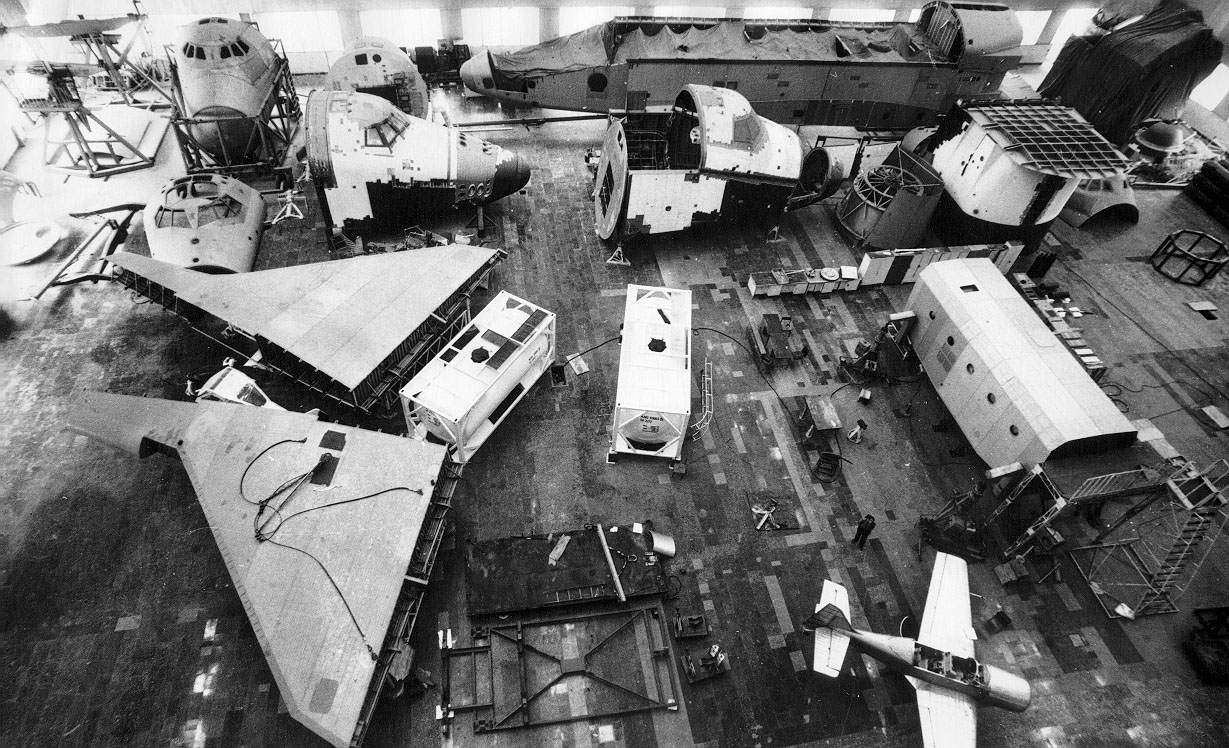
To confirm the possibility of using the existing production base and ground support facilities, a full-scale dimensional and technological mock-up of the "Energia-M" was built, and software-based tests were carried out with it at the technical and launch complexes.
The central block has its own features.
Block V of the "Energia-M" launch vehicle consists of the oxidizer and fuel tanks and of the transition, inter-tank, tail and engine compartments. The nose fairing is attached to the transition compartment. The inter-tank compartment houses the control and telemetry system equipment, pneumatic panels and elements of the pneumatic-hydraulic system.
The engine compartment houses one RD-0120 engine with its steering drive system, elements of the pneumatic-hydraulic system, connector blocks for linking with Block Ya, instruments of the measurement and control system, pneumatic panels, and elements of the fire and explosion prevention system.
The pneumatic-hydraulic elements are borrowed as far as possible from Block Ts of "Energia". The number of valves and pneumatic-hydraulic elements is reduced compared with Block Ts.
The diameter of Block V is 7.7 m. Maximum height 25.5 m (50.5 m with the fairing). Mass of the fully assembled block 20-25 t.
The fuel tanks of Block V are cylindrical with spherical end domes of 4.185 m radius, which makes it possible to use for their manufacture the tooling and equipment used for making the fuel tanks of the Block Ts of "Energia".
The fuel tank consists of two spherical end domes and a "smooth" cylindrical shell. The end domes differ from the end domes of the Block Ts tank in the arrangement and somewhat smaller number of flanges, and in a smaller diameter of the flange of the tel'nogo pipeline. The cylindrical shell, 8 m high, consists of four sections of a design similar to the sections of the Block Ts oxidizer tank. The in-tank devices are similar in range to the in-tank devices of the Block Ts hydrogen tank and differ only by a reduced number of helium cylinders and pressurization sprayers.
The volume of the fuel tank is 600 m3 (the volume of Block Ts is 1400 m3). The maximum height of the fully assembled tank is 12 m.
The oxidizer tank of Block V differs from the oxygen tank of Block Ts by a cylindrical shell half as high (one cylindrical section instead of two) and by the shape of the upper end dome (spherical instead of ogival). The in-tank devices differ by the absence of thermostatting manifolds.
The volume of the tank is 200 m3 (the volume of the oxygen tank of Block Ts is 600 m3). The maximum height of the fully assembled tank is 6.2 m.
The inter-tank compartment has the same dimensions as the inter-tank compartment of Block Ts (diameter 7.7 m, height 5.6 m). The design of the compartment is simplified because of the absence of concentrated loads and the lower overall level of loading. The compartment has no detachable joints connecting the corresponding compartment of Block Ts to the launch pad, no attachment fittings for the side blocks, no longerons and no reinforced frames.
The tail compartment has the same dimensions as the cylindrical part of the tail compartment of Block Ts. The compartment consists of a frame for the links with the side blocks and a cylindrical framework shell with an upper end frame and one intermediate frame. A heat-protective coating is applied to the end surface of the compartment. At the places where the links with the side blocks attach, units similar to the "Energia" side-block link units are installed on the side surface of the compartment.
The engine compartment is conical, with an upper diameter of 7.7 m and a lower diameter of 0.5 m. The height of the compartment is 4.5 m. It is a framework structure with a large number of cutouts for pipelines, with a heat-protective coating on the outside. A heat-shield casing of the engine and connector blocks for linking with Block Ya are installed on the compartment. The design of the heat-protective coating of the casing and of the engine shield is similar to that used on Block Ts.
The transition compartment is conical, with a lower diameter of 7.7 m and an upper diameter of 6.7 m. The height of the compartment is 1.5 m. The design of the compartment is similar to that of the tail compartment of Block V.
The nose fairing (payload compartment) is similar in its outer lines and structural design to the "Energia" cargo container (14S70), and differs from it by a lower height (25 m) and by the presence of trusses for attaching the side blocks.
The specific structural design of the fairing body will be chosen at the stage of ensuring a rational technology for its manufacture.
Original version of the text
"Энергия-М"
Ракета-носитель "Энергия-М" (изделие 217ГК "Нейтрон", примечание web-мастера) разрабатывалась для выведения космических аппаратов наиболее распространенной в ближайшие годы массы - от 4 до 35 т - на низкие, средние, высокие круговые и эллиптические орбиты, а также на траектории полета к Луне и планетам Солнечной системы (на геостационарную орбиту - до 6,5 т). Ракета-носитель с максимальным заимствованием блоков, систем и агрегатов, прошедших экспериментальную и натурную отработку в составе ракет "Зенит" и "Энергия".
"Энергия-М" состоит из центрального кислородно-водородного блока, создаваемого на базе второй ступени "Энергии", двух блоков первой ступени, заимствованных у носителя "Энергия" и космического разгонного блока.
В качестве космического разгонного блока в составе ракеты "Энергия-М" используется либо кислородно-керосиновый разгонный блок, либо его модификация с увеличенным запасом топлива, размещаемым в навесных сбрасываемых топливных емкостях. В дальнейшем в составе "Энергии-М" предполагалось использовать вновь разрабатываемый кислородно-водородный разгонный блок.
Принятые конструктивно-компоновочные решения обеспечивают возможность создания ракеты "Энергия-М" на производственной и стендовой базах "Энергии", а ее эксплуатация возможна одновременно с эксплуатацией "Энергии", с использованием одних и тех же стартовых сооружений, технического и других наземных комплексов.
Создание ракеты "Энергия-М" позволяет:
- осуществить замену носителя "Протон" на высокотоксичных компонентах топлива, использование которых приводит к исключению из народнохозяйственного оборота отчуждаемых земель в районе падения первой ступени и представляет большую потенциальную экологическую угрозу в случае аварии ракеты, в процессе хранения и транспортирования компонентов топлива
- ликвидировать район отчуждения в заповедных зонах Горного Алтая;
- увеличить массу и габариты космических аппаратов по сравнению с выводимыми в настоящее время ракетой "Протон" в 1,5-2 раза, что удовлетворяет тенденции роста масс и габаритов космических аппаратов;
- обеспечить выведение тяжелых космических аппаратов в южном направлении на синхронно-солнечные орбиты;
- обеспечить использование и сохранение в работоспособном состоянии производственно-технологического и наземного комплексов ракеты-носителя "Энергия" и системы
"Энергия"-"Буран" и поддержание высокой надежности этих систем в условиях ограниченного количества их пусков.
"Энергия-М" превосходит разработанные и разрабатываемые зарубежные коммерческие ракеты-носители своего класса - "Титан-4" (США), "Ариан-5" (Франция), HII (Япония) - как по энергетическим, так и по эксплуатационным характеристикам.
Являясь единственной в своем классе использующей экологически чистые компоненты топлива, ракета-носигель "Энергия-М" может конкурировать на мировом рынке средств выведения достаточно успешно, если учесть и относительно невысокую стоимость пуска.
С введением в эксплуатацию ракеты "Энергия-М" будет заполнена еще одна ячейка семейства ракет-носителей нового поколения, использующих экологически чистые компоненты топлива.
В качестве одного из возможных направлений дальнейшего совершенствования характеристик ракет-носителей предусматривался вариант ракеты-носителя со спасаемыми и возвращаемыми к месту старта многоразовьми блоками первой ступени, что уменьшает затраты на проведение пуска и решает задачу сокращения площадей земель, отчуждаемых в районе падения блоков первой ступени.
Для подтверждения возможности использования существующих производственной базы и средств наземного обеспечения был изготовлен полноразмерный габаритно-технологический макет ракеты "Энергия-М" и проведены программные работы с ним на техническом и стартовом комплексах.
Центральный блок имеет свои особенности.
Блок В ракеты-носителя "Энергия-М" состоит из баков окислителя и горючего, переходного, межбакового, хвостового и двигательного отсеков. К переходному отсеку крепится головной обтекатель. В межбаковом отсеке размещается аппаратура системы управления и телеметрии, пневмощиты, элементы пневмогидравлической системы.
На двигательном отсеке размещается один двигатель РД-0120 с системой рулевых приводов, элементы пневмо-гидравлической системы, колодки связи с блоком Я и приборы системы измерения и управления, пневмощиты, элементы системы пожаро- и взрывопредупреждения.
Элементы пневмо-гидравлики максимально заимствуются с блока Ц "Энергии". Количество арматуры и элементов пневмо-гидравлической системы уменьшено по сравнению с блоком Ц.
Диаметр блока В 7,7 м. Максимальная высота 25,5 м (50,5 - с обтекателем). Масса полностью собранного блока 20-25 т.
Топливные баки блока В - цилиндрические со сферическими днищами радиусом 4,185 м, что позволяет использовать для их изготовления технологическую оснастку и оборудование, применяемые для изготовления топливных баков блока Ц "Энергии".
Бак горючего состоит из двух сферических днищ и "гладкой" цилиндрической обечайки. Днища баков отличаются от днищ бака блока Ц размещением и несколько меньшим количеством фланцев, меньшим диаметром фланца тельного трубопровода. Цилиндрическая обечайка высотой 8 м состоит из четырех секций, по конструкции аналогичных секциям бака окислителя блока Ц. Внутрибаковые устройства по номенклатуре аналогичны внутрибаковым устройствам водородного бака блока Ц и отличаются только уменьшенным количеством гелиевых баллонов и распылителей наддува.
Объем бака горючего 600 м3 (объем блока Ц 1400 м3). Максимальная высота полностью собранного бака 12 м.
Бак окислителя блока В отличается от кислородного бака блока Ц вдвое меньшей высотой цилиндрической обечайки (одна цилиндрическая секция вместо двух) и формой верхнего днища (сферическая вместо оживальной). Внутрибаковые устройства отличаются отсутствием коллекторов термостатирования.
Объем бака 200 м3 (объем кислородного бака блока Ц 600 м3). Максимальная высота полностью собранного бака 6,2 м.
Межбаковый отсек имеет такие же габариты, как и межбаковый отсек блока Ц (диаметр 7,7 м, высота 5,6 м). Конструкция отсека упрощена из-за отсутствия сосредоточенных нагрузок и снижения общего уровня нагружения. В составе отсека отсутствуют разъемные соединения, связывающие аналогичный отсек блока Ц со стартом, фитинги крепления боковых блоков, лонжероны и усиленные шпангоуты.
Хвостовой отсек имеет такие же габариты, как цилиндрическая часть хвостового отсека блока Ц. Отсек состоит из шпангоута связей с боковыми блоками и цилиндрической каркасной обечайки с верхним торцевым и одним промежуточным шпангоутом. На торцевой поверхности отсека наносится теплозащитное покрытие. В местах крепления связей с боковыми блоками на боковой поверхности отсека устанавливаются узлы, аналогичные узлам связей с боковыми блоками "Энергии".
Двигательный отсек конической формы с верхним диаметром 7,7 м, нижним - 0,5 м. Высота отсека 4,5 м. Отсек представляет собой каркасную конструкцию с большим количеством вырезов под трубопроводы, имеющую снаружи теплозащитное покрытие. На отсеке устанавливается теплозащитный кожух двигателя и колодки связей с блоком Я. Конструкция теплозащитного покрытия кожуха и экрана двигателя аналогична применяемым на блоке Ц.
Переходный отсек конической формы с нижним диаметром 7,7 м, верхним - 6,7 м. Высота отсека 1,5 м. Конструкция отсека аналогична конструкции хвостового отсека блока В.
Головной обтекатель (грузовой отсек) по геометрическим обводам и конструктивному исполнению подобен грузовому контейнеру "Энергии" (14С70) и отличается от него меньшей высотой (25 м) и наличием ферм крепления боковых блоков.
Конкретное конструктивное исполнение корпуса головного обтекателя выбирается на этапе обеспечения рациональной технологии его изготовления.