


Monino airfield
In August 2007 I visited the Monino museum here are the pictures I took:
The central Air Force museum of Russia is in the suburbs of Mosow (40 km) in the Monino town. It’s a former military airport which was transformed in an museum in 1958. This airport is the biggest museum plane of Russia, it has really beautifull pieces, which sometimes are unique.
All the planes and helicopteres came by there own, which is outstanding because lot of them are prototypes.
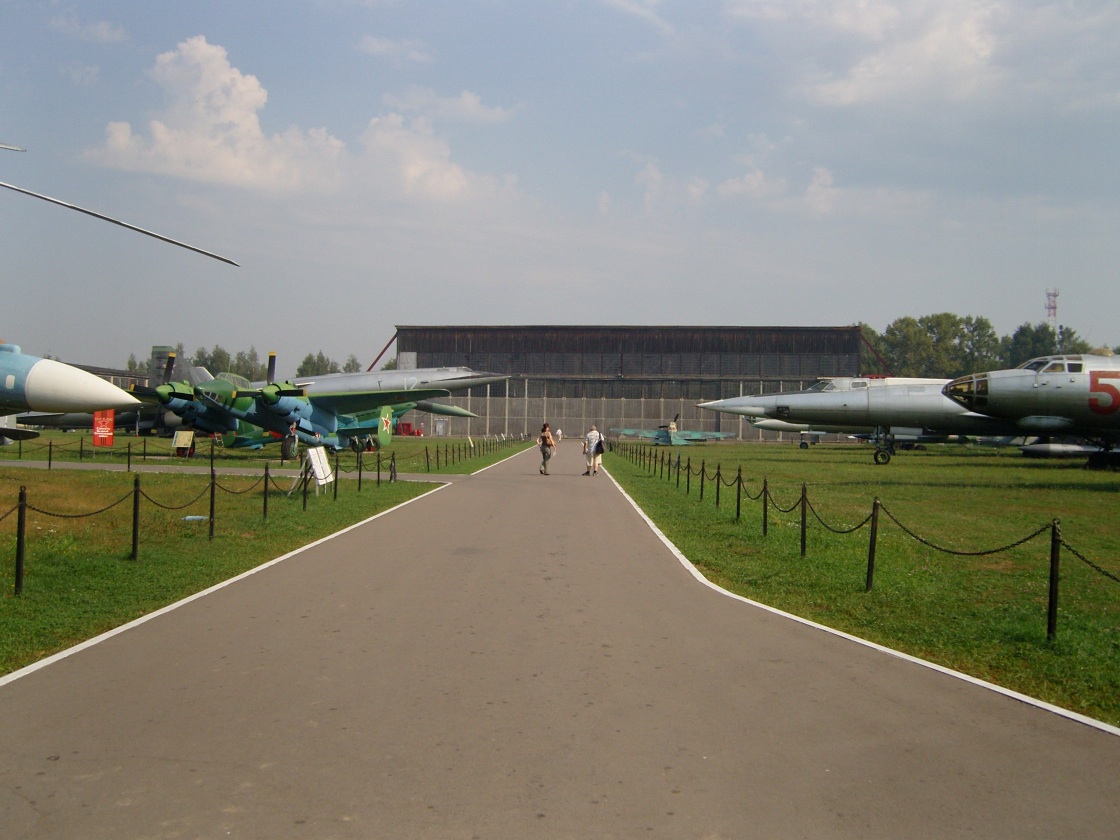
The visit begin with the supersonic bombers:
The Tupolev Tu-16 was a twin-engine jet bomber used by the Soviet Union. It has flown for more than 50 years and, as the Xian H-6, remains in service with the Chinese air force.
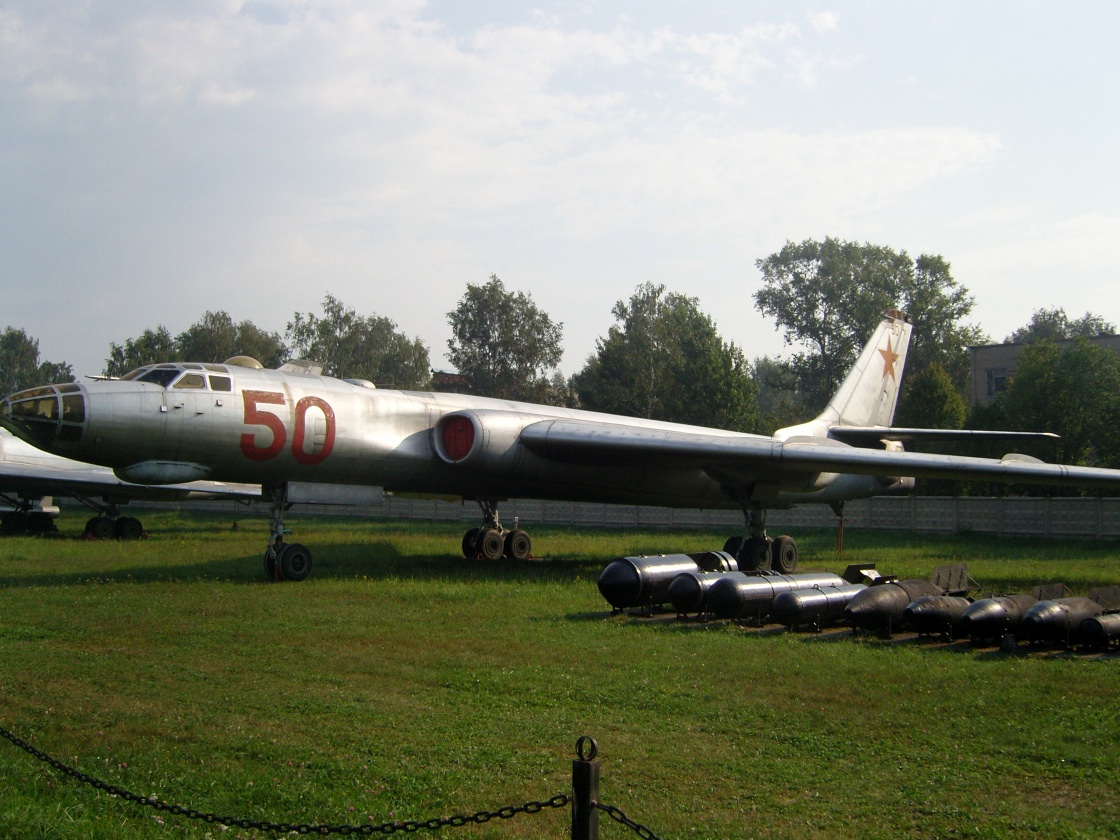
The Tu-22 was originally intended as a supersonic replacement for the Tupolev Tu-16 bomber. The design, designated Samolët 105 by Tupolev, was drawn in 1954, but the first flight of the prototype did not take place until 21 June 1958. The availability of more powerful engines, and the TsAGI discovery of the Area rule for minimizing transonic drag, led to the construction of a revised prototype, the 105A. This first flew on 7 September 1959.
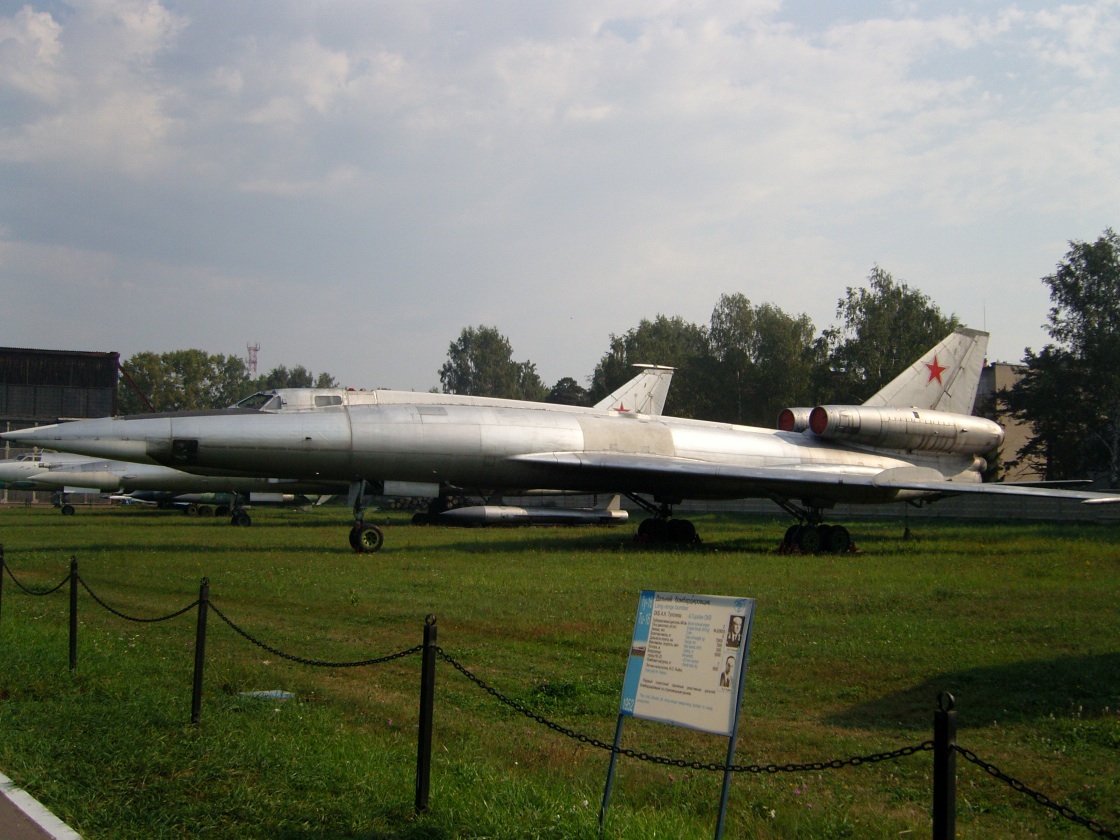
The Tupolev Tu-22M is a supersonic, swing-wing, long-range strategic and maritime strike bomber developed by the Soviet Union. Significant numbers remain in service with the Russian Air Force.
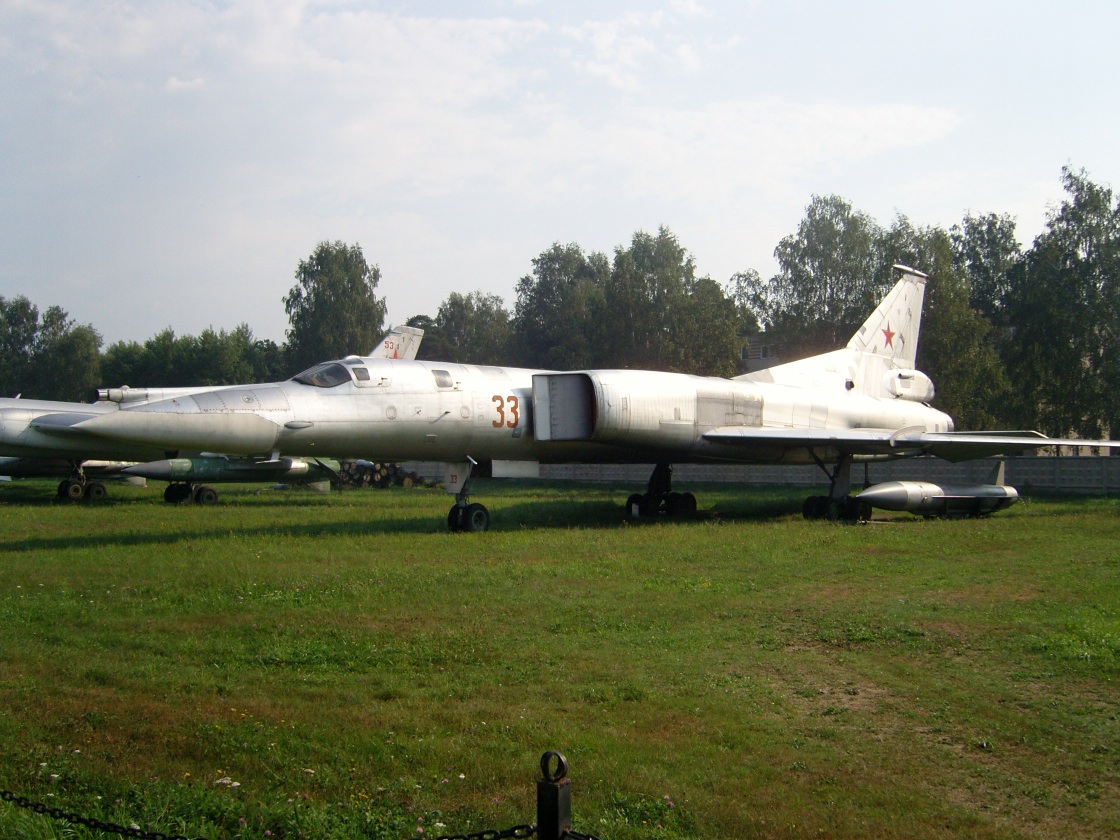
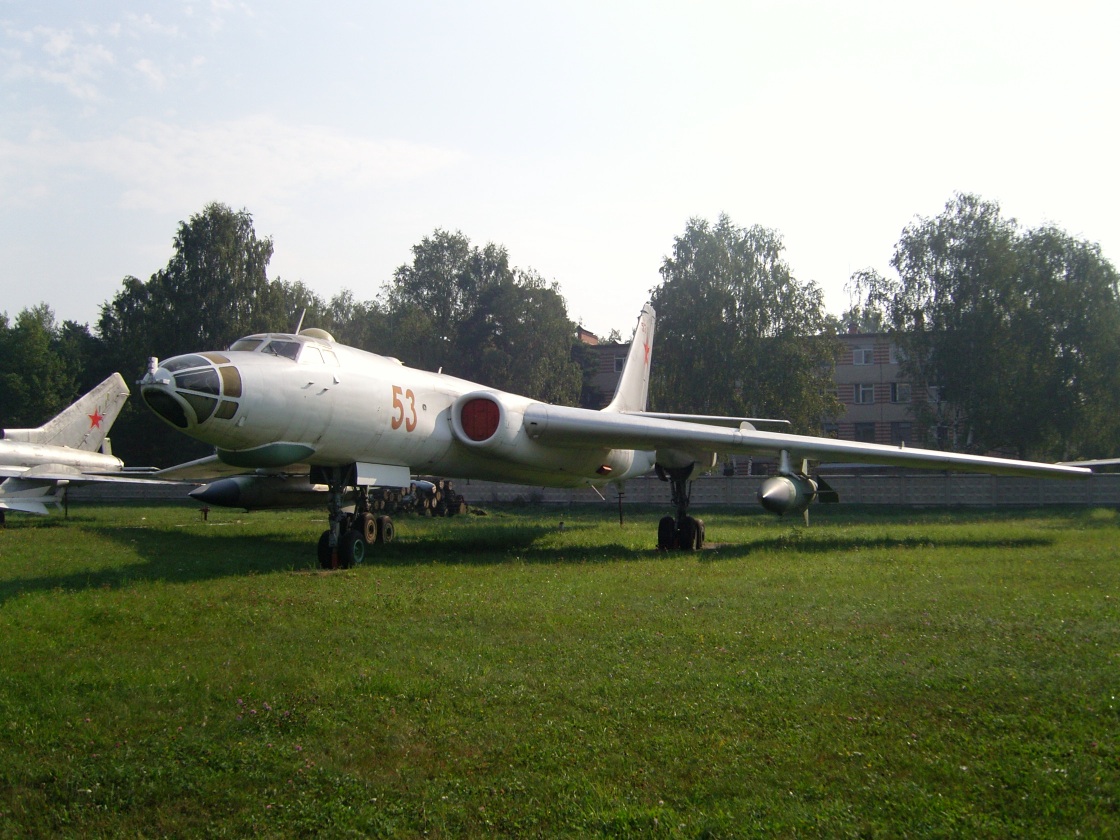
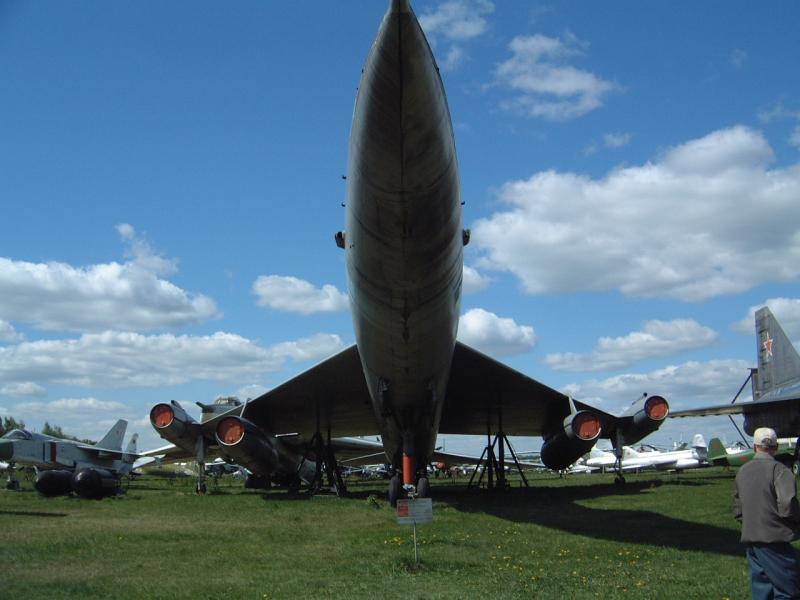
The Myasishchev M-50 was a Soviet prototype four-engine supersonic bomber which never attained service. Only one prototype was built, which was believed to have first flown in 1957. The M-50 was constructed by the Myasishchev design bureau.
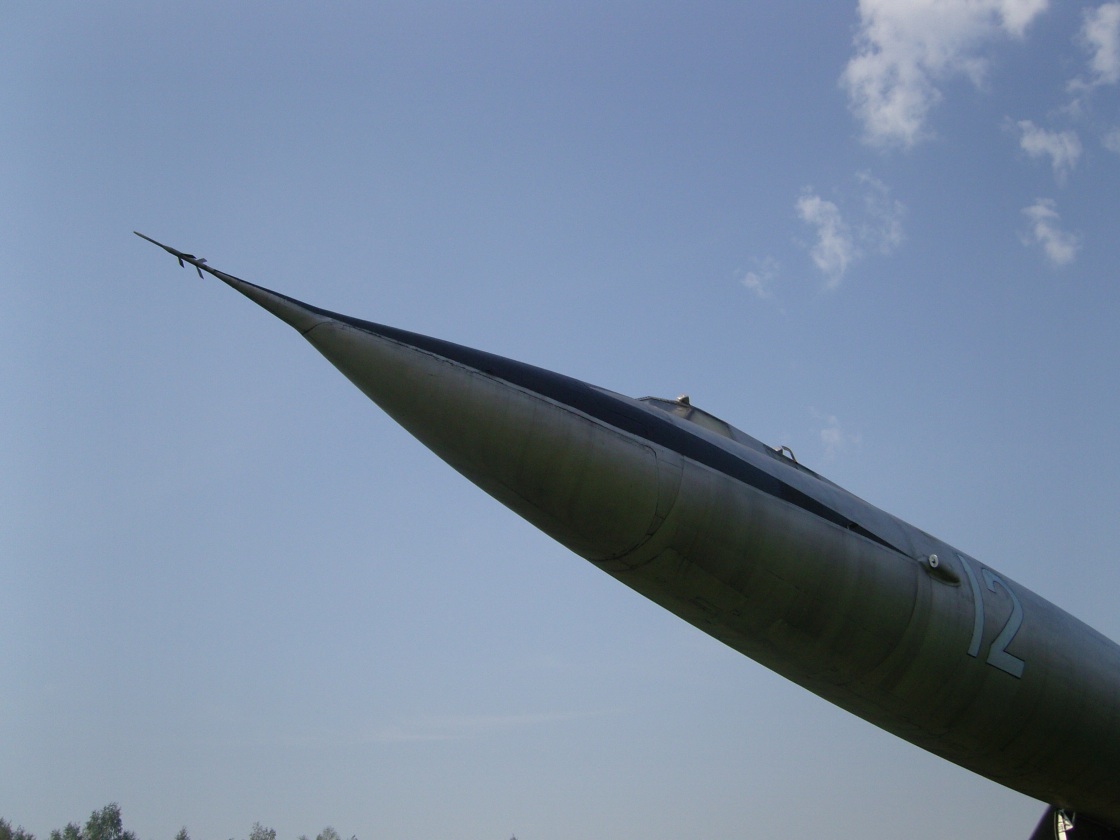
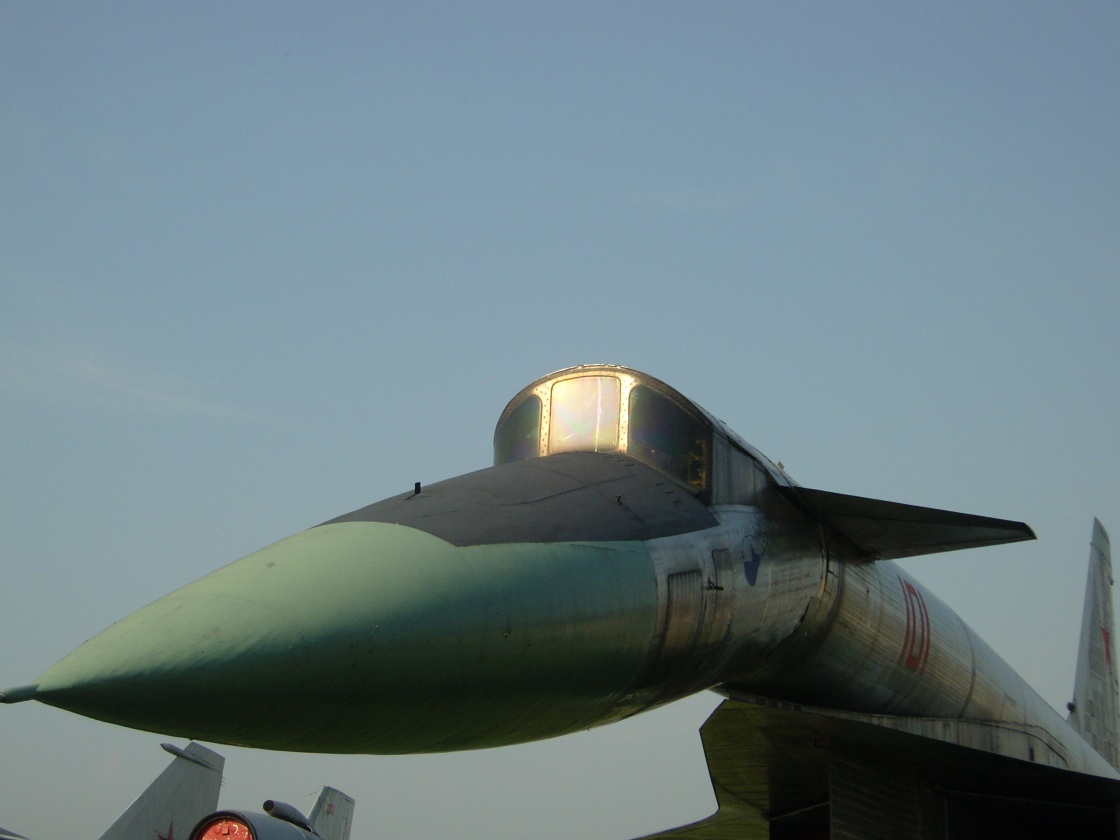
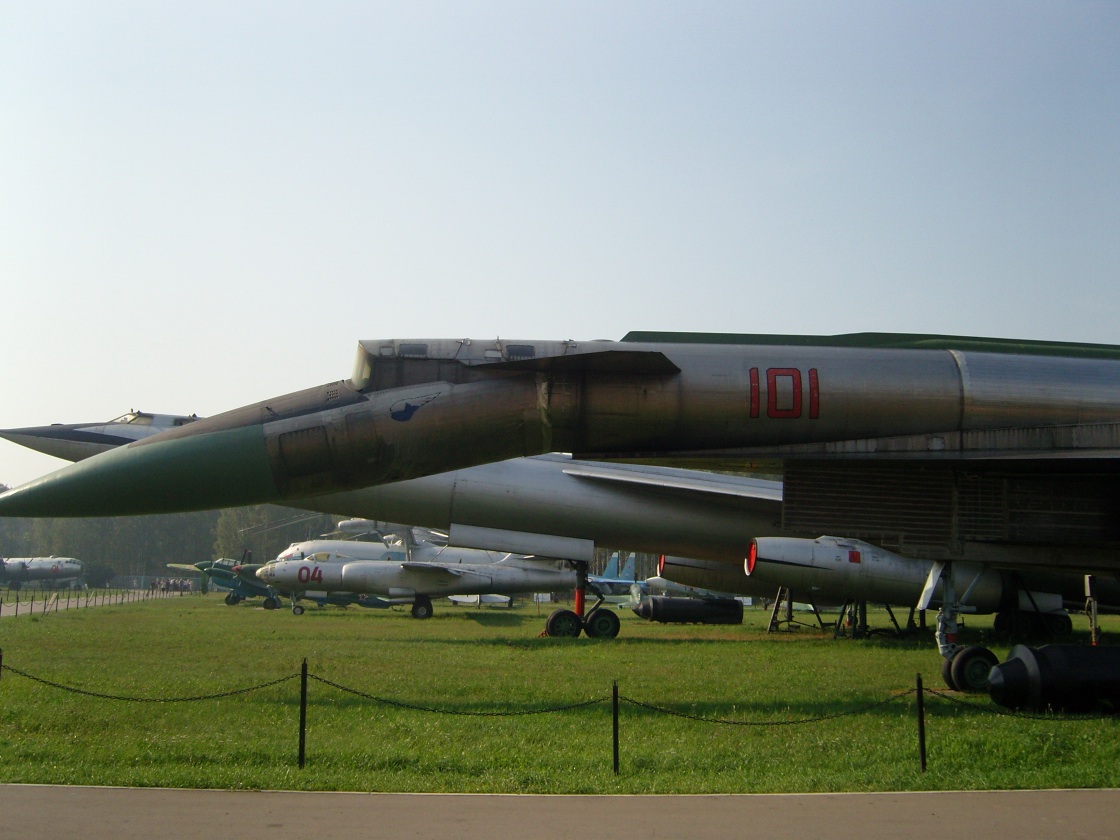
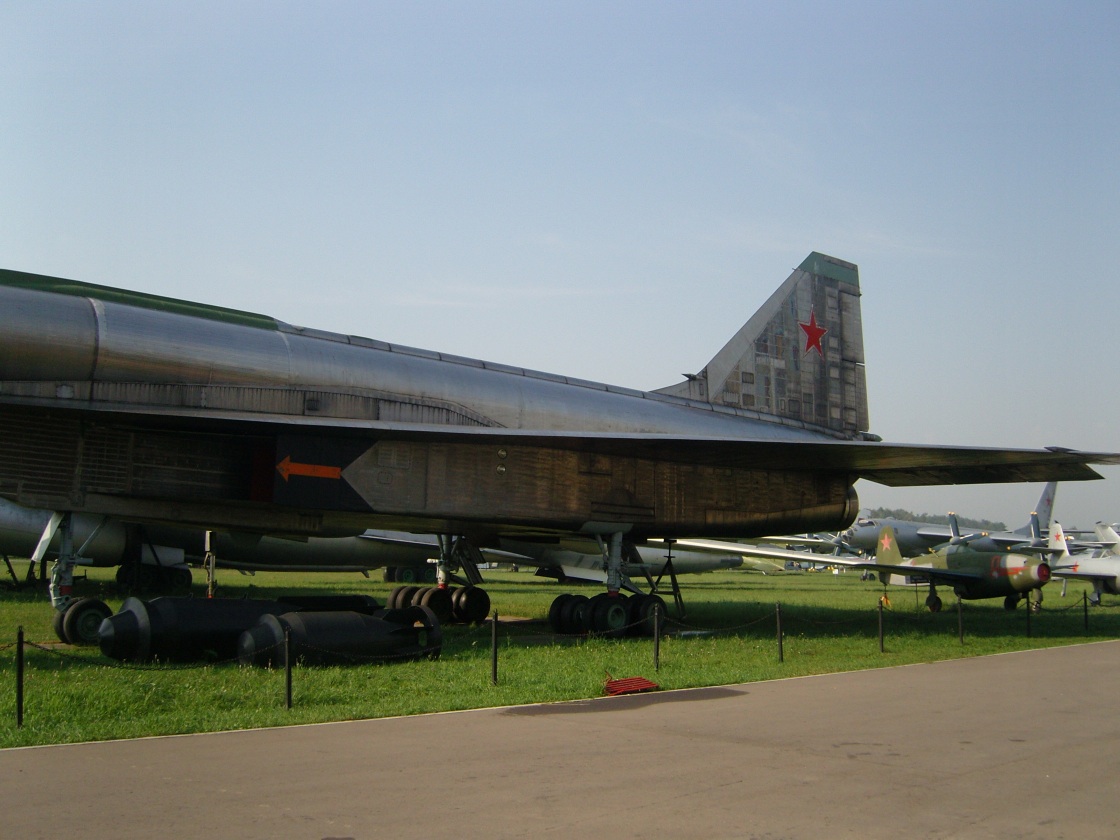
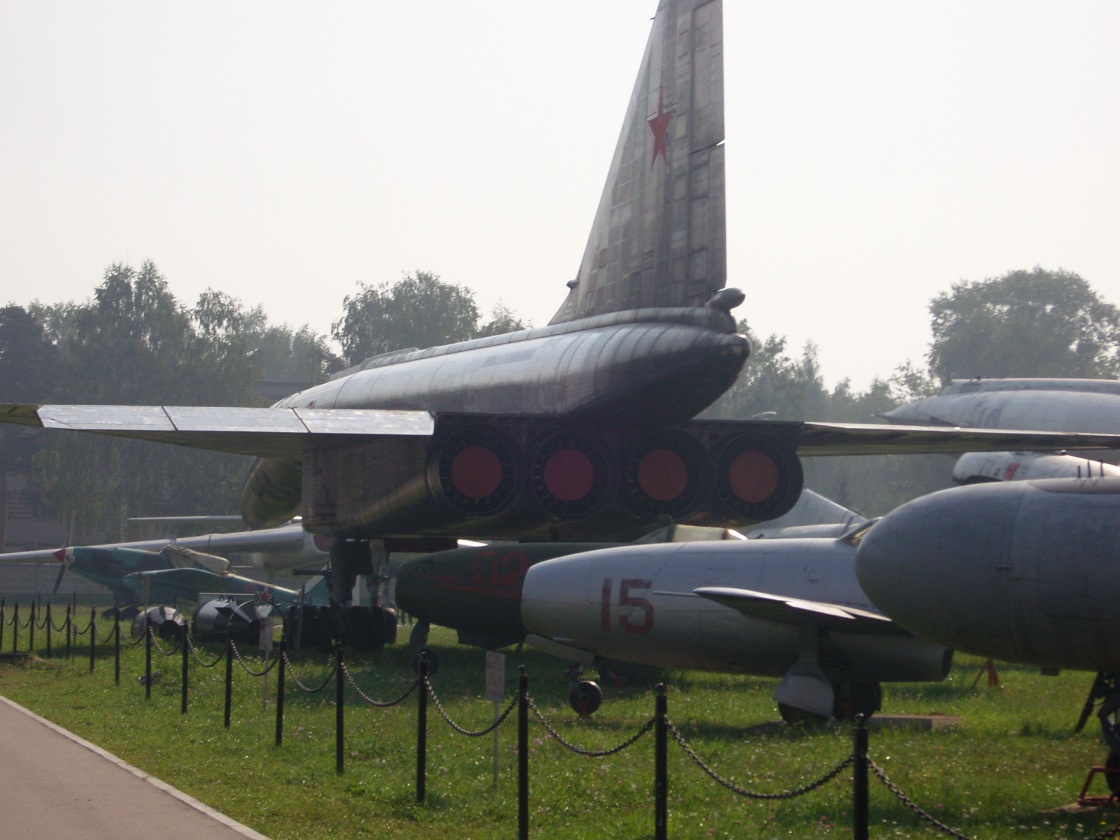
Sukhoi T-4, or “Aircraft 100”, or “Project 100”, or “Sotka” was a Soviet high speed reconnaissance and interceptor aircraft that did not proceed beyond the prototype stage. It is all made of Titan to resist to the heat of high speed flight. It is sometimes incorrectly named Su-100.
The Sukhoi’s engineers says that it would have been cheaper if it was made of gold.
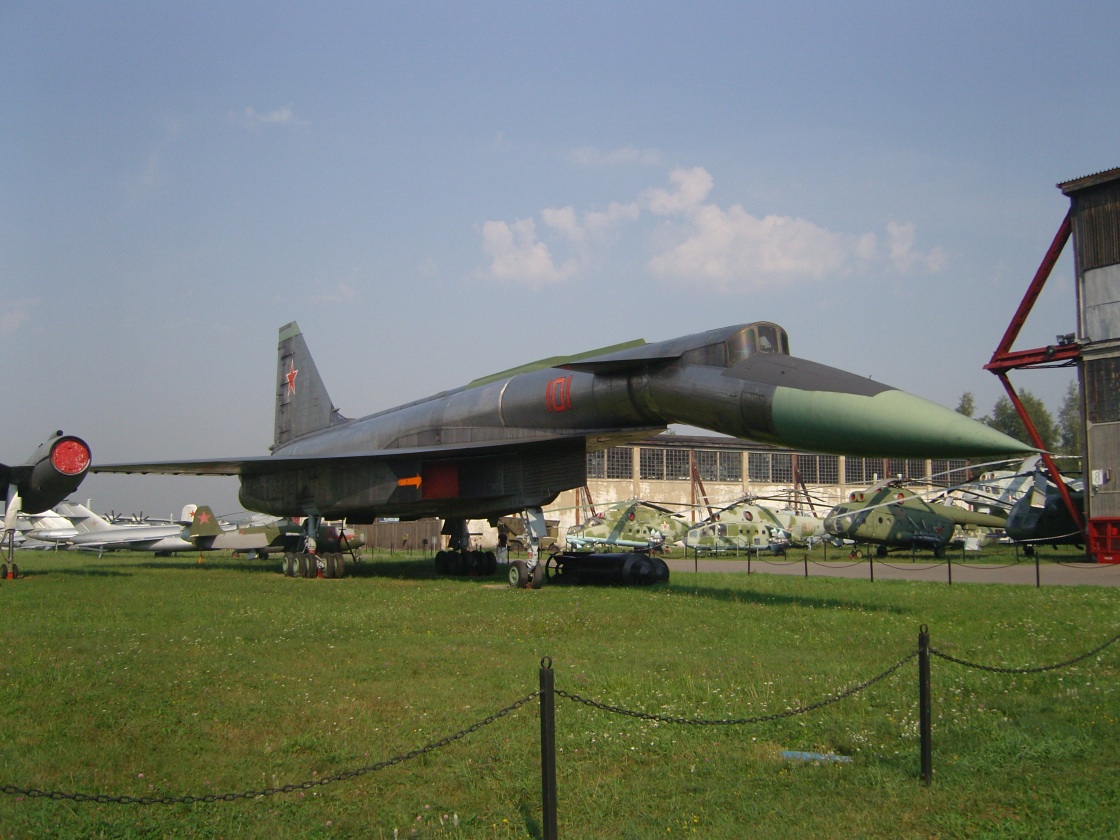
The next of the visit take place in the main hangar of the airport where collection planes are stored:
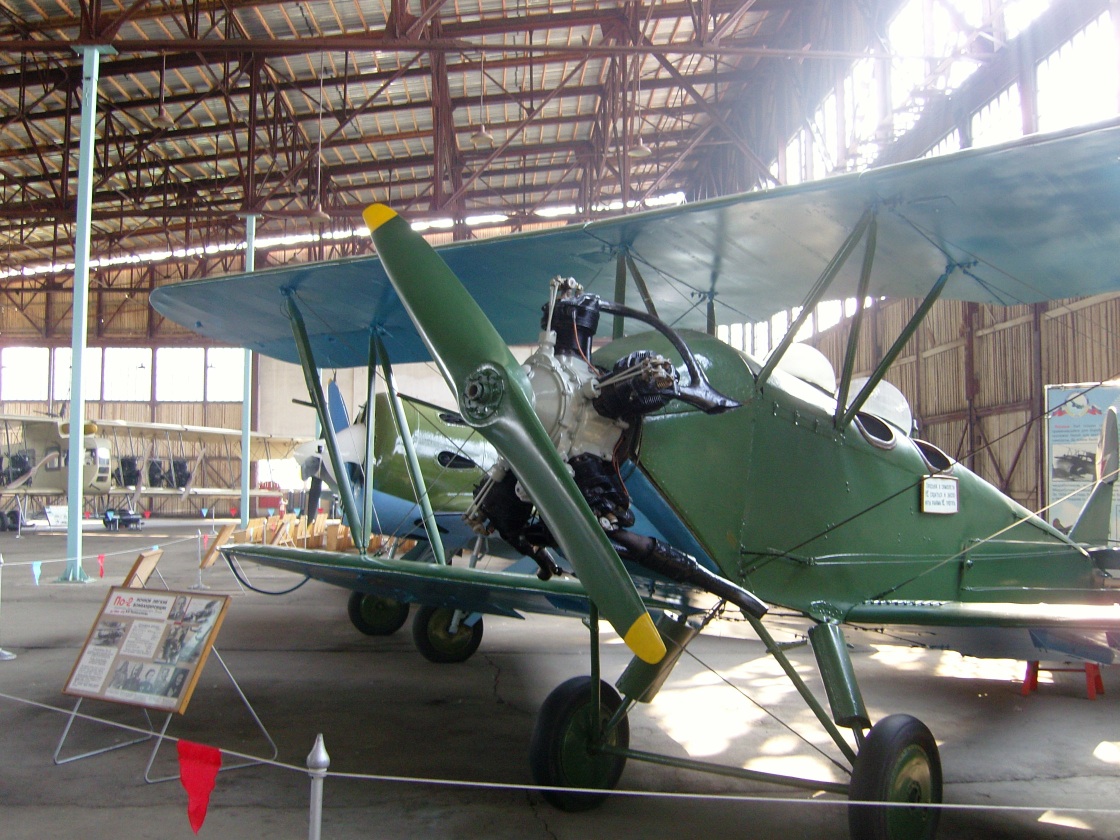
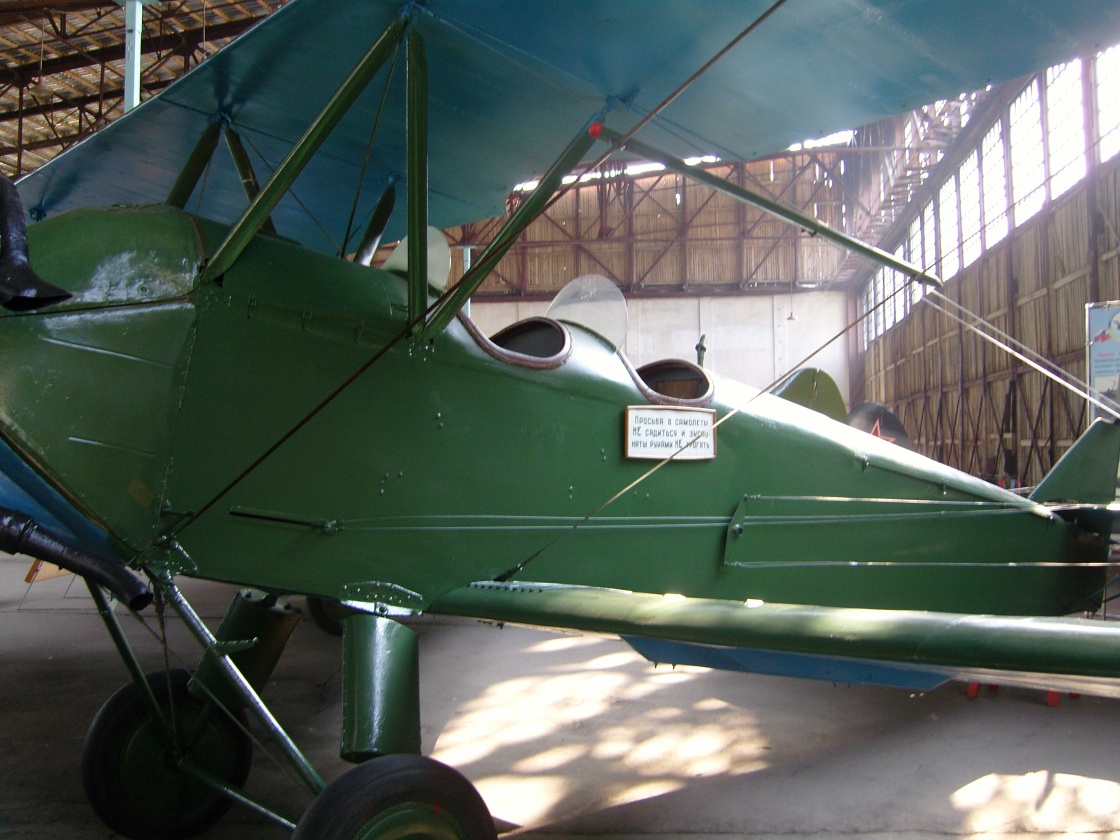
The Polikarpov U-2 or Po-2 served as a general-purpose Soviet biplane, nicknamed Kukuruznik (Russian: Кукурузник, from Russian “kukuruza” (кукуруза) for maize), NATO reporting name of “Mule”. The reliable, uncomplicated and forgiving aircraft served as a trainer and crop-duster. It is the second most produced aircraft, and the most produced biplane, in the history of aviation.
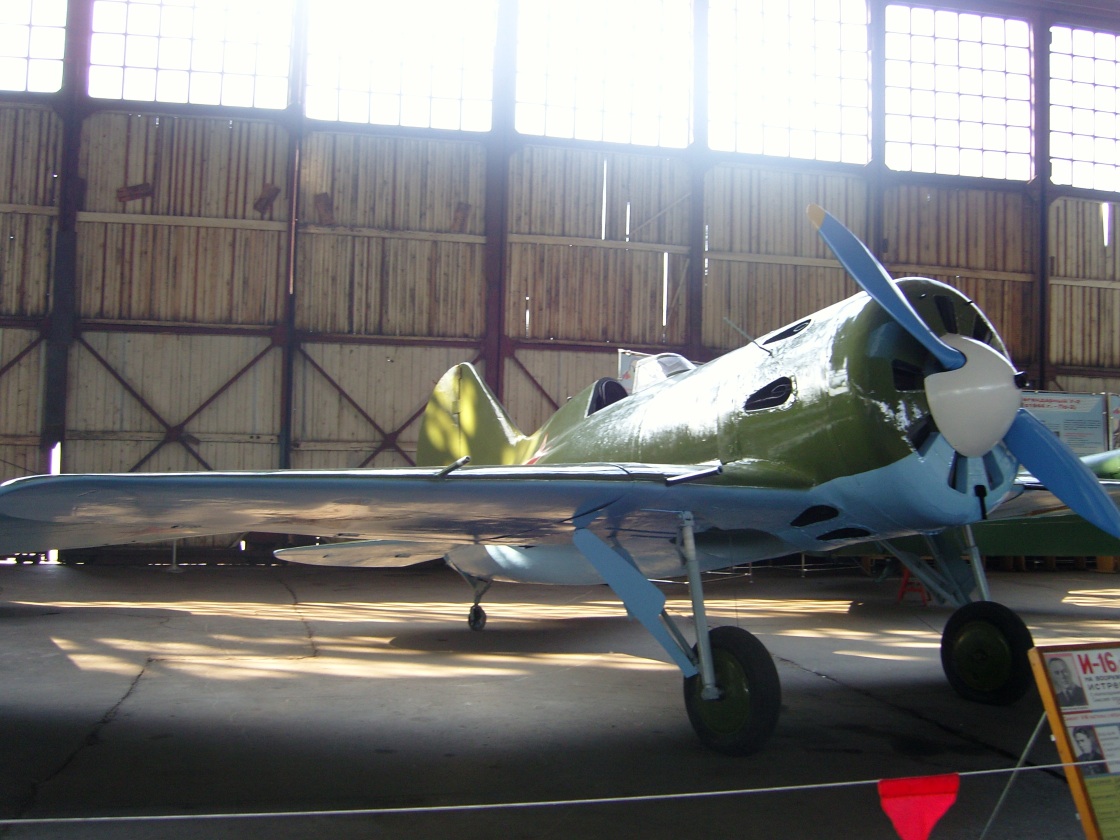
The Polikarpov I-16 was a Soviet fighter aircraft of revolutionary design; it was the world’s first all- metal cantilever-winged monoplane fighter with retractable landing gear. The I-16 was introduced in the mid-1930s and formed the backbone of the Soviet Air Force at the beginning of World War II. The diminutive fighter prominently featured in the Second Sino-Japanese War, the Spanish Civil War where it was called the Rata or Mosca, and the Battle of Khalkhin Gol.
Ilyushin Il-10 (Cyrillic Ил-10) was a Soviet ground attack aircraft developed at the end of World War II by the Ilyushin construction bureau. It was also license-built in Czechoslovakia by Avia as the Avia B-33.
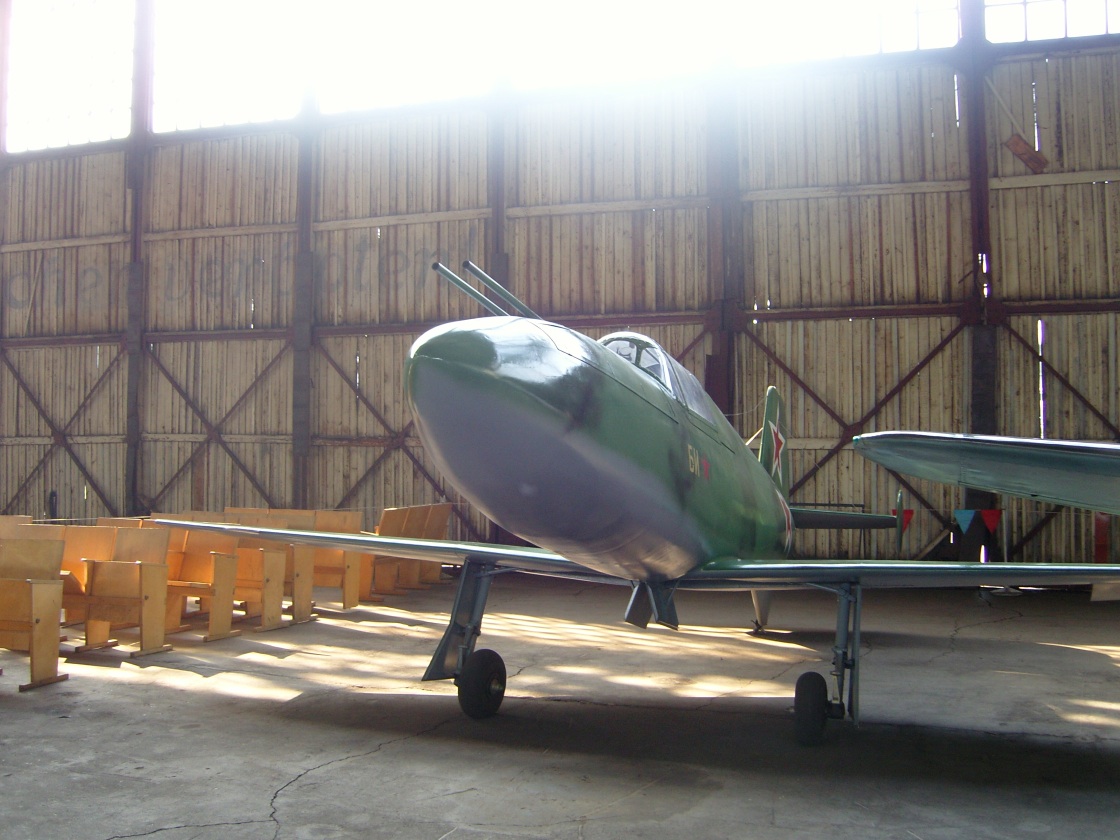
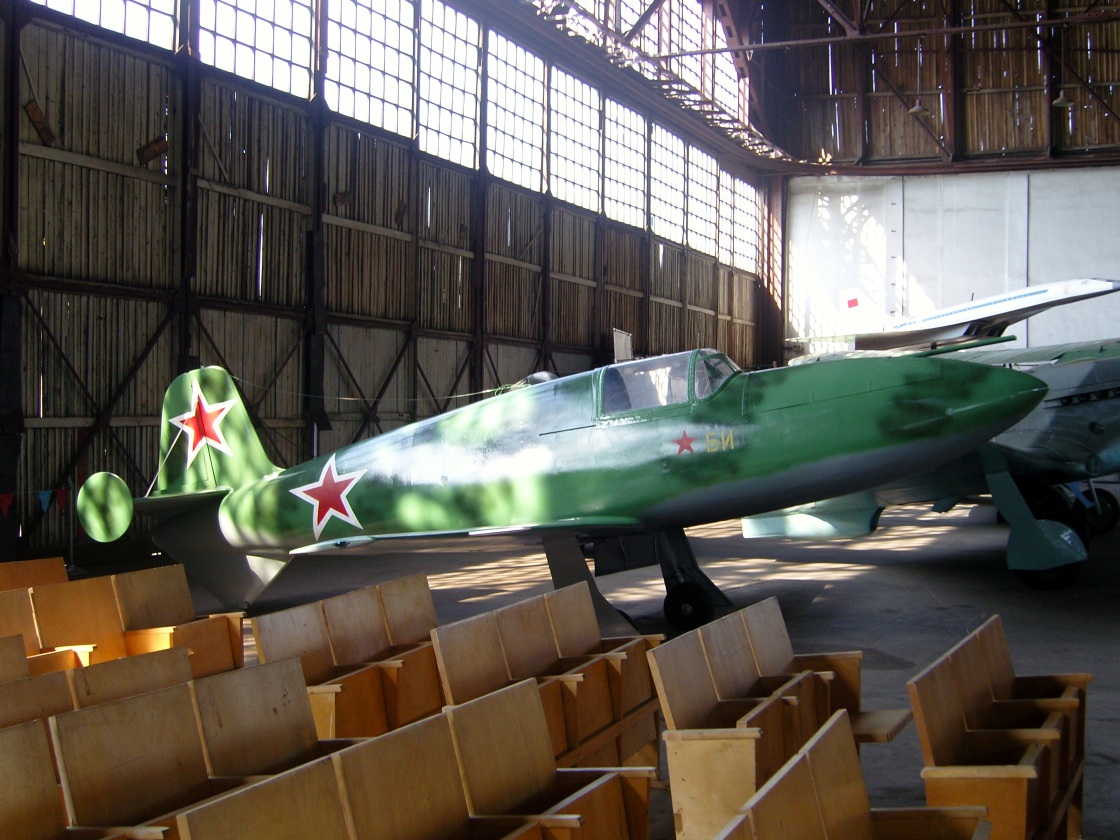
The Bereznyak-Isayev BI-1 was a revolutionary Russian Rocket plane designed by A. Y. Bereznyak and A. M. Isayev that was developed several years before the more widely known Messerschmitt Me 163. It was to be armed with 2 20 mm cannons and some minor improvements were considered like ramjets on each wing to increase range, but this model didn’t even pass the wind tunnel test. Unlike the German rocket fighter, the BI-1 was not lost to any fuel accidents. It was lost following an accident in which the plane suddenly made an uncontrollable dive to the ground in which the test pilot captain, G.Ya.Bakhchivandzhu, was killed. Development was stopped following the accident before it could enter service with the Soviet Air Force but was still used as a test glider.
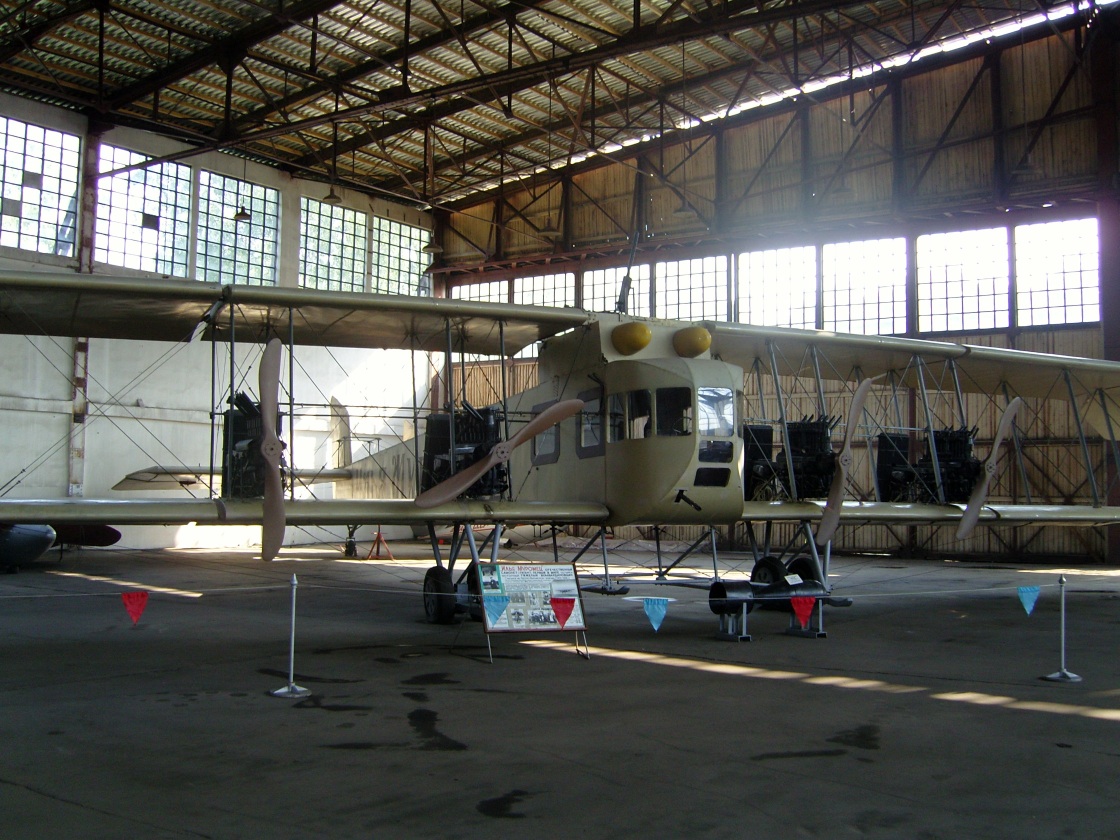
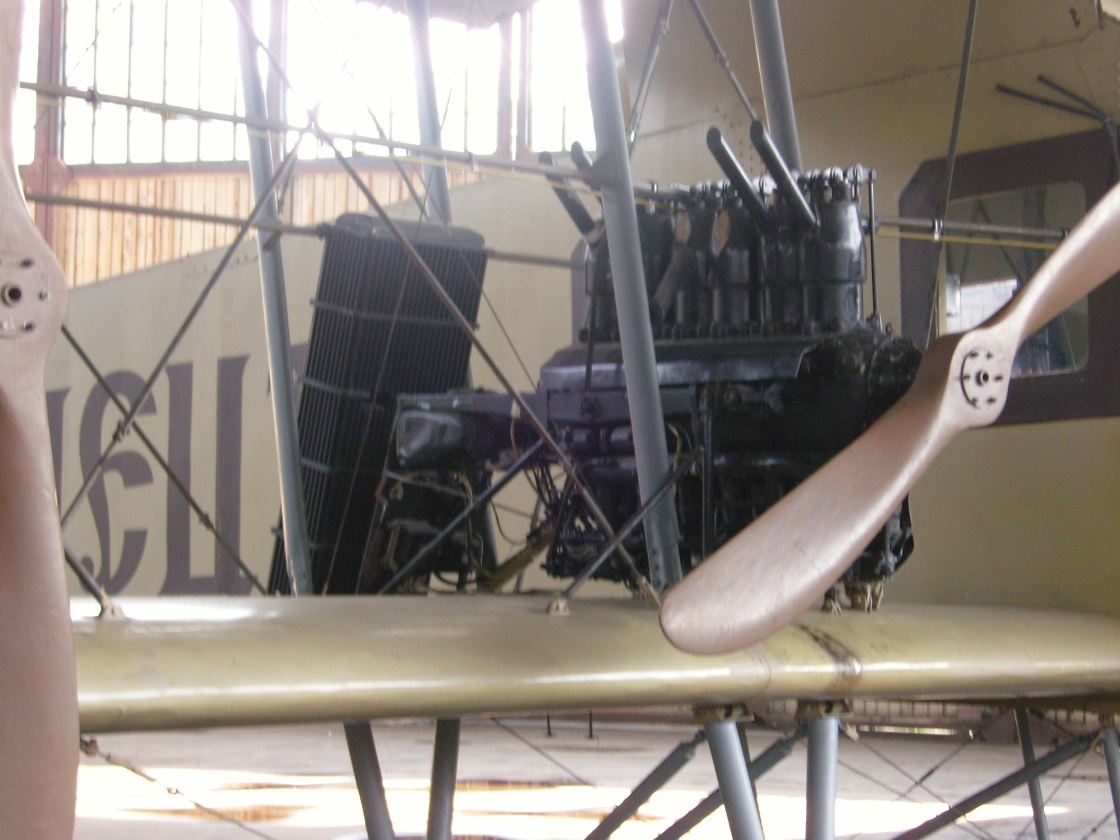
First 4 engines bomber.
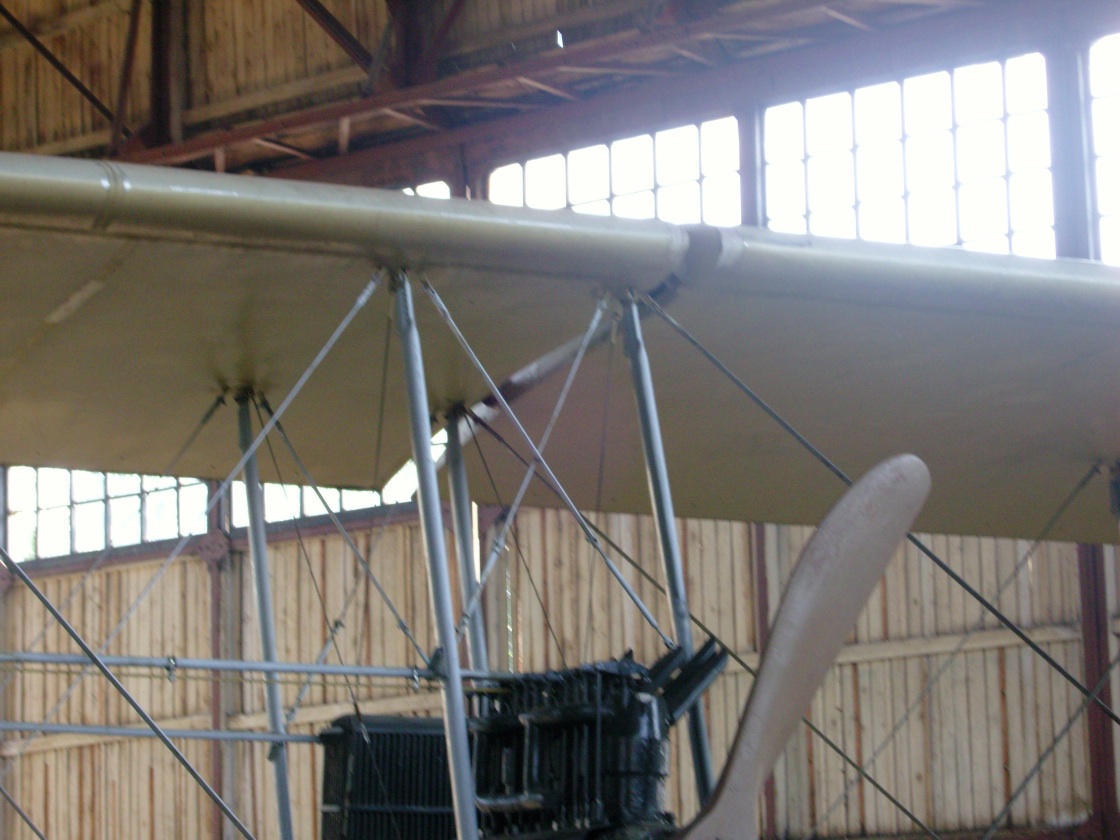
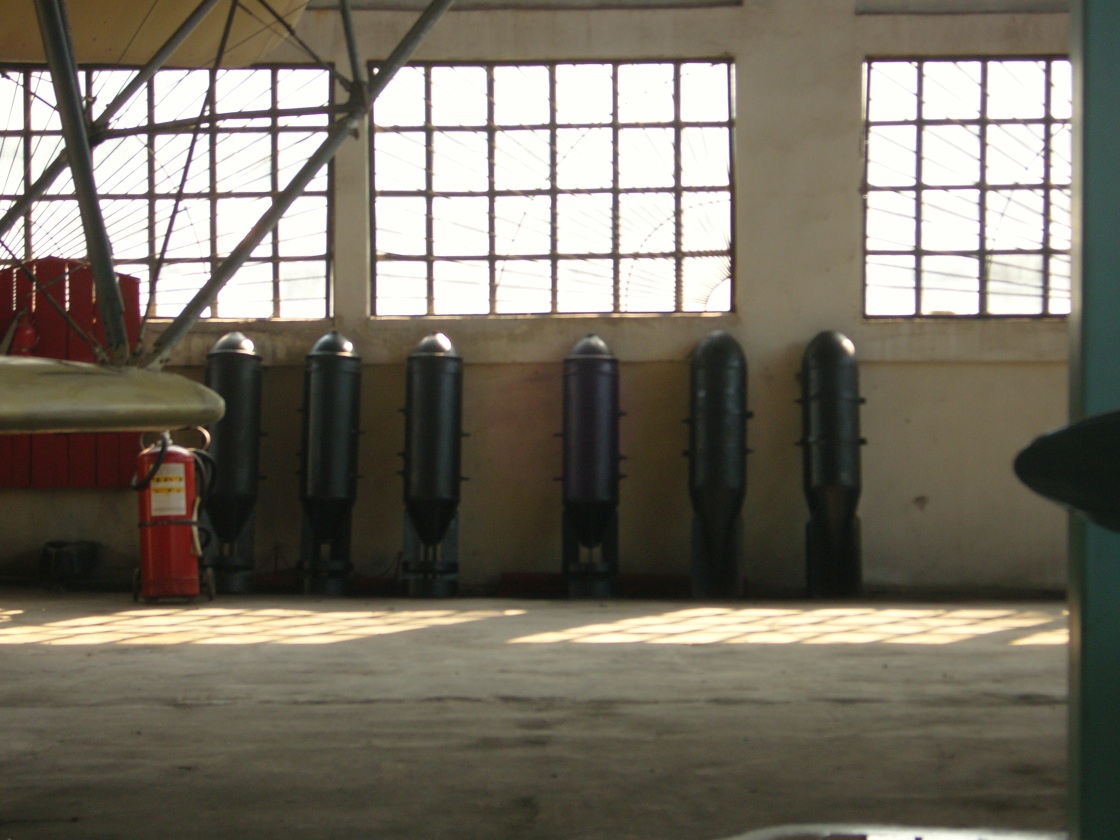
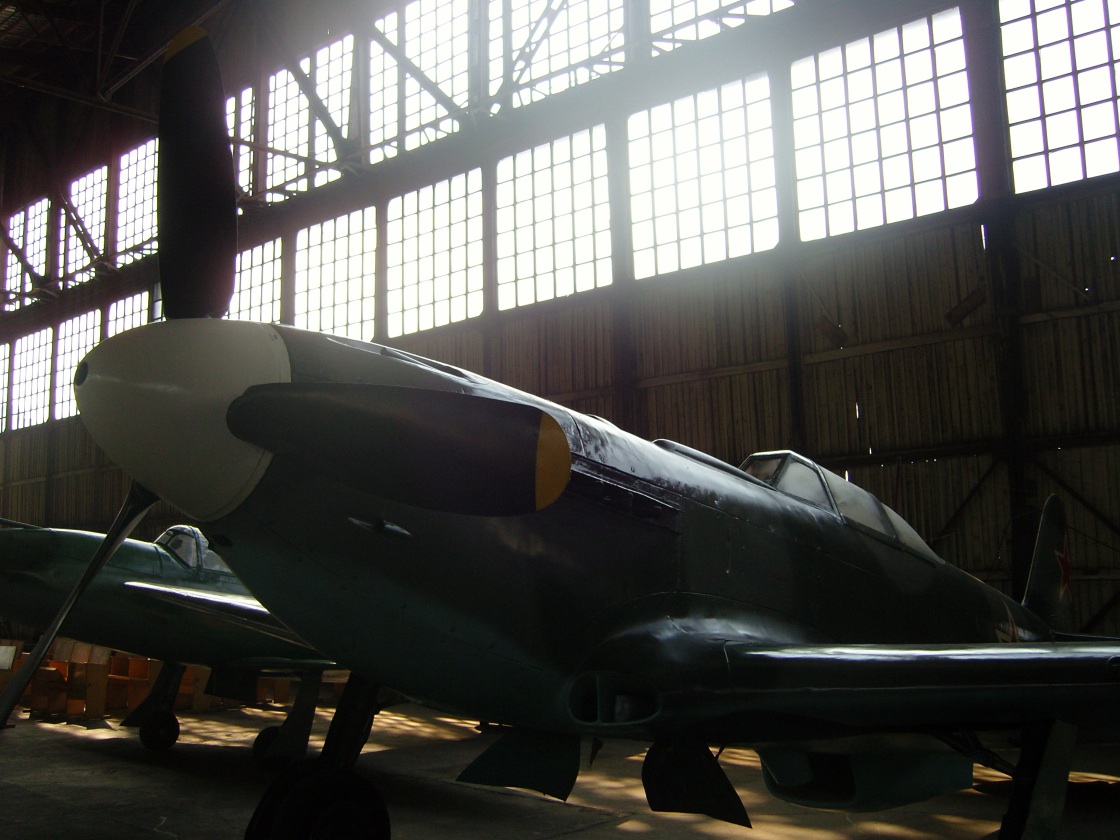
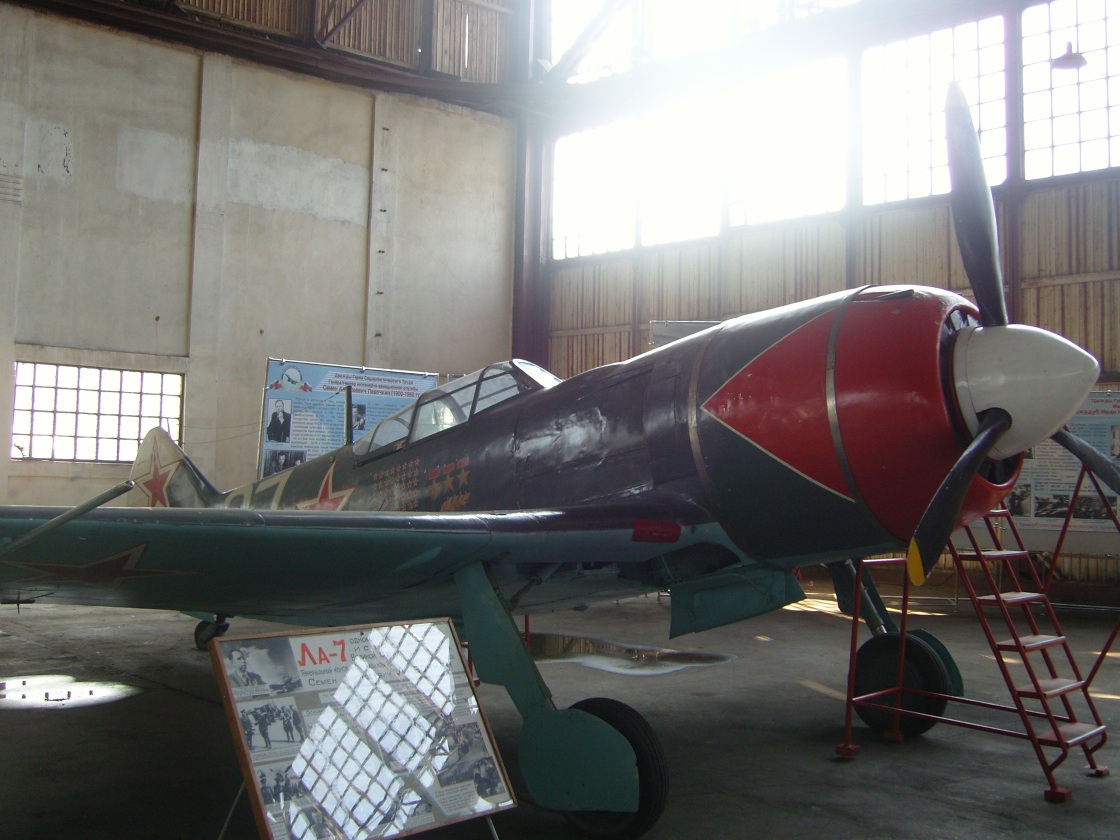
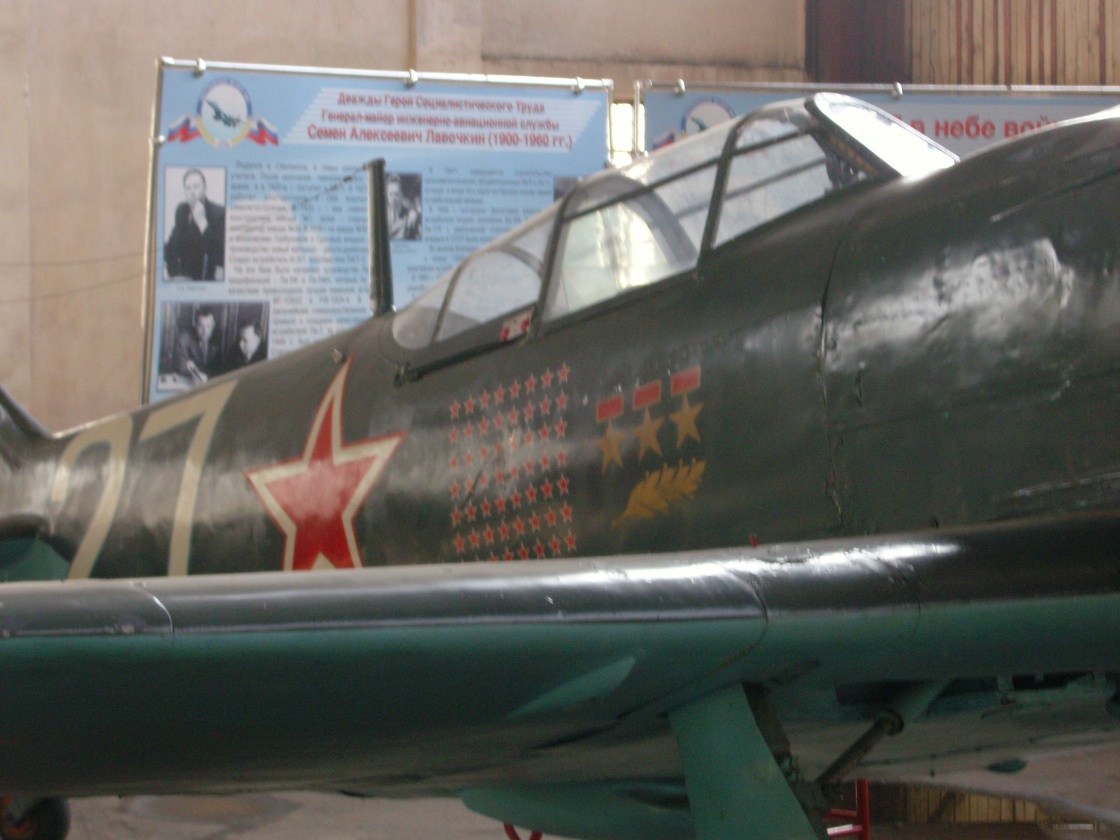
The Lavochkin La-7 was a Soviet fighter aircraft of World War II. It was a development and refinement of the Lavochkin La-5, and the last in a family of aircraft that had begun with the LaGG-1 in 1938.
This model was honored three times of the Heroes of USSR’s medal.
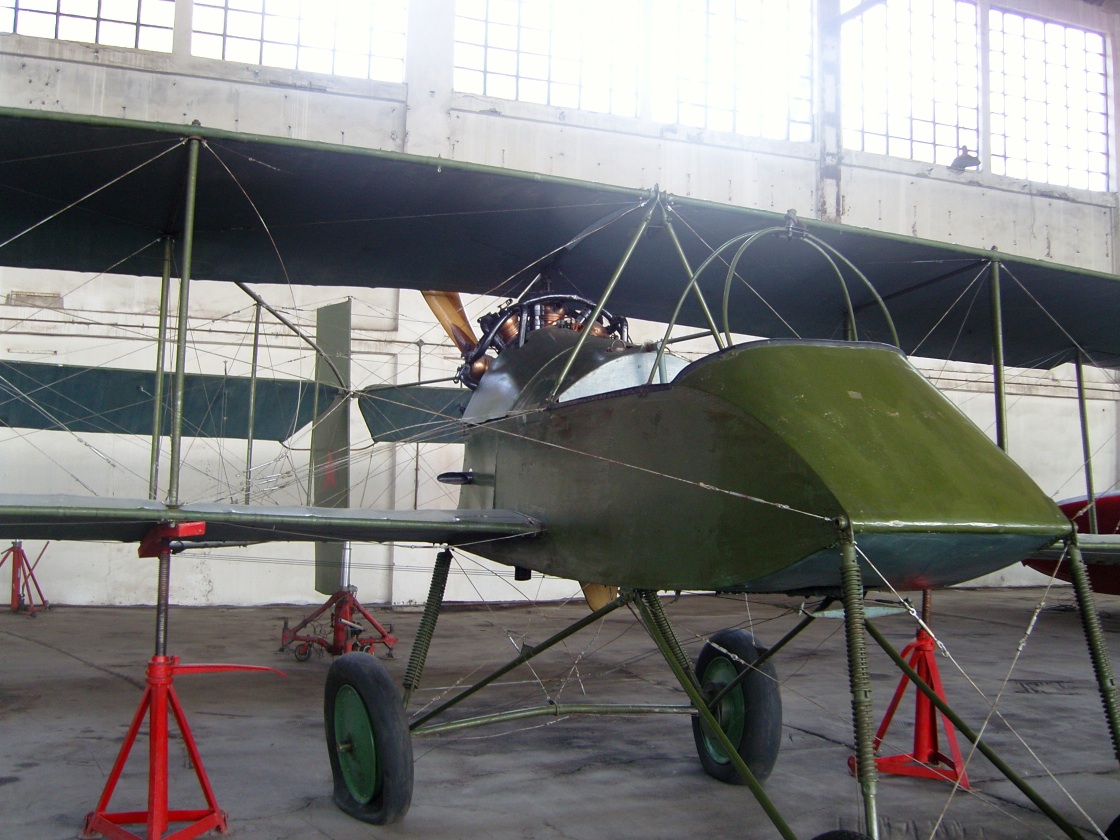
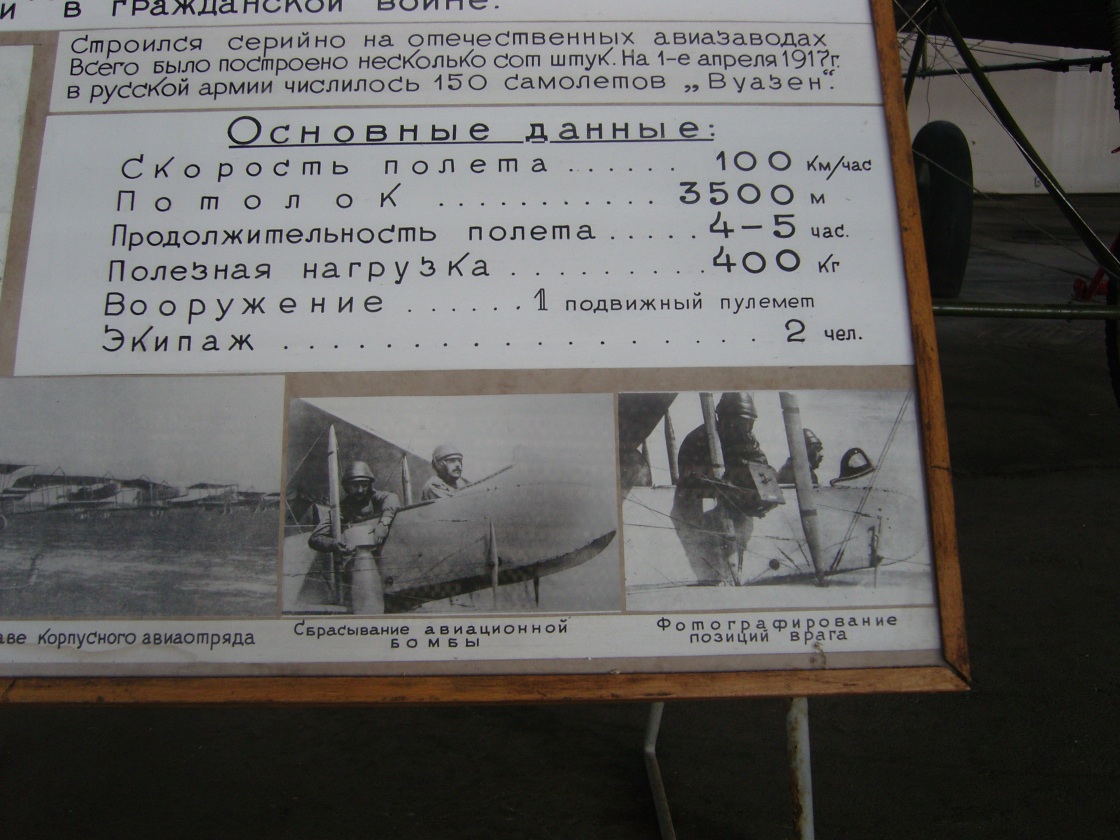
This plane was used during the first world war and during the civil war as a bomber and spy plane. We can see on the board the different ways of usage.
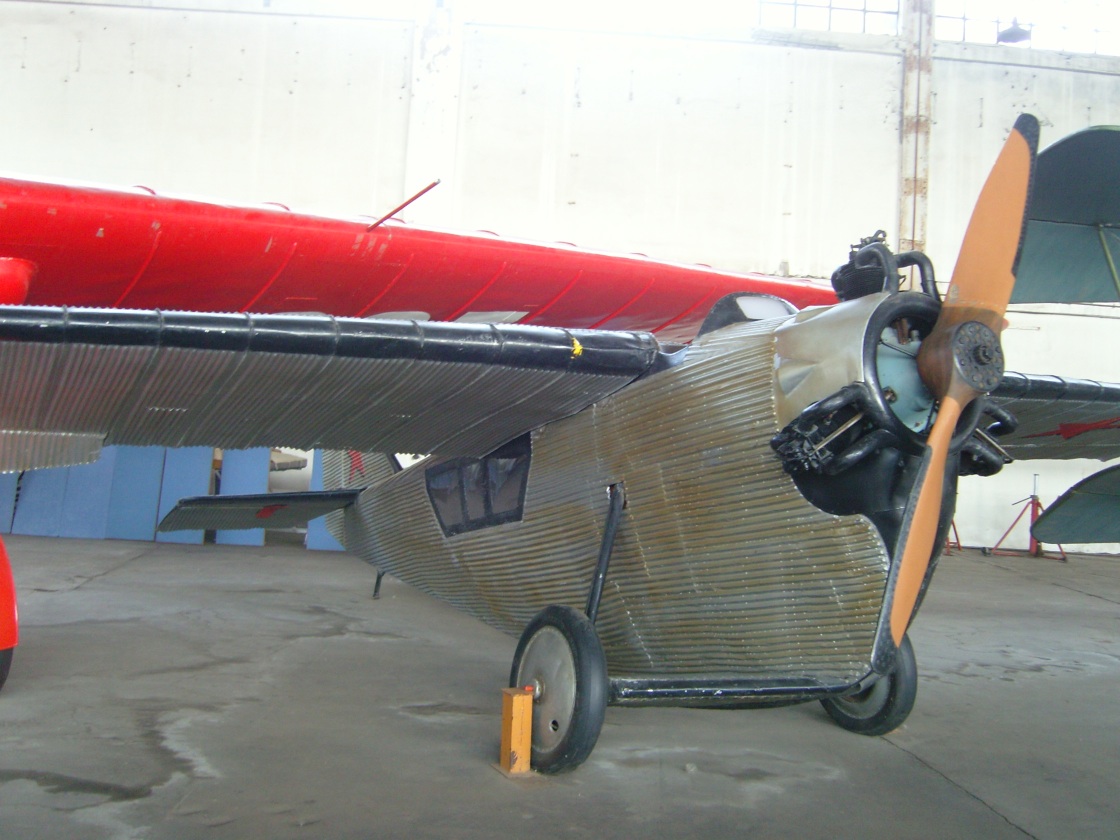
First plane with metalic fuselage.
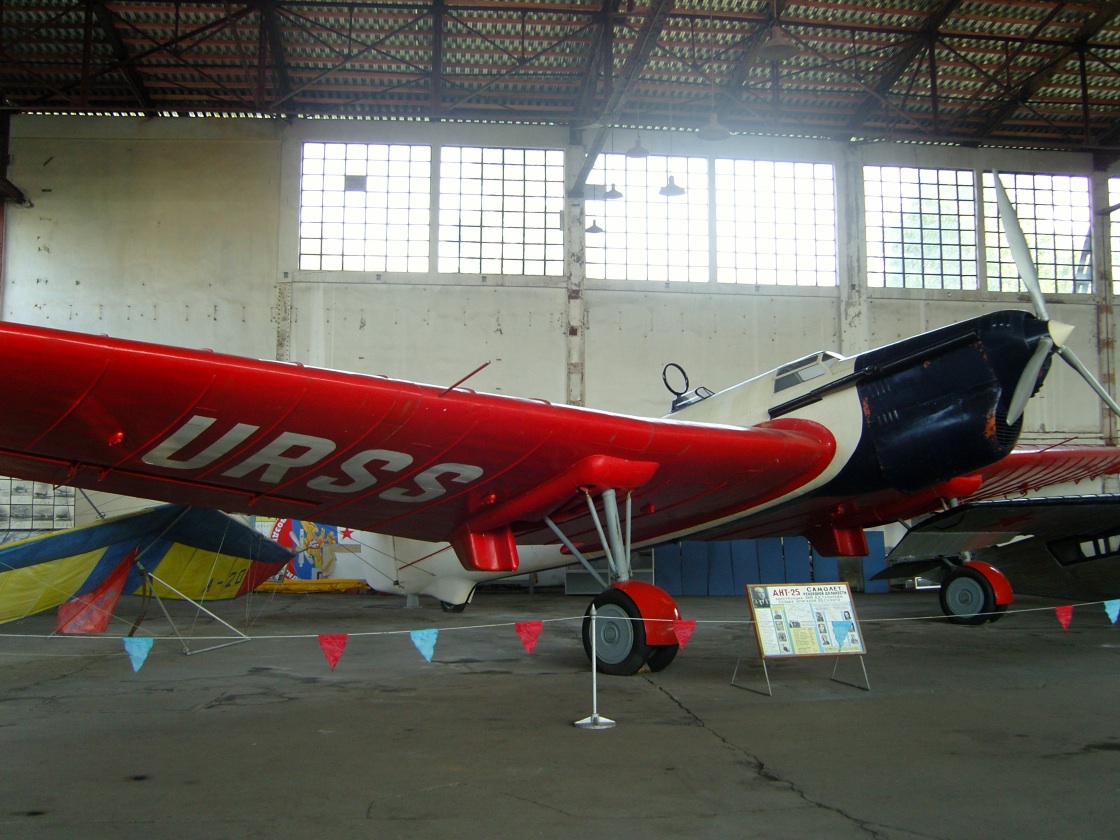
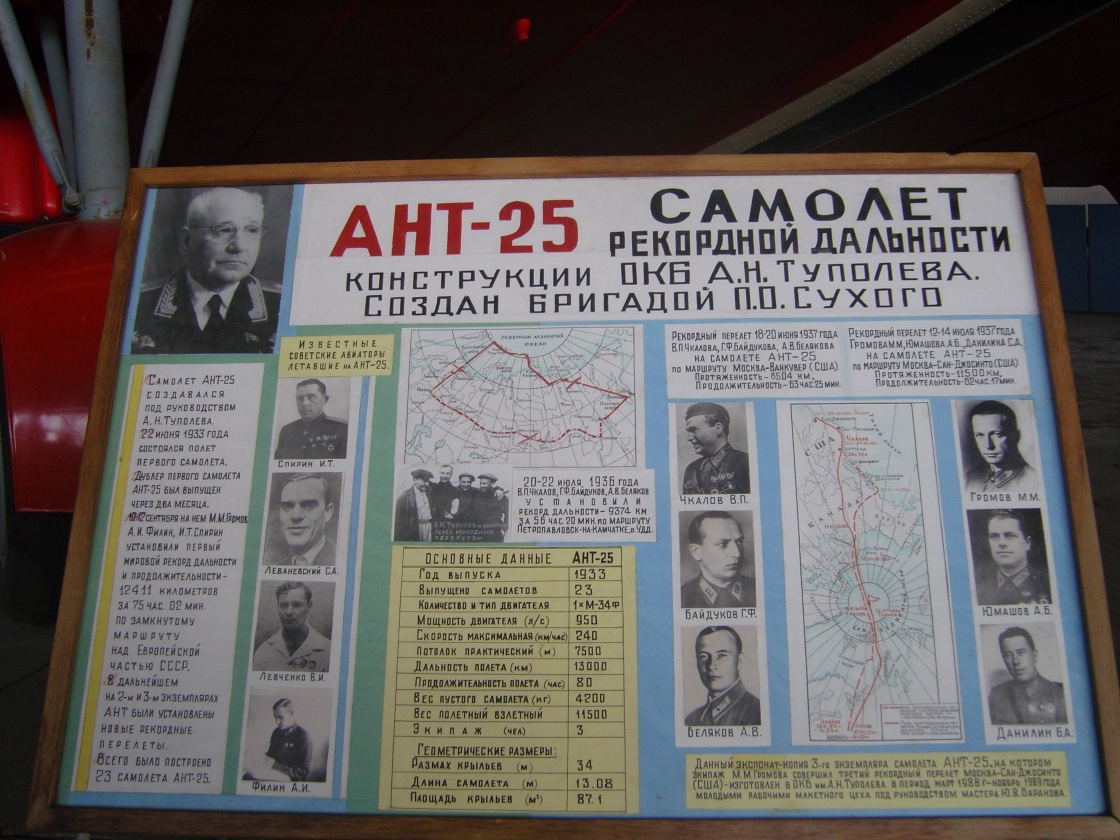
Tupolev ANT-25 was a Soviet long-range experimental bomber aircraft constructed in 1933.
The aircraft was designed by Pavel Sukhoi and made its maiden flight on 22 June 1933. The ANT-25 gained fame after its non-stop flight from Moscow to Portland, United States on 18-20 June, 1937. The 9,130 km trip took 63 hours and 25 minutes. Airplane had been piloted by Valery Chkalov (co-pilot – Georgiy Baidukov, navigator A. Belyakov) during this flight. Another long-range, and widely publicized feat, was the Moscow-San Jacinto non-stop trip, flown on 12-14 July, 1937. This trip was 11,500 km long, and took 62 hours and 17 minutes to complete.
The wings are wide because they shelter the tanks.
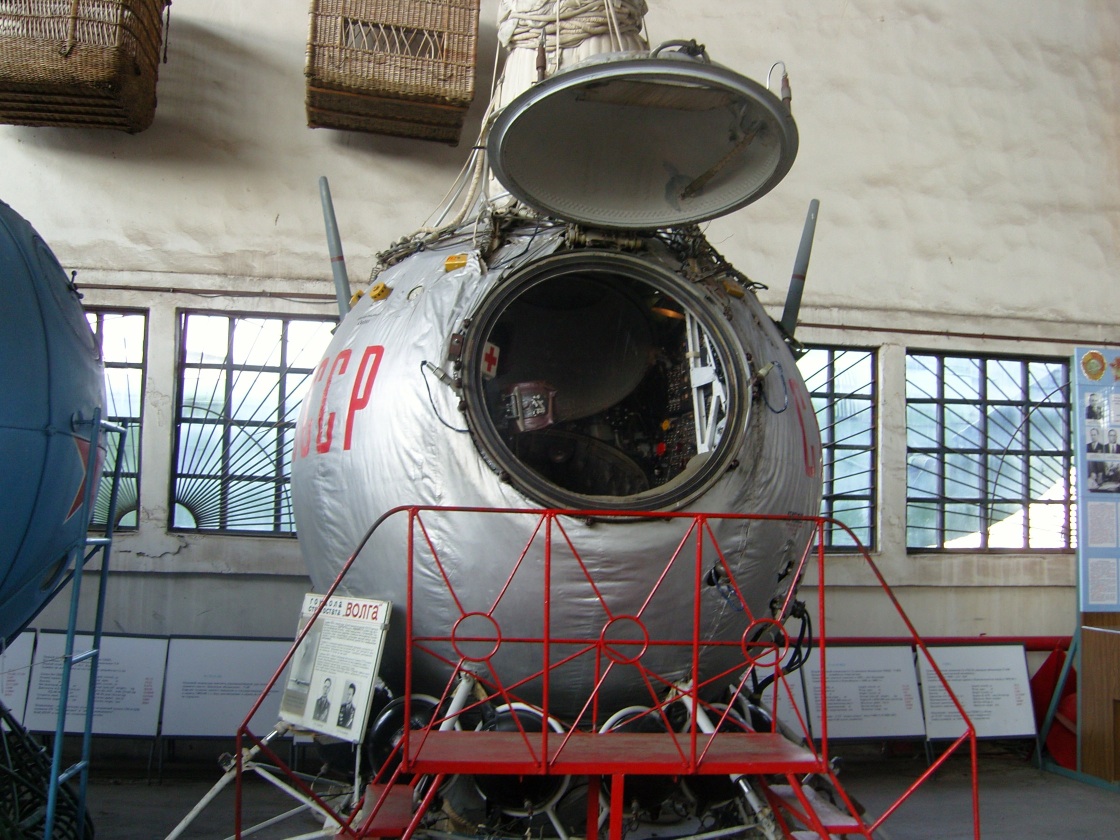
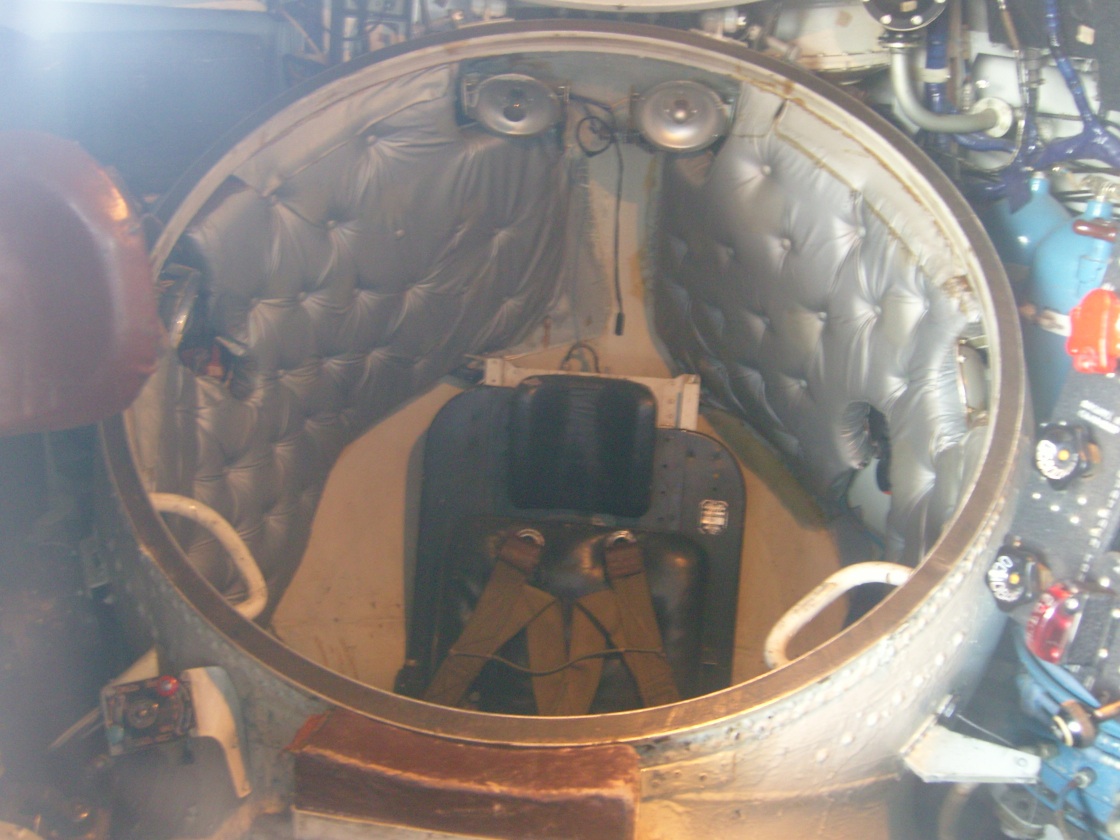
Stratospheric Volga balloon.
This balloon bring two people on November 1, 1962, Major Yevgenny Andreyev and Colonel Piotr Dolgov. The first jumped at 24 460m high to test an ejector seat system (without explosive) of the Vostok capsule. Piotr Dolgov should have test a space suit (Sokol), he jumped at 28 640m but broke his visor, the suit depressurised and he died.
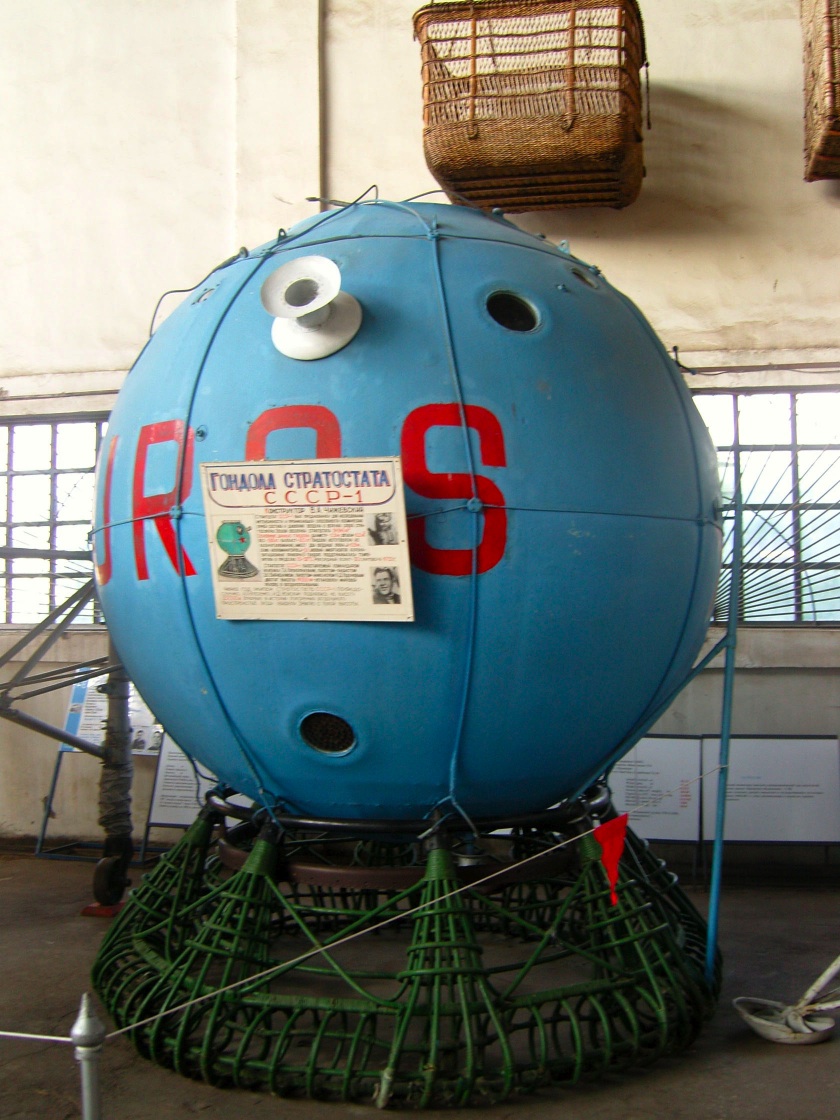
Another stratospheric balloon URSS-1.
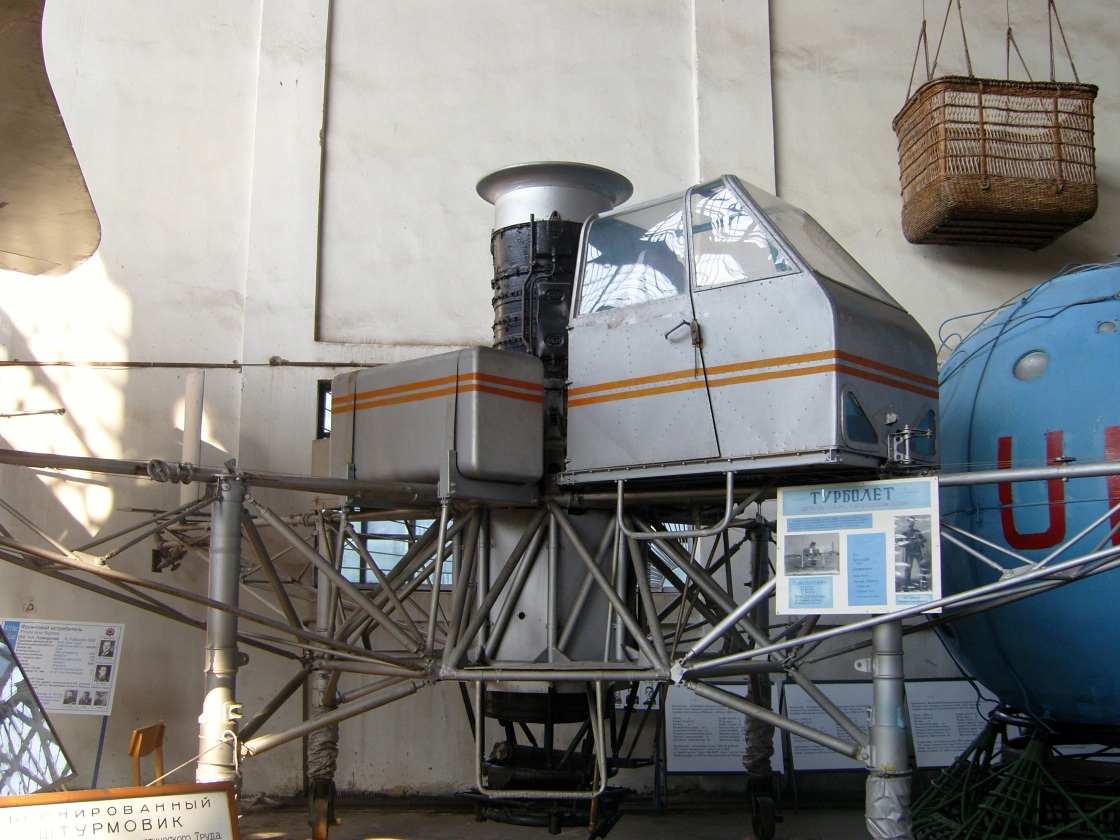
Prototype of turobjet “chopper”.
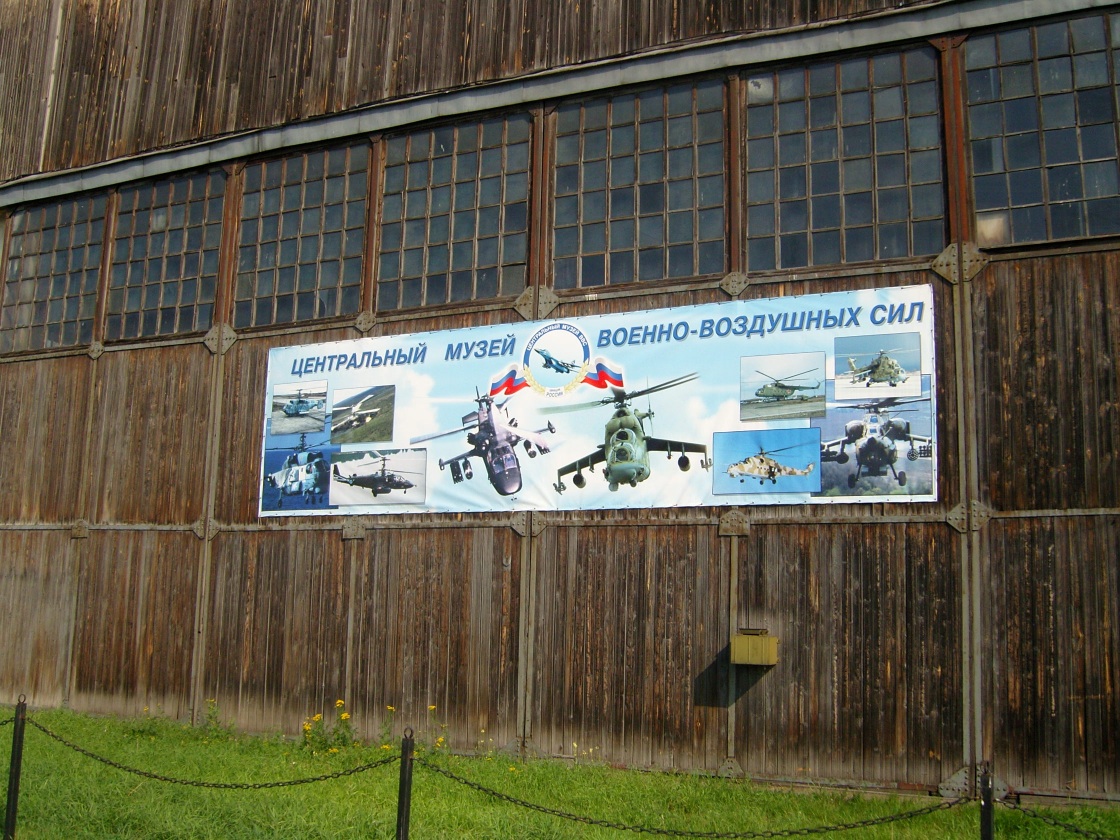
Outside the building are the choppers:
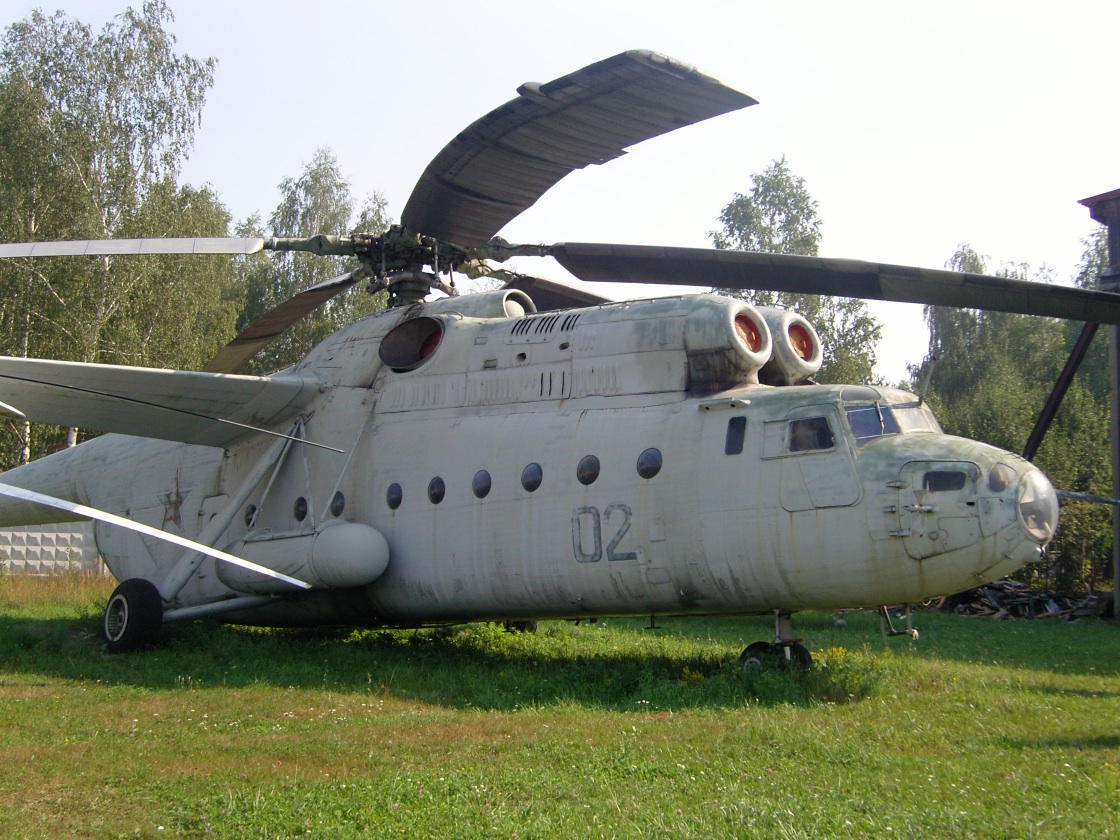
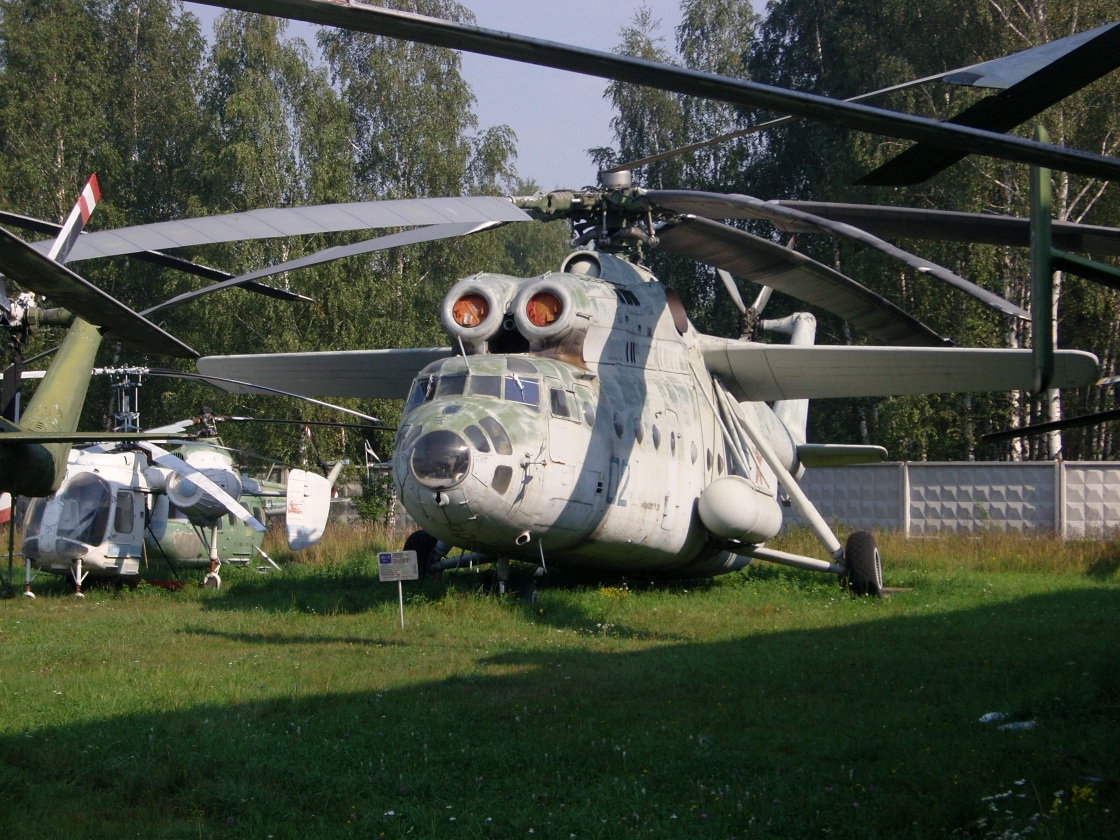
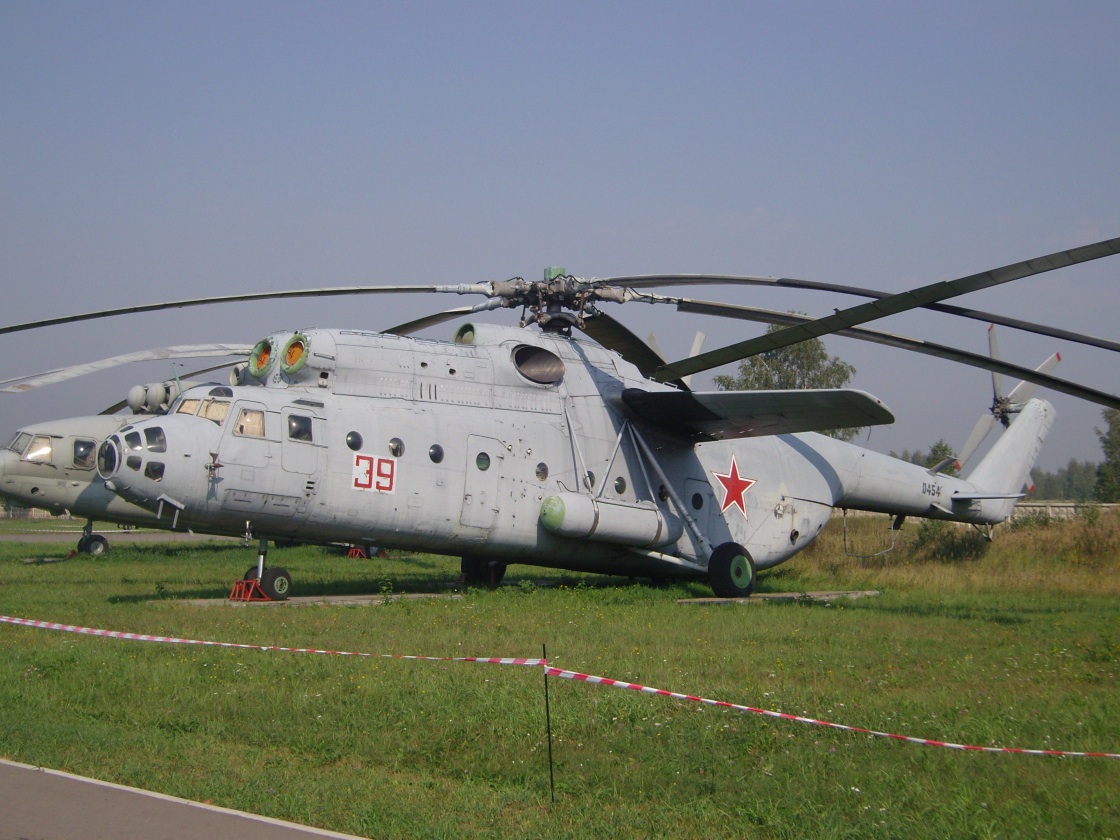
The Mil Mi-6 was a Soviet/Russian heavy transport helicopter designed by the Mil design bureau and built in large numbers for both military and civil roles.
The Mil Mi-24 is a large helicopter gunship and low-capacity troop transport produced by Mil Moscow Helicopter Plant and operated from 1972 by the Soviet Air Force, its successors, and over thirty other nations.
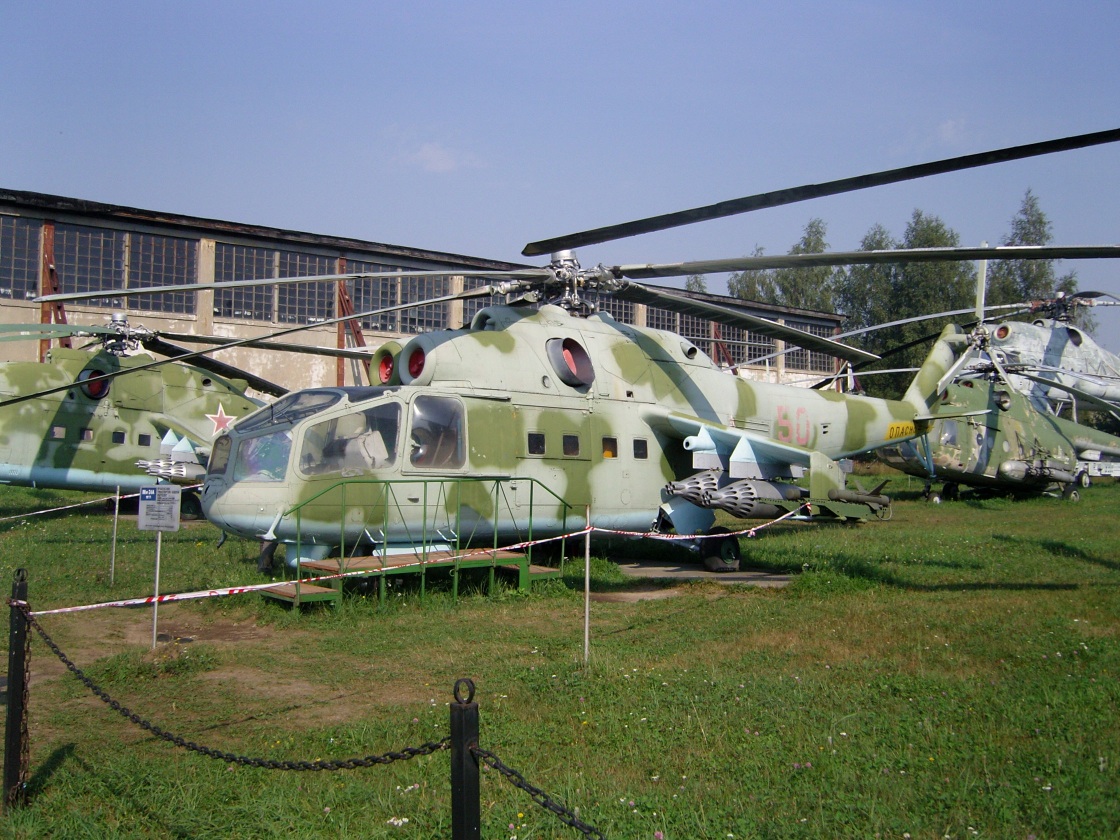
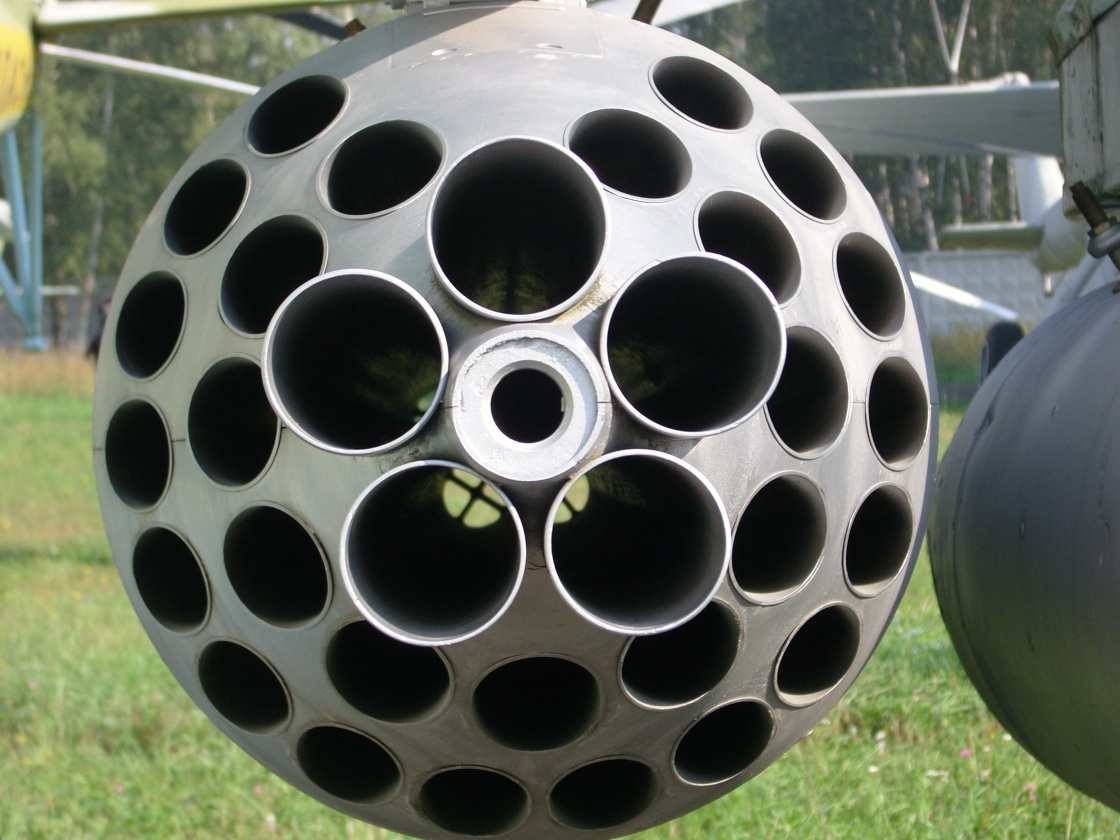
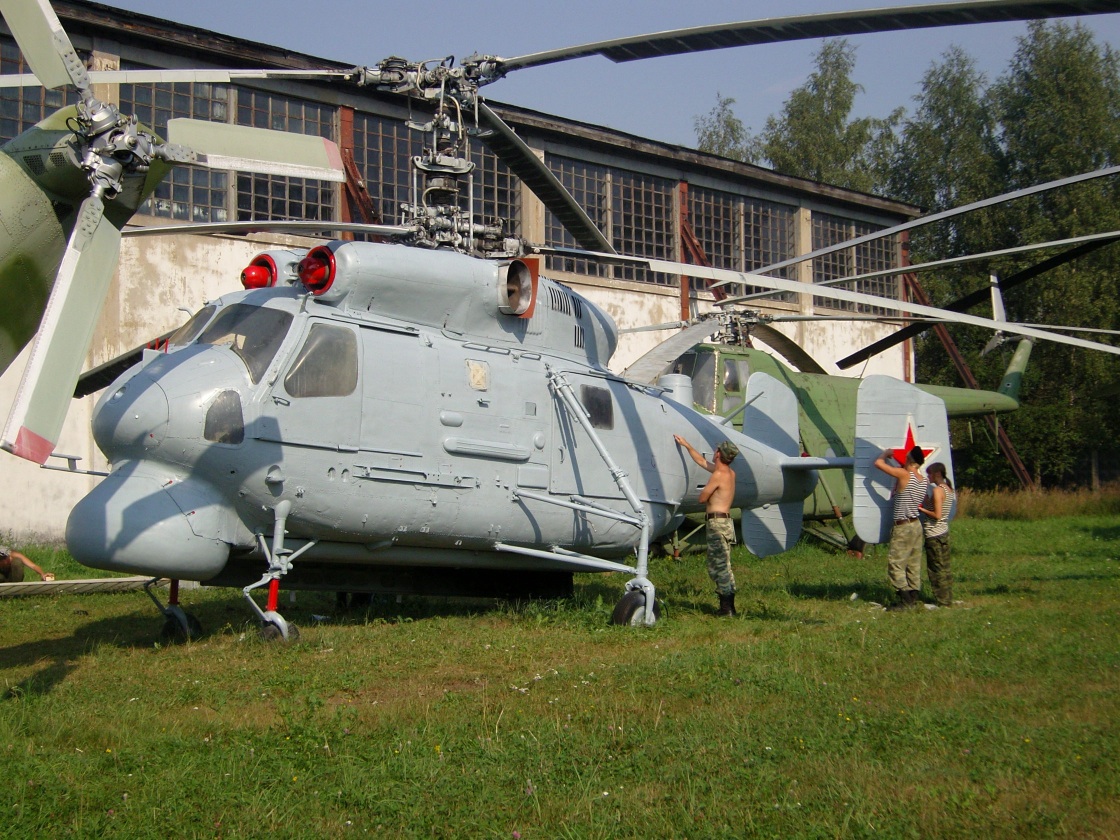
The Kamov Ka-25 is a Russian naval helicopter, designed by Nikolai Il’yich Kamov or V.A. Glushenkov. Ka-25 first flew in 1961.
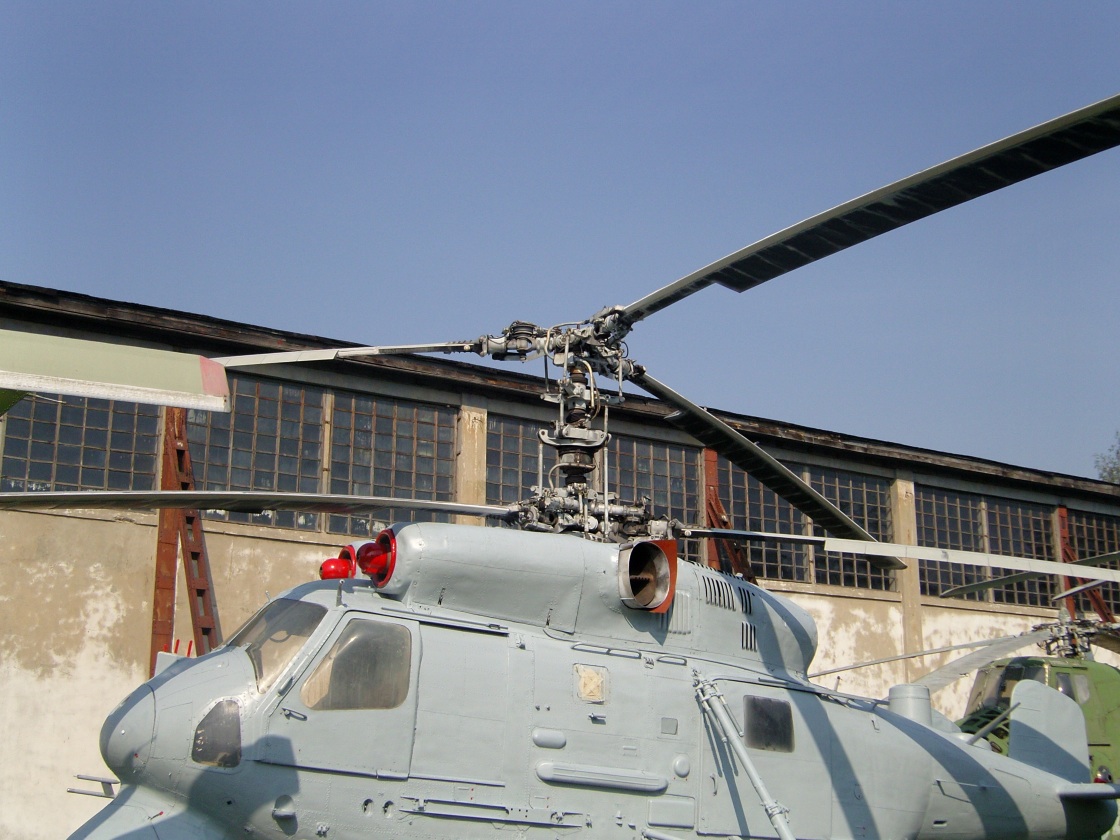
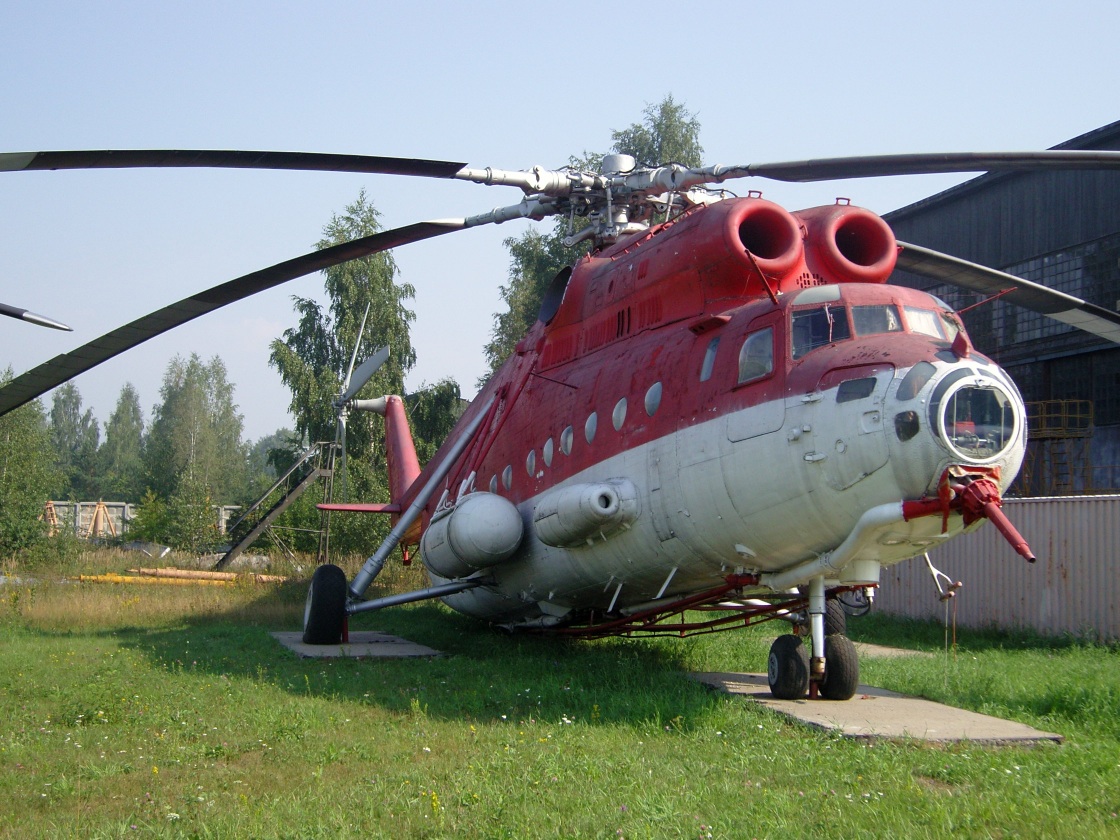
Transport chopper. The load is placed on the plateform under the fuselage. The oblong tube under the cockpit is the elevator for the crew.
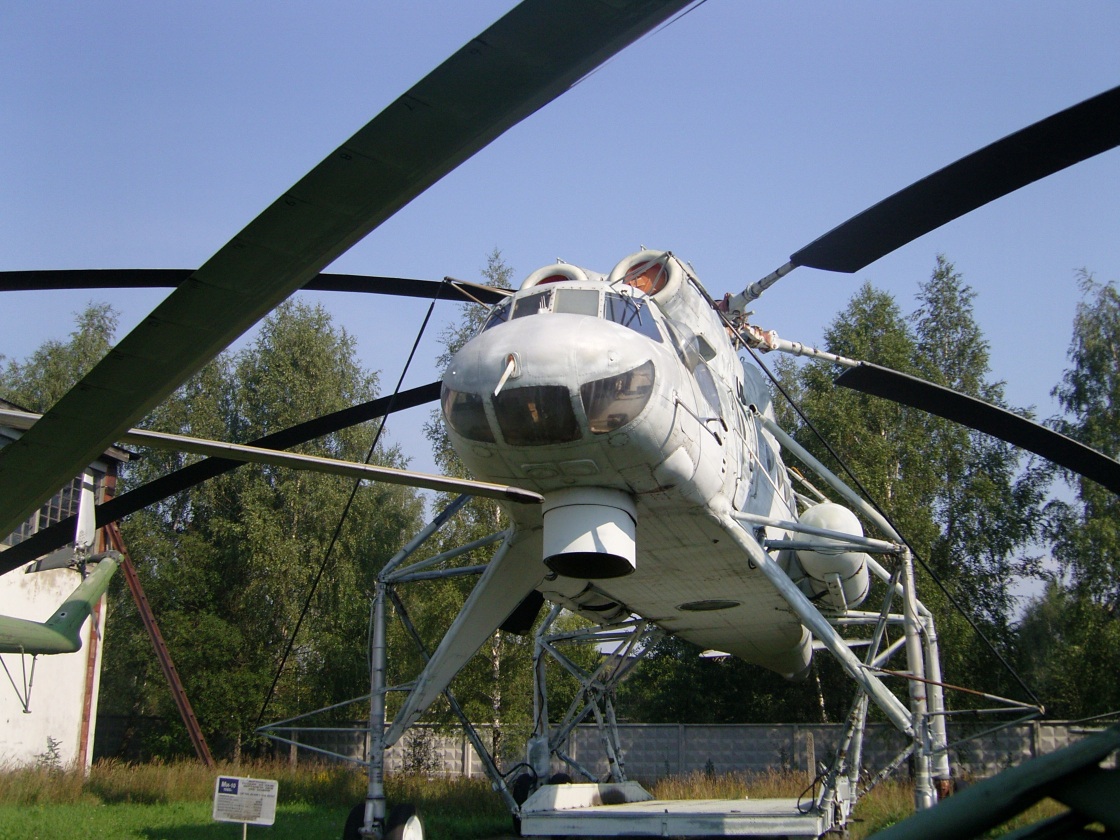
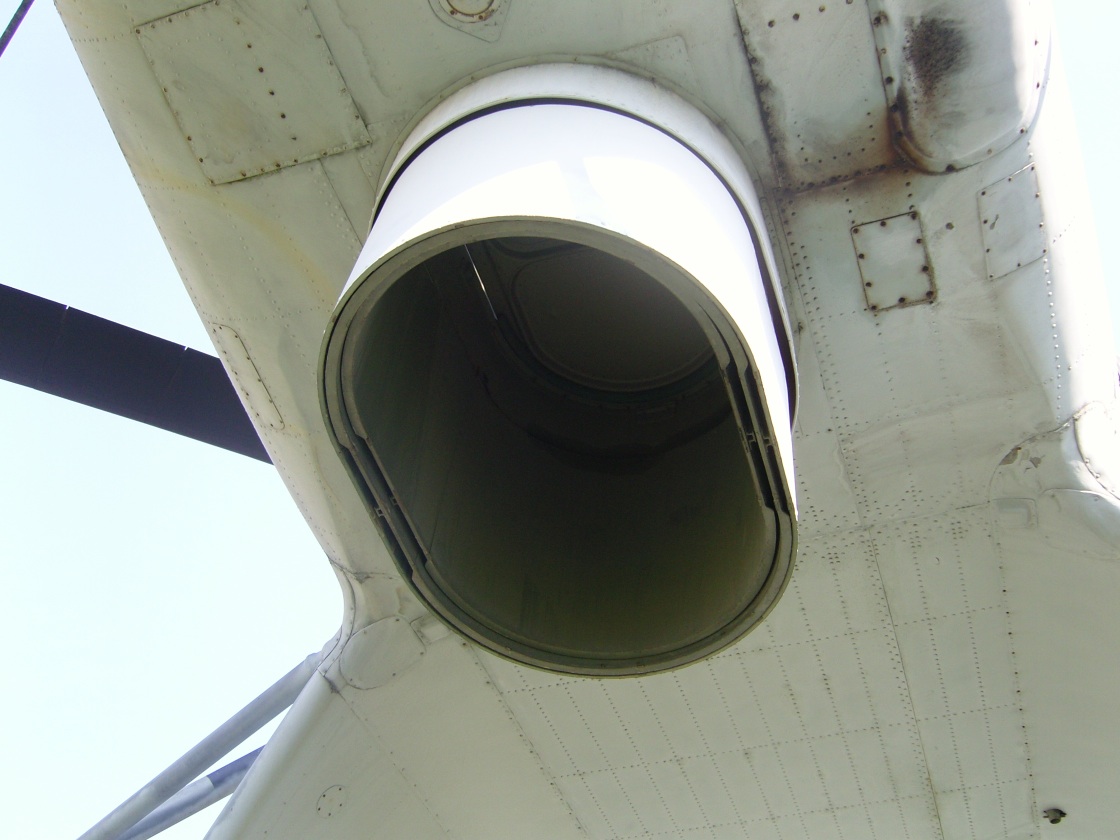
Civil version, firechopper (Mi-26T), of the Mi-26.
Planes:
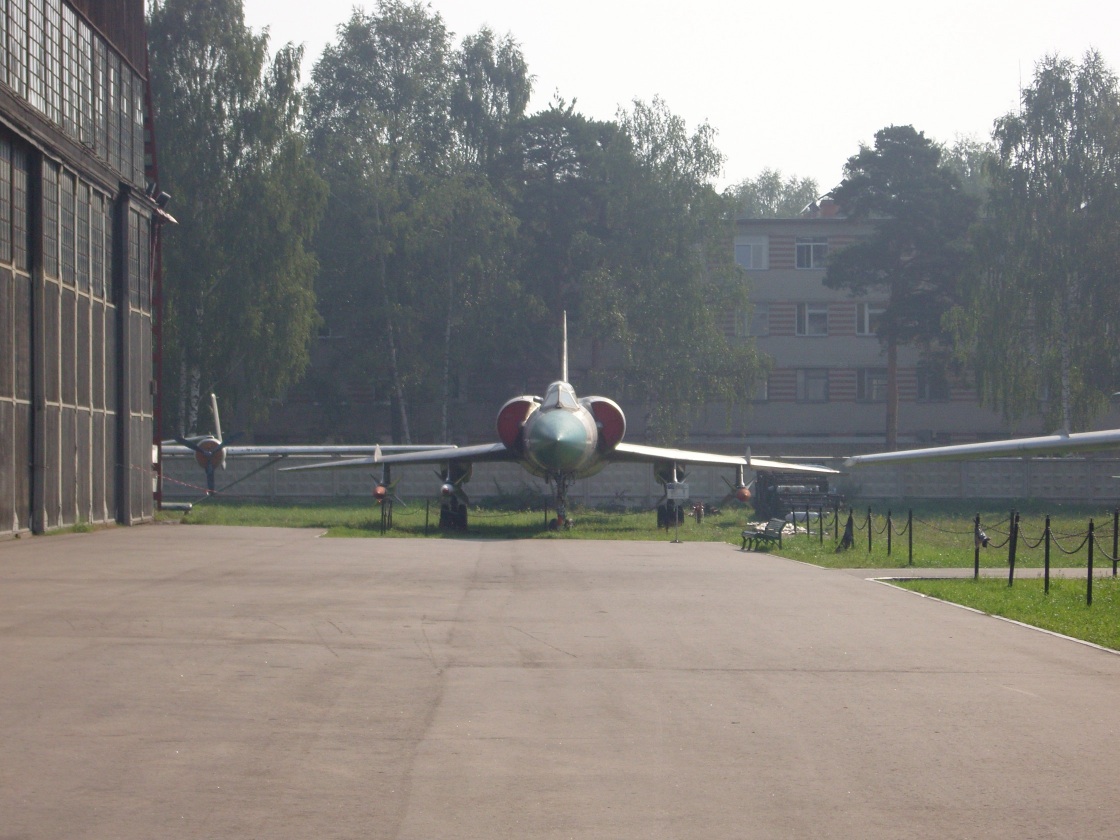
The Tupolev Tu-128 was a long-range interceptor aircraft developed by the Soviet Union in the 1960s. It remains the world’s largest production fighter aircraft.
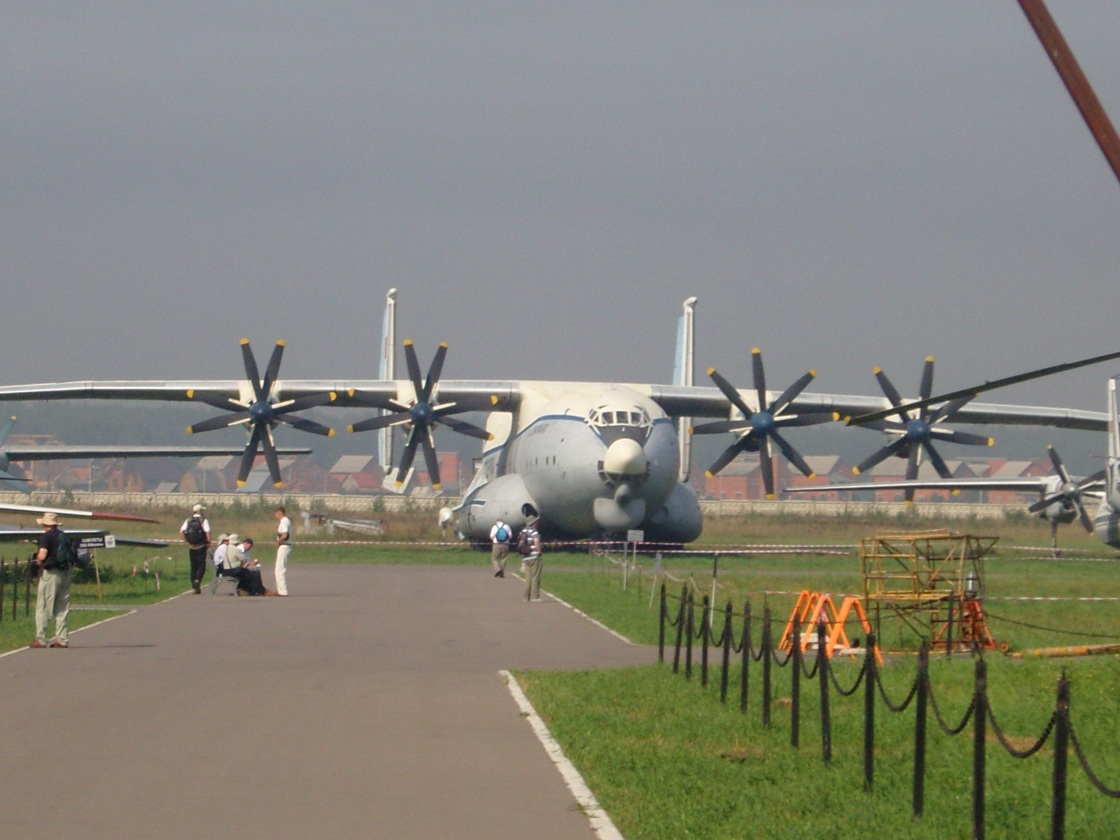
Antonov An-22 was the world’s largest aircraft, until the advent of American C-5 Galaxy and later the Soviet An-124. Powered by 4 contra-rotating turboprops, the design remains the world’s largest turboprop-powered aircraft. It first appeared outside the Soviet Union at the 1965 Paris Air Show.
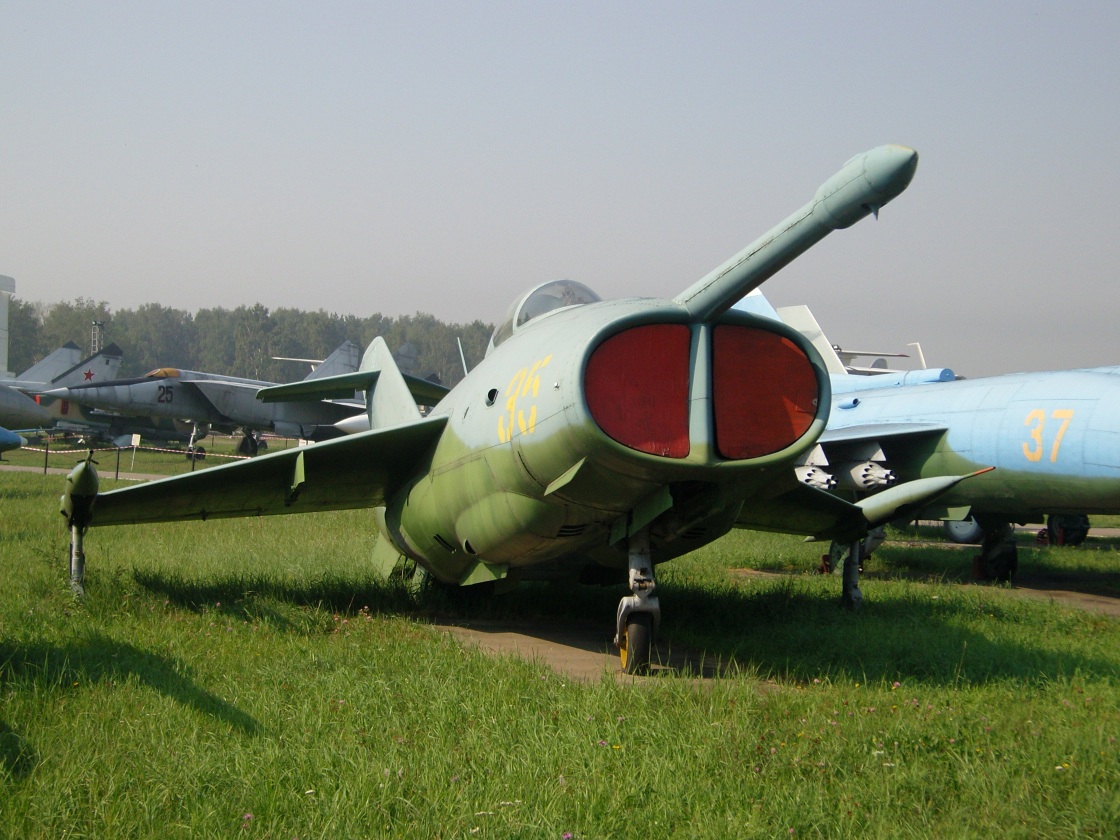
The Yakovlev Yak-36 was a Soviet technology demonstrator for a VTOL multi-role combat aircraft.
The plane had vectored thrust engines, similar to the Harrier. One engine was mounted forward of the cockpit, and one was below the cockpit. The exhaust exited through vectoring nozzles in the center of gravity which were vectorable through about 90º.
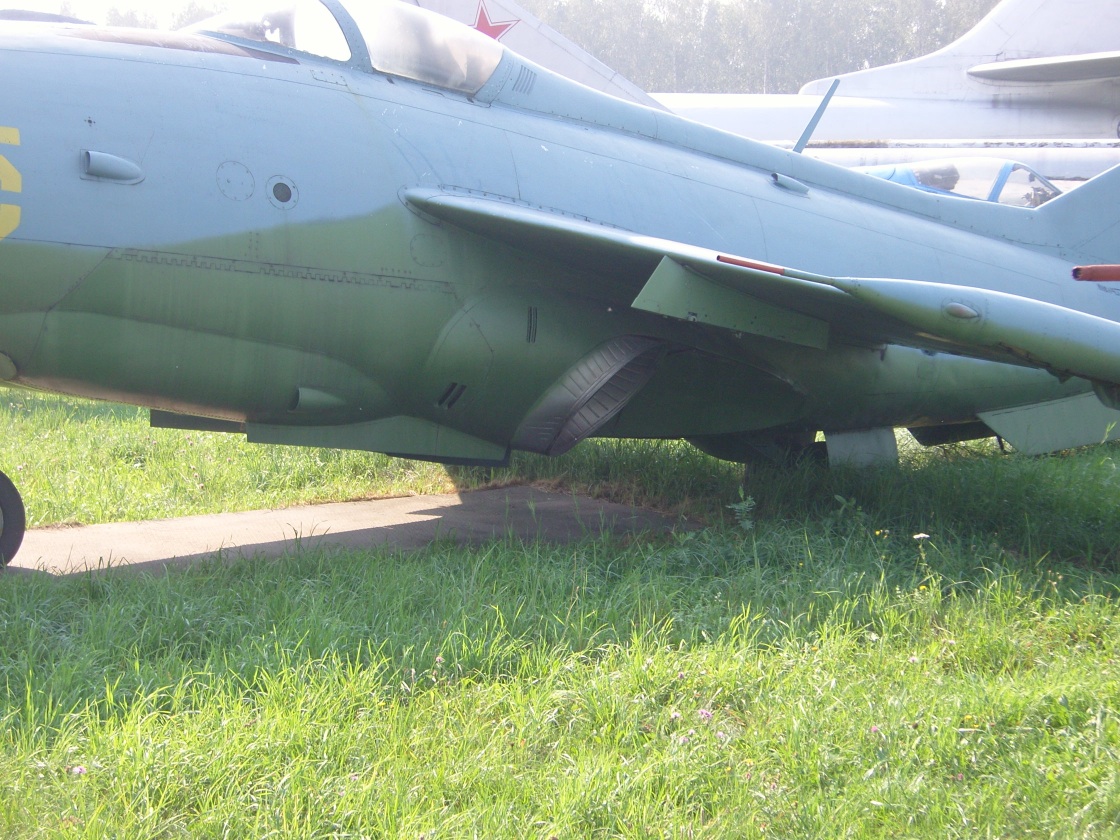
The Yakovlev Yak-38 was Soviet Naval Aviation’s first and only operational VTOL multi-role combat aircraft.
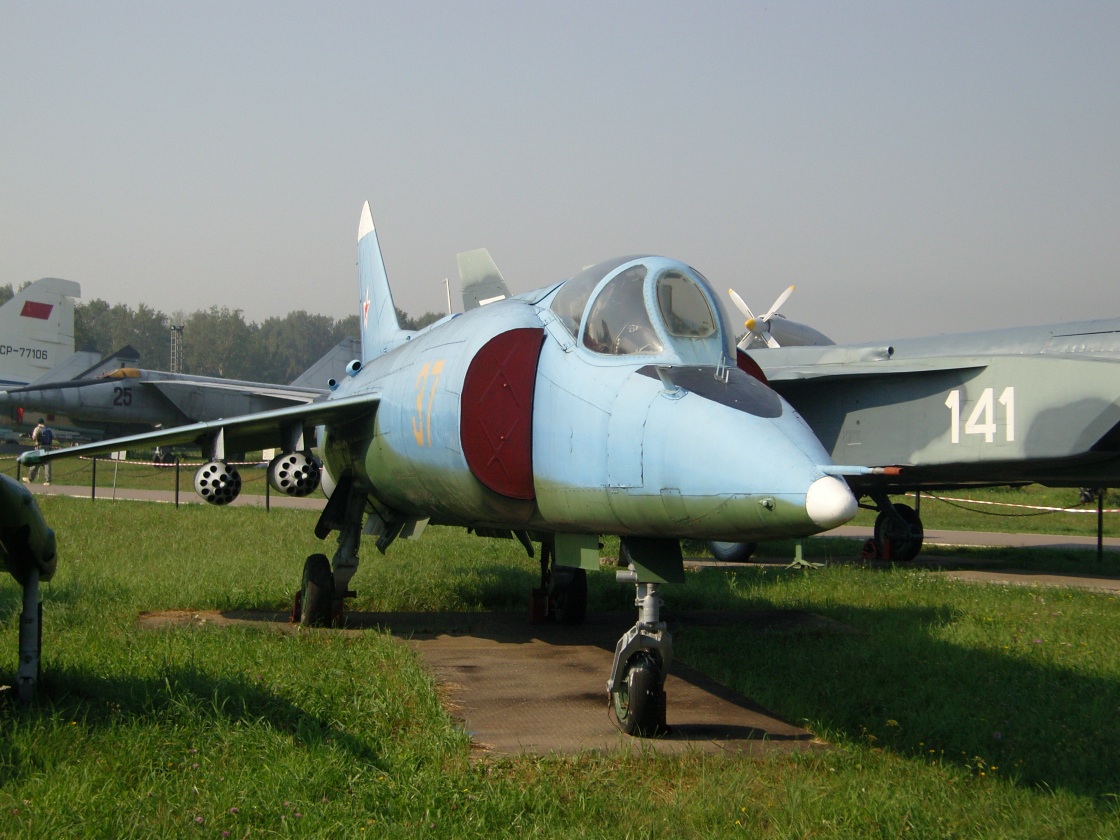
The Mikoyan-Gurevich MiG-15 (Russian: МикоÑн и Гуревич МиГ-15) was a jet fighter developed for the USSR by Artem Mikoyan and Mikhail Gurevich. The MiG-15 was one of the first successful swept-wing jet fighters, and it achieved fame in the skies over Korea, where early in the war, it outclassed all enemy fighters. The MiG-15 also served as the starting point for development of the more advanced MiG-17 which would oppose American fighters over Vietnam in the 1960s. The MiG-15 is believed to have been one of the most numerous jet aircraft ever made, with over 12,000 built. Licensed foreign production perhaps raised the total to over 18,000.
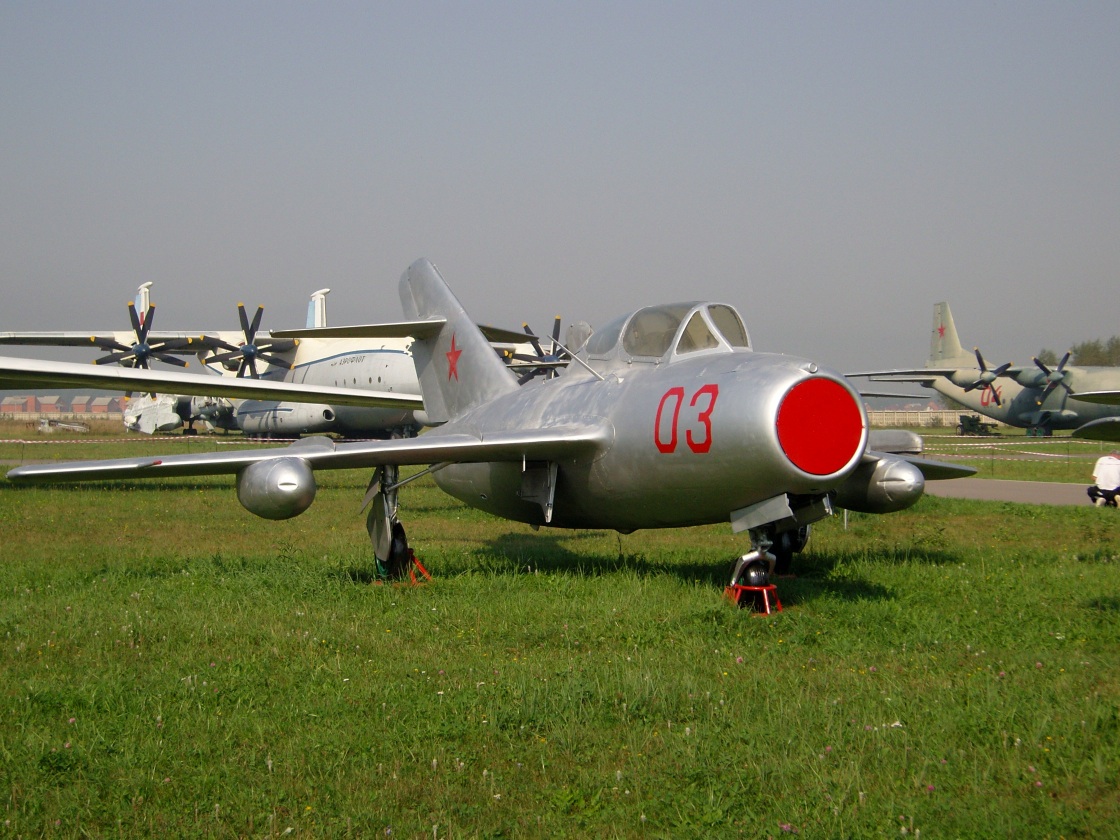
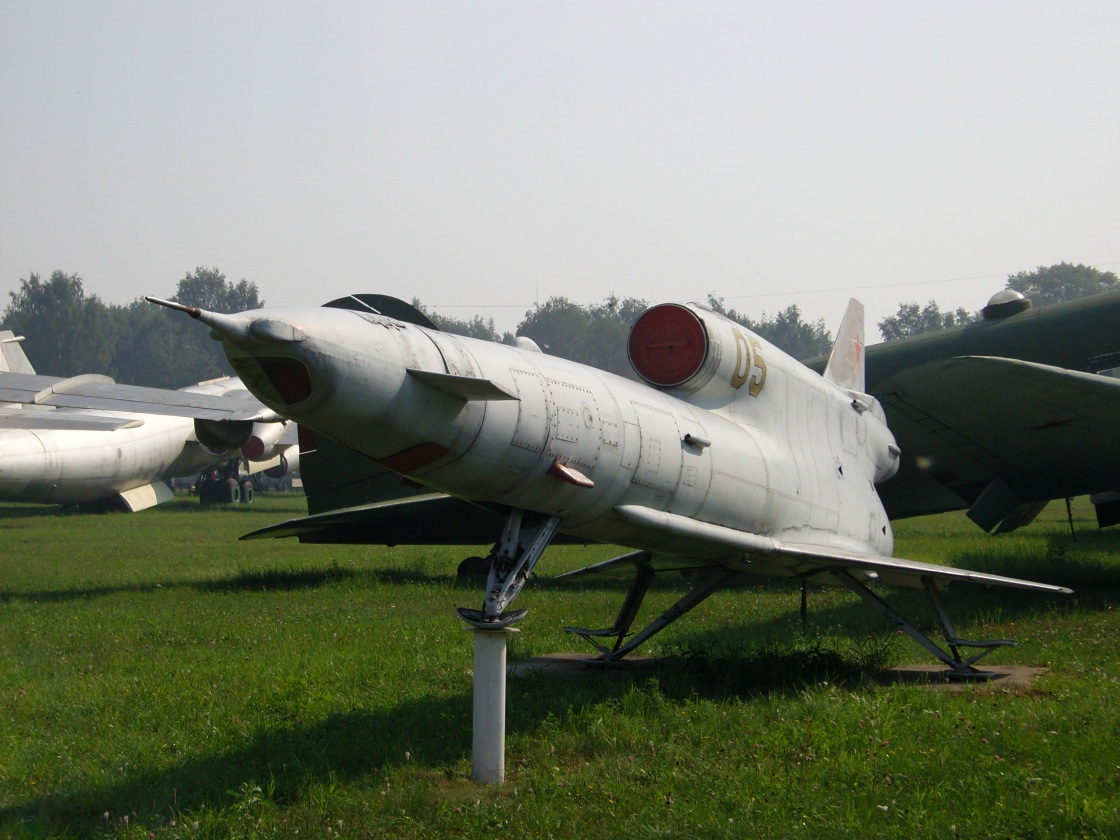
The EPOS plane or Lapot, was a space combat plane prototype. Developped during the 70s it should have been launch from a supersonic plane (SPIRAL project). The lack of funding and the end of the American DynaSoar plane stopped this ambitious project.
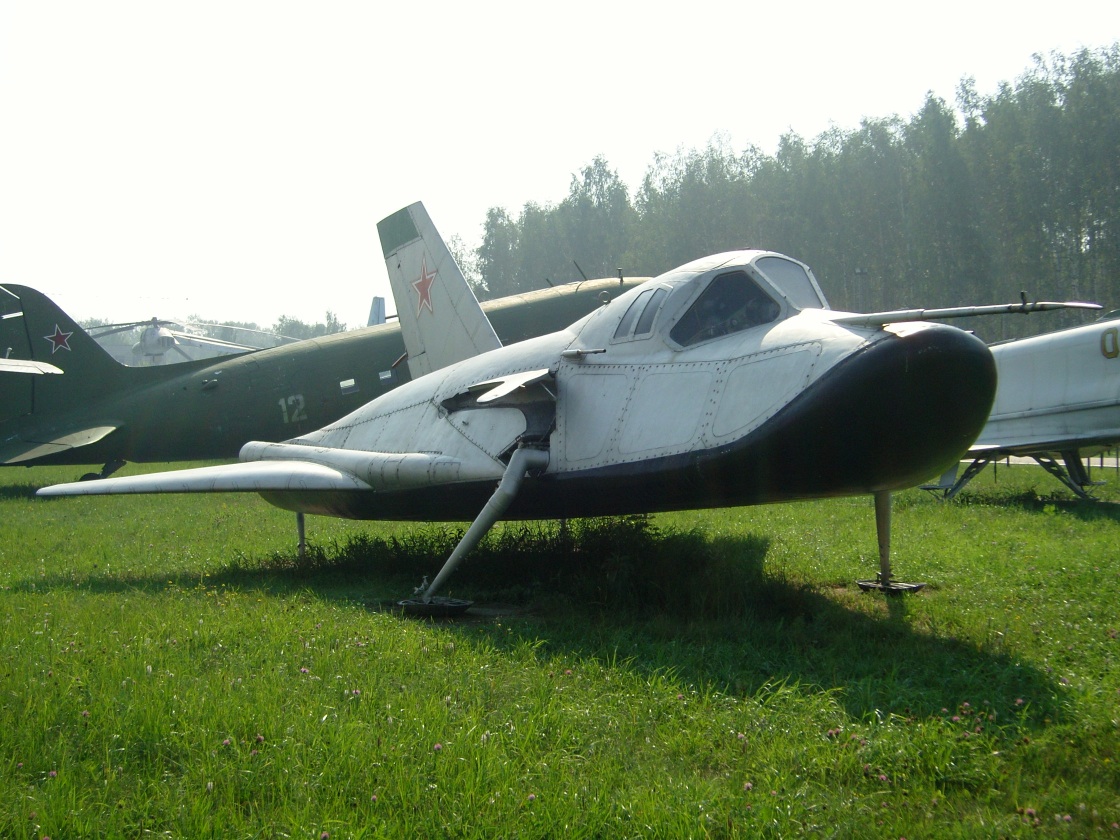
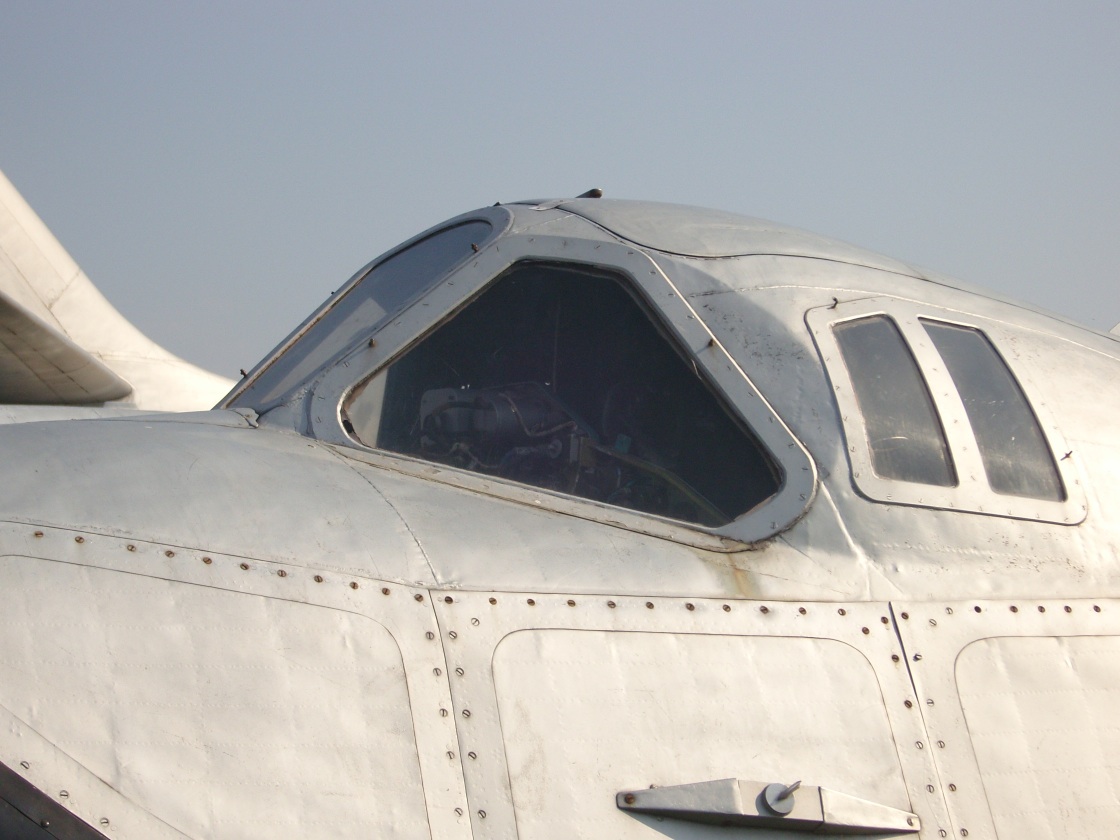
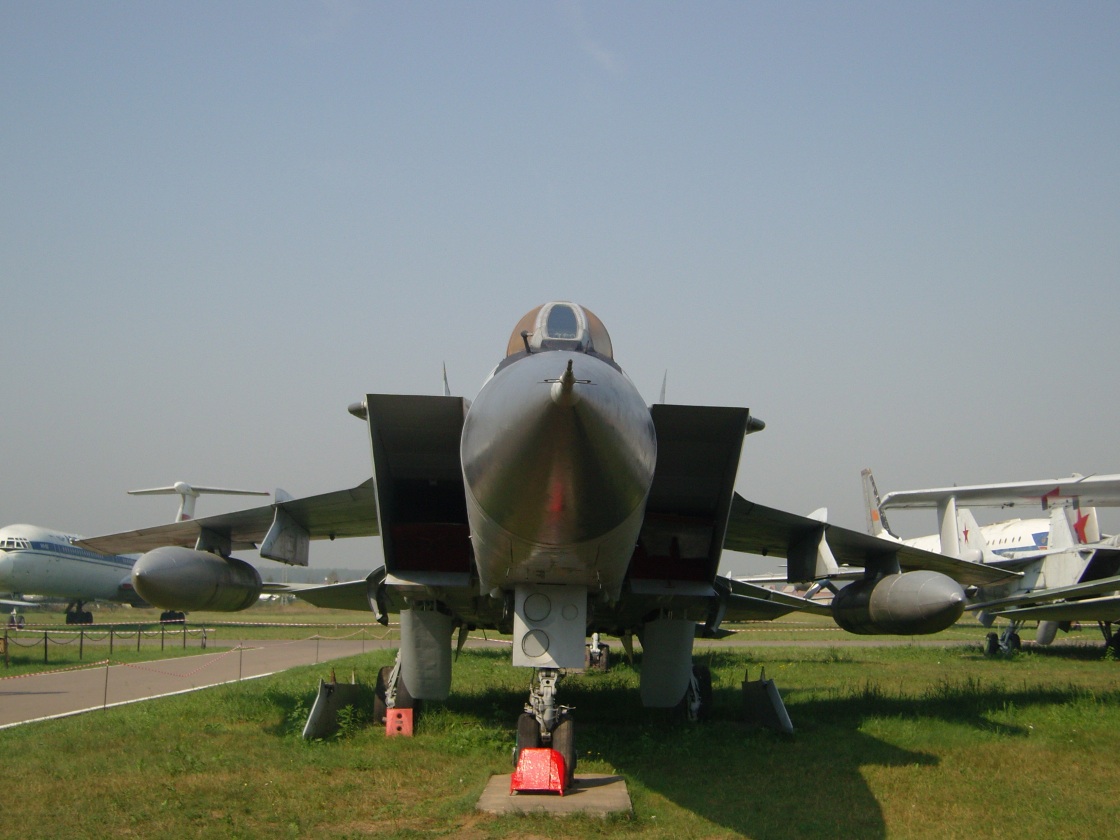
The Mikoyan MiG-31 (Russian: МиГ-31) is a supersonic interceptor aircraft developed to replace the MiG-25 ‘Foxbat’. Designed by the Mikoyan design bureau, the MiG-31 was the most advanced interceptor fielded by the Soviet Union before its dissolution.
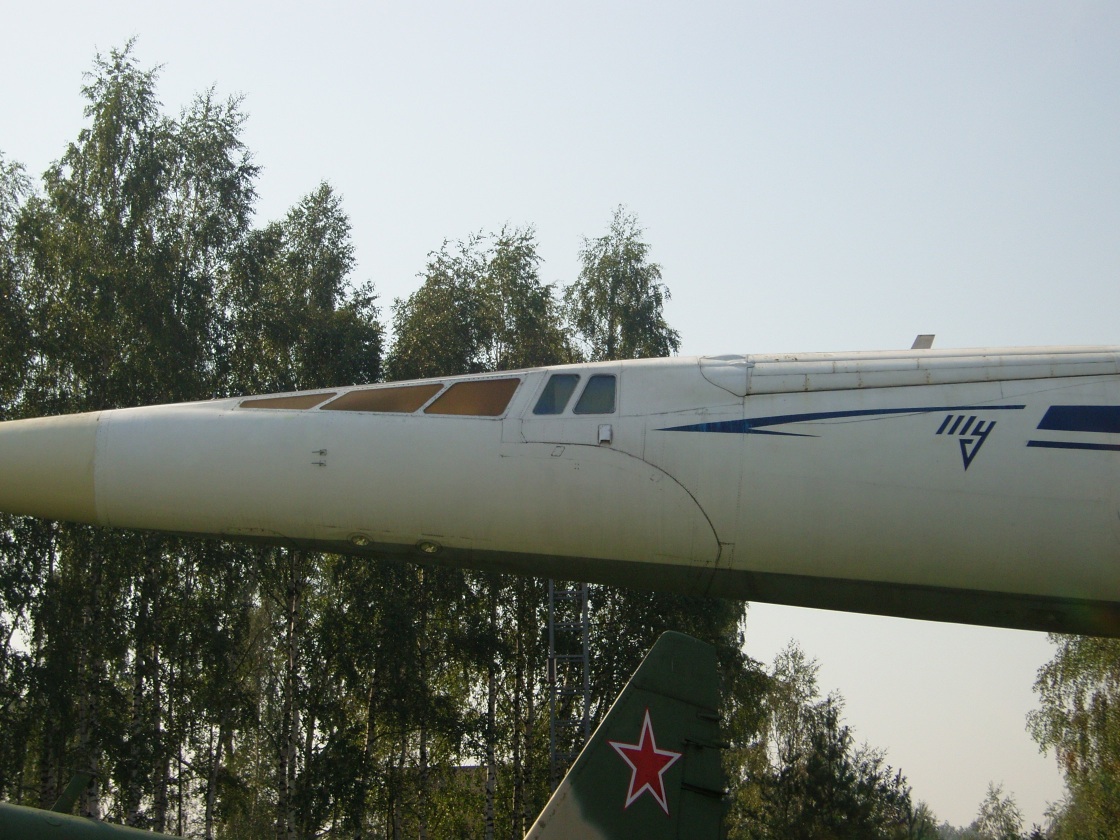
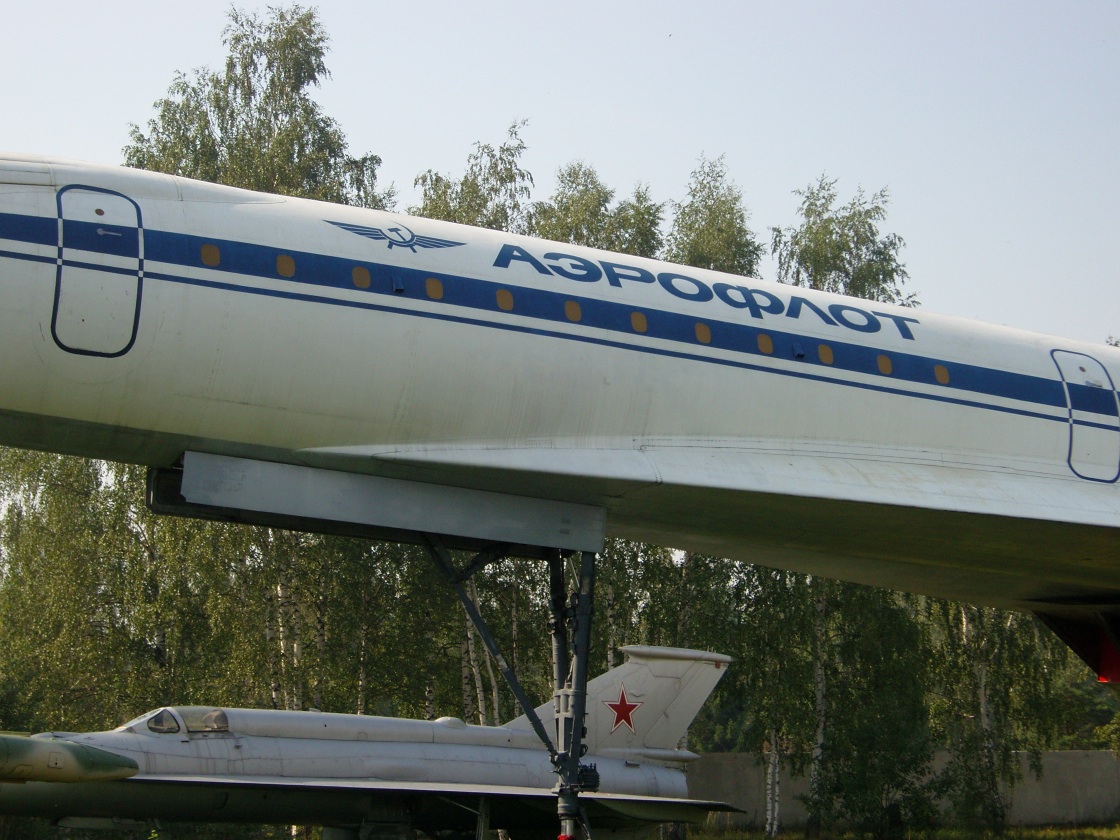
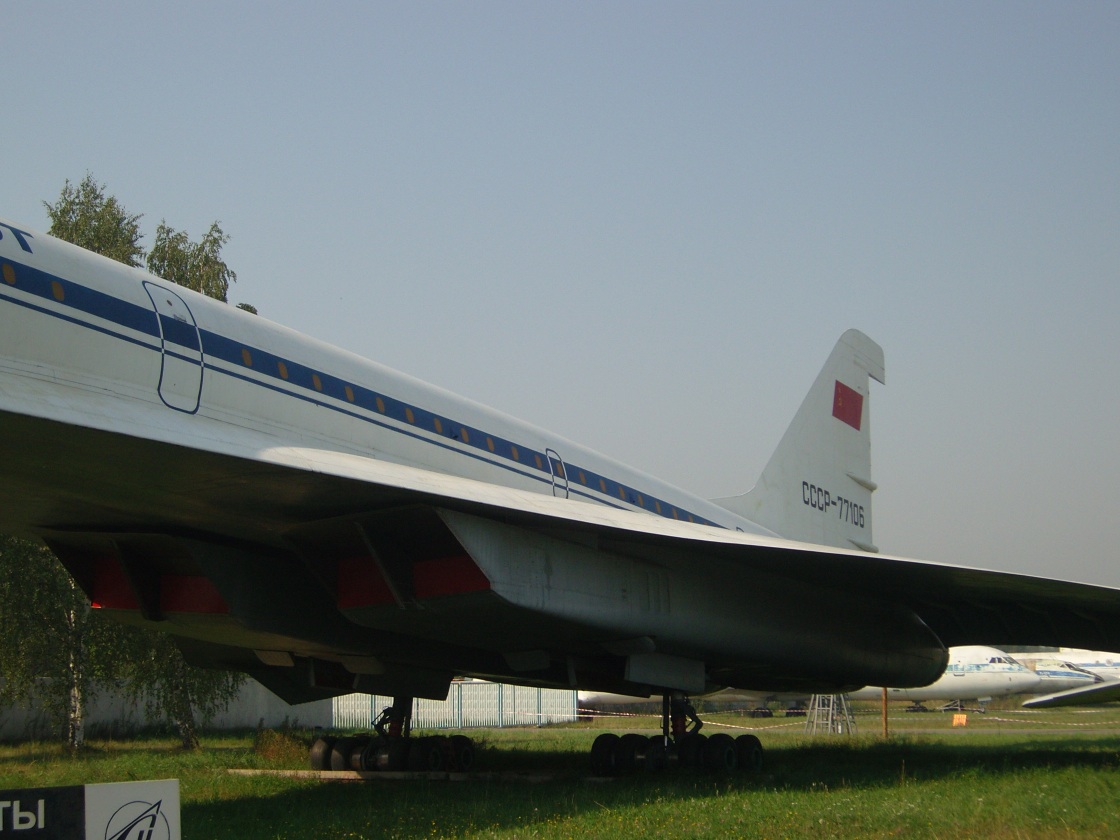
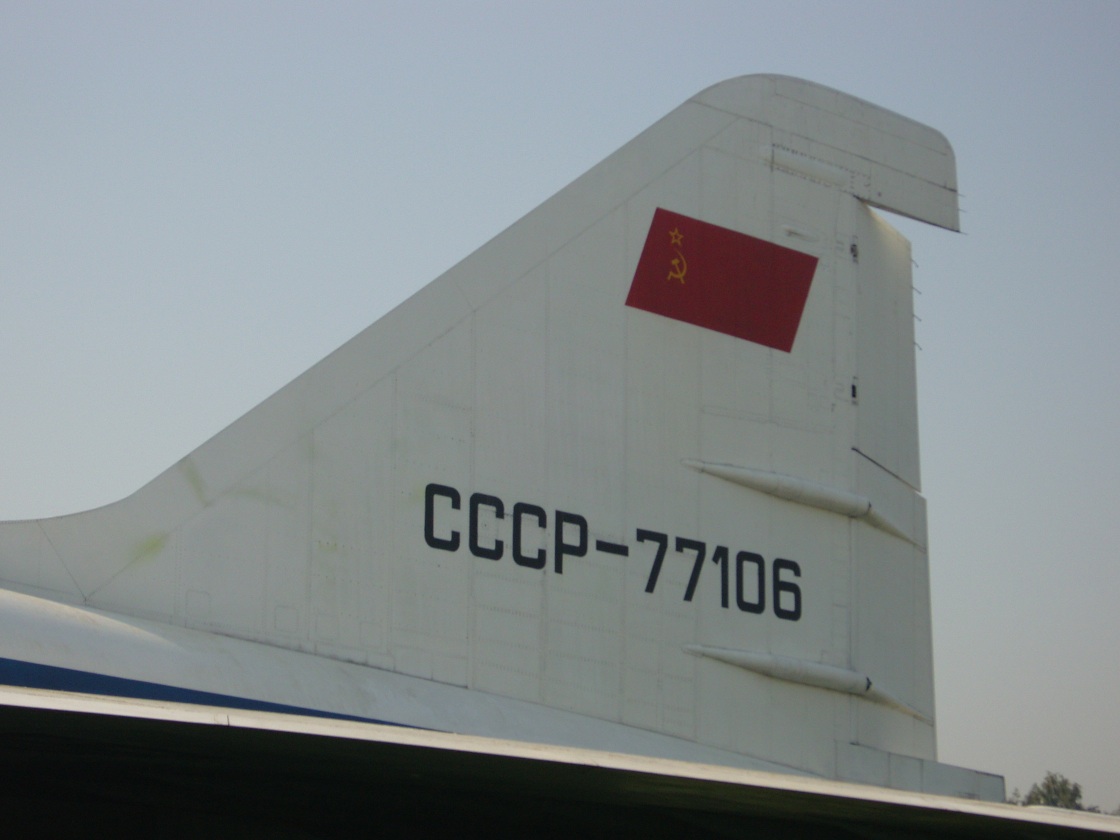
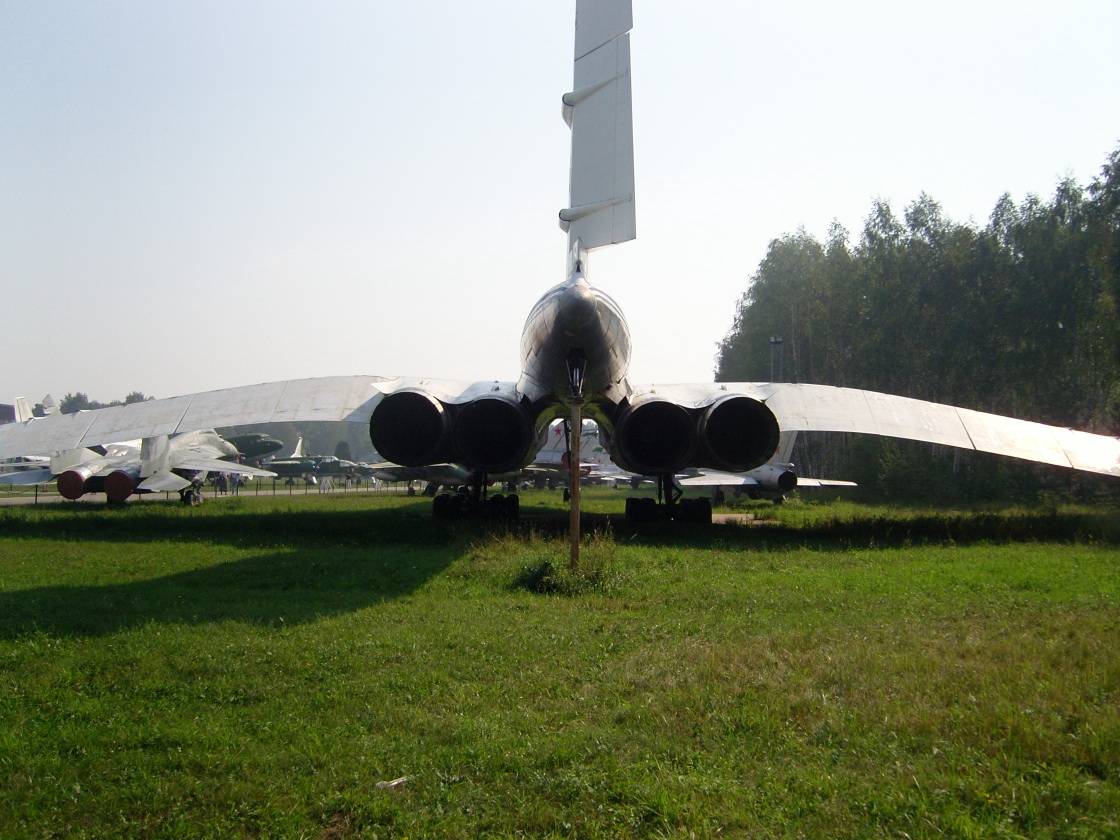
The Tupolev Tu-144 was the first supersonic transport aircraft (SST), constructed under the direction of the Soviet Tupolev design bureau headed by Alexei Tupolev.
Some western observers nicknamed the plane Concordski (sometimes Konkordski), as the Tu-144 was very similar to Concorde. A prototype first flew on 31 December 1968 near Moscow, two months before Concorde. The Tu-144 first broke the sound barrier on 5 June 1969, and on 15 July 1969 it became the first commercial transport to exceed Mach 2, and the fastest commercial airliner ever.
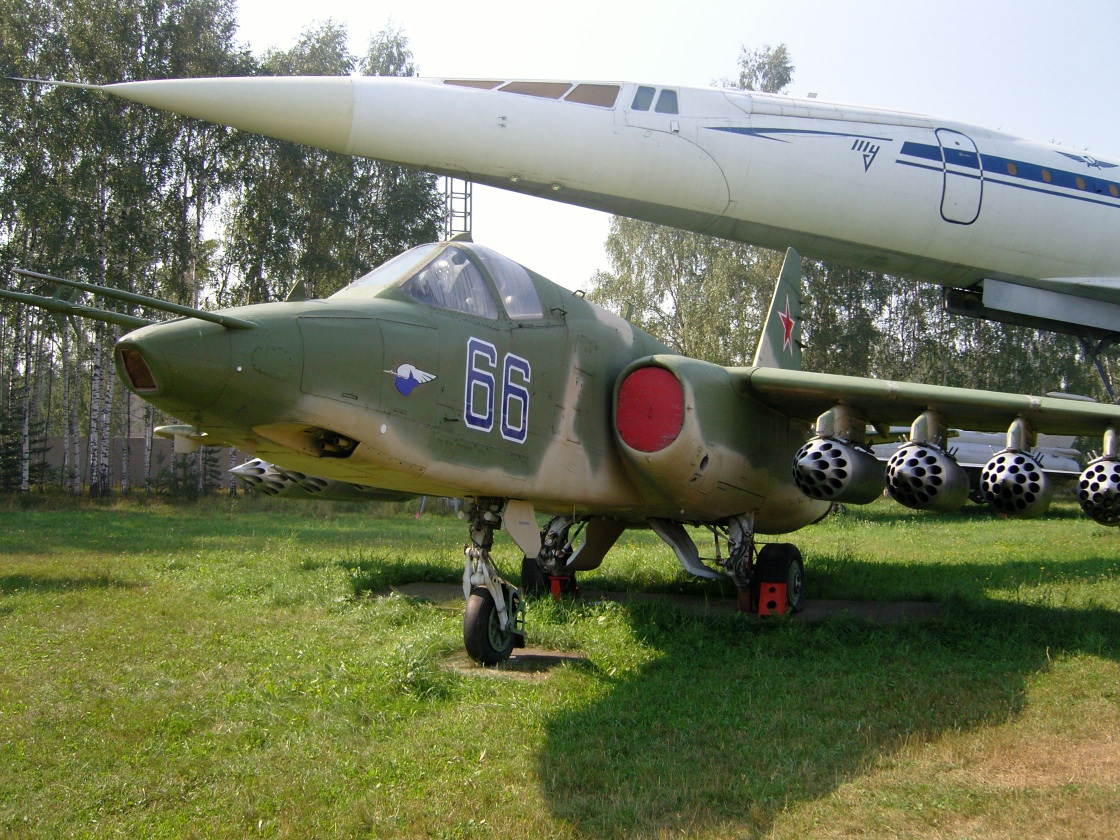
The Sukhoi Su-25 is a single-seat, twin-engine jet aircraft developed in the Soviet Union by the Sukhoi Design Bureau. It was designed to provide close air support for the Soviet Ground Forces. The first prototype made its maiden flight on 22 February 1975. After testing, the aircraft went into series production in 1978 at Tbilisi in the Soviet Republic of Georgia. NATO assigned the new aircraft the reporting name “Frogfoot”.
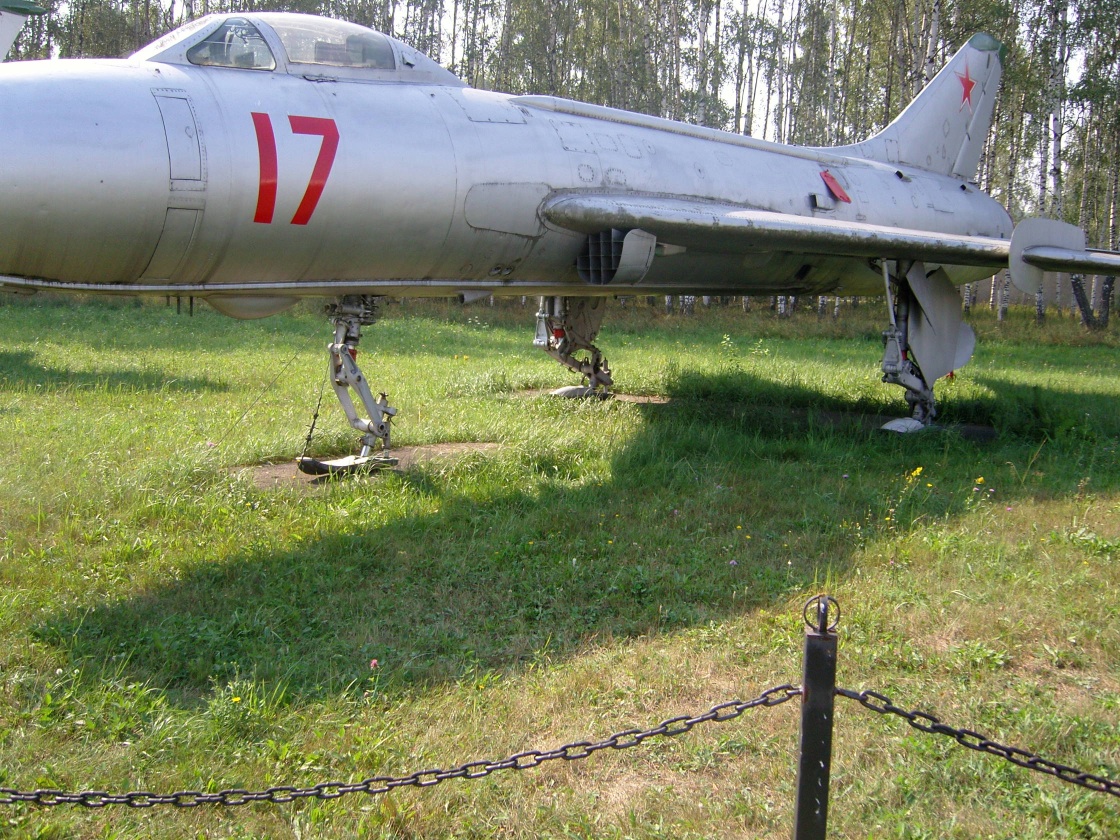
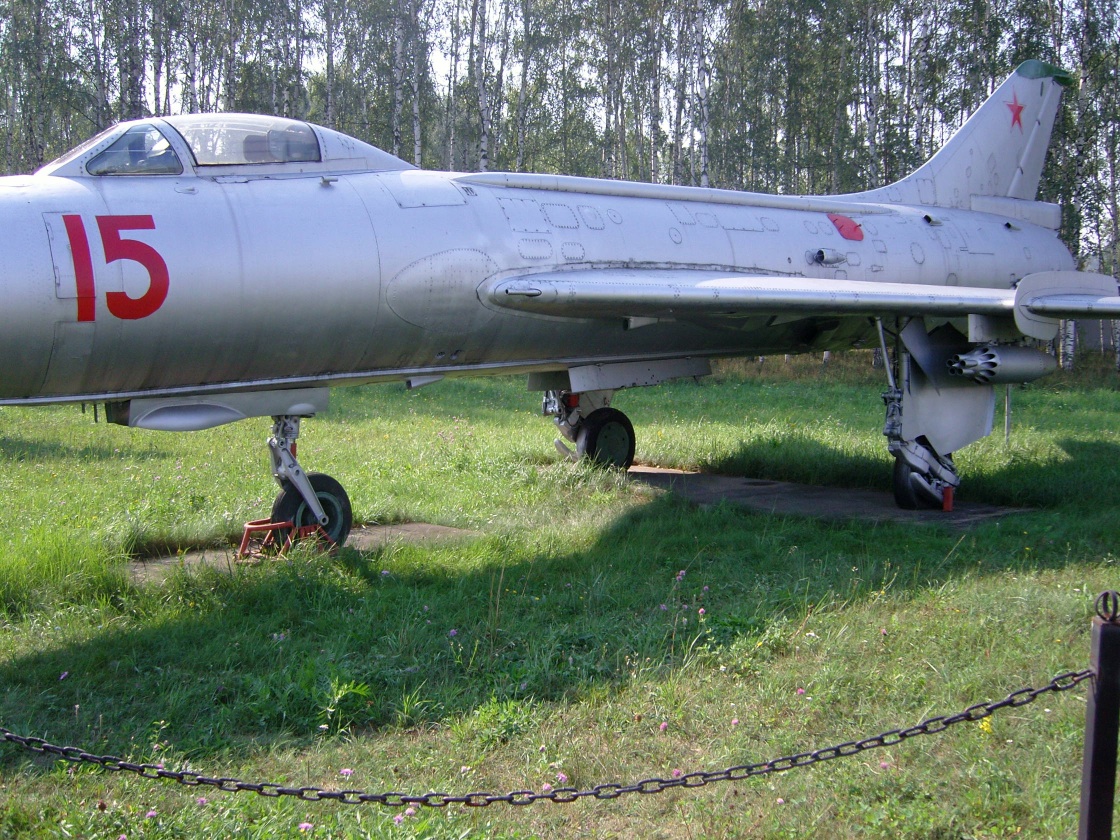
The Sukhoi Su-7 was a swept wing, turbojet-powered fighter-bomber used by the Soviet Union and its allies.
Here is two variants with glidders and landing gears.
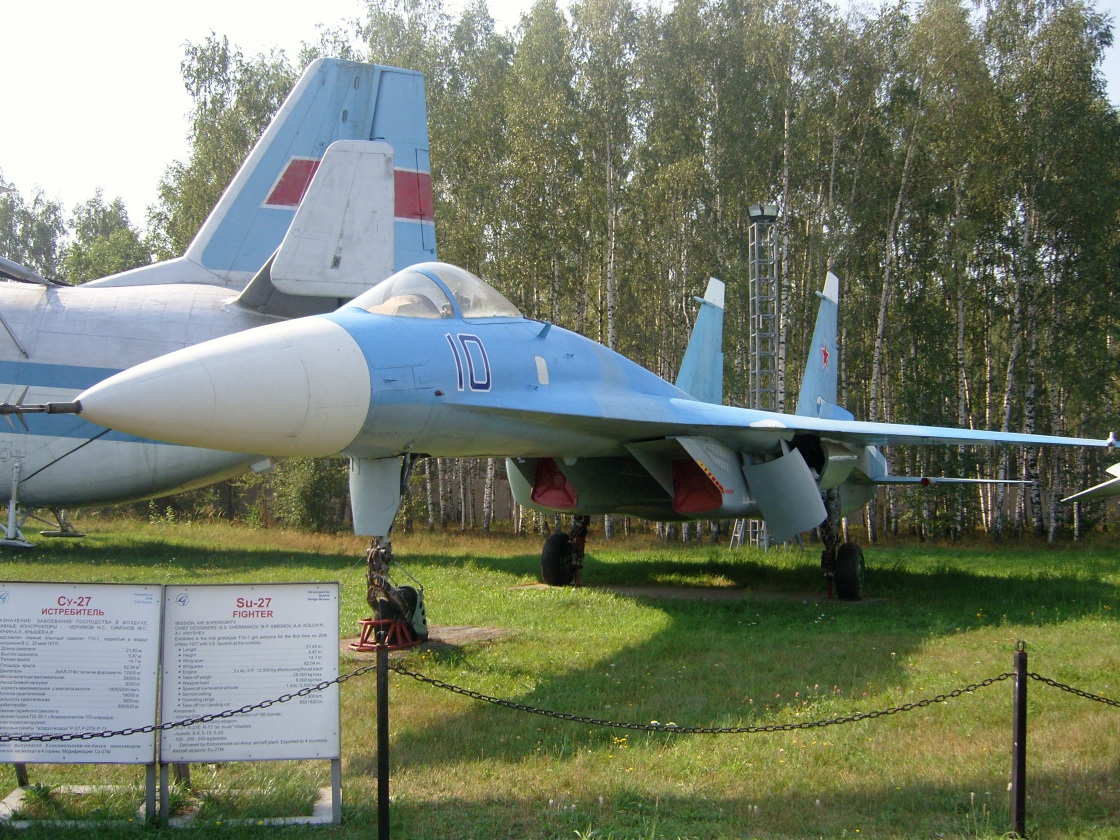
The Sukhoi Su-27 is a jet fighter plane originally manufactured by the Soviet Union, and designed by the Sukhoi Design Bureau. It was intended as a direct competitor for the new generation of American fighters (which emerged as the F-14 Tomcat, F-15 Eagle, F-16 Fighting Falcon, and F/A-18 Hornet), with long range, heavy armament, and very high agility. The Su-27 most often flies air superiority missions, but is able to perform almost all combat operations. Its closest American counterpart is the F-15 Eagle.
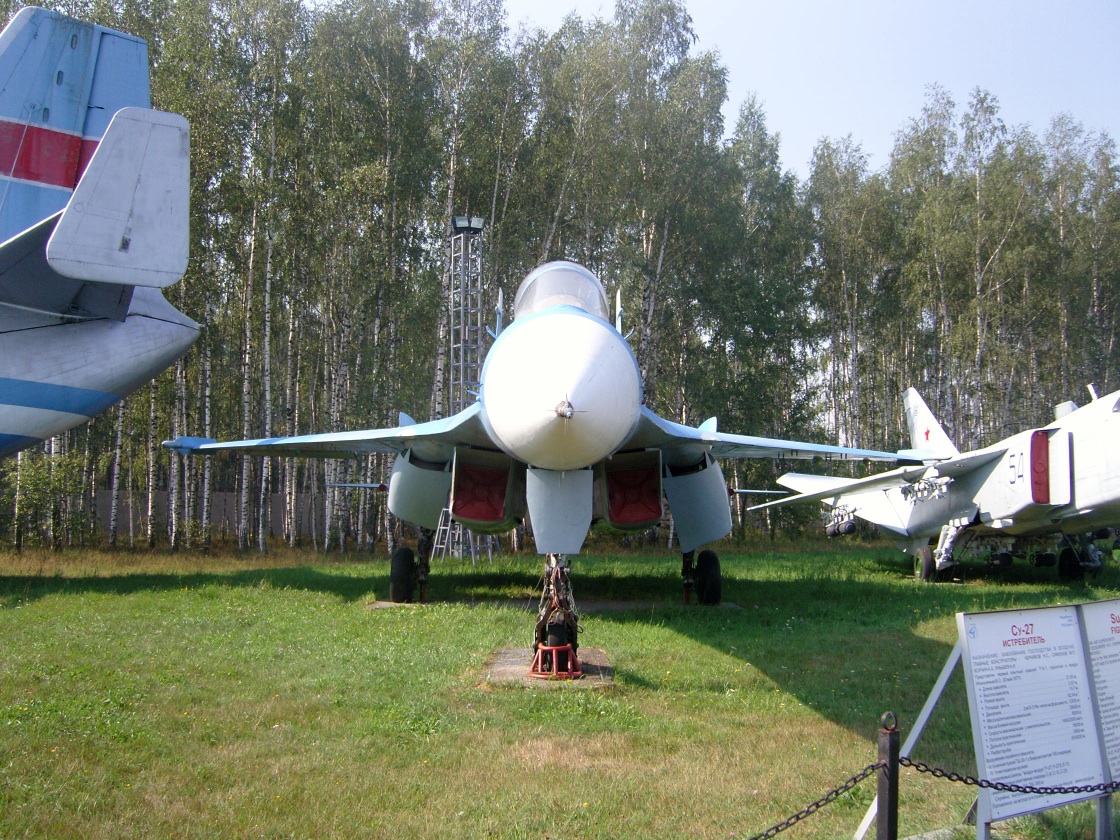
The Sukhoi Su-35 is a 4.5 generation heavy class, long-range, multi-role, air superiority fighter and strike fighter. Due to the similar features and components it contains, the Sukhoi Su-35 is considered to be a close cousin of the Sukhoi Su-30MKI,a specialized version of the Sukhoi Su-35. It has been further developed into the Su-35BM. The Su-35 is in service in small numbers with the Russian Air Force with around five in service
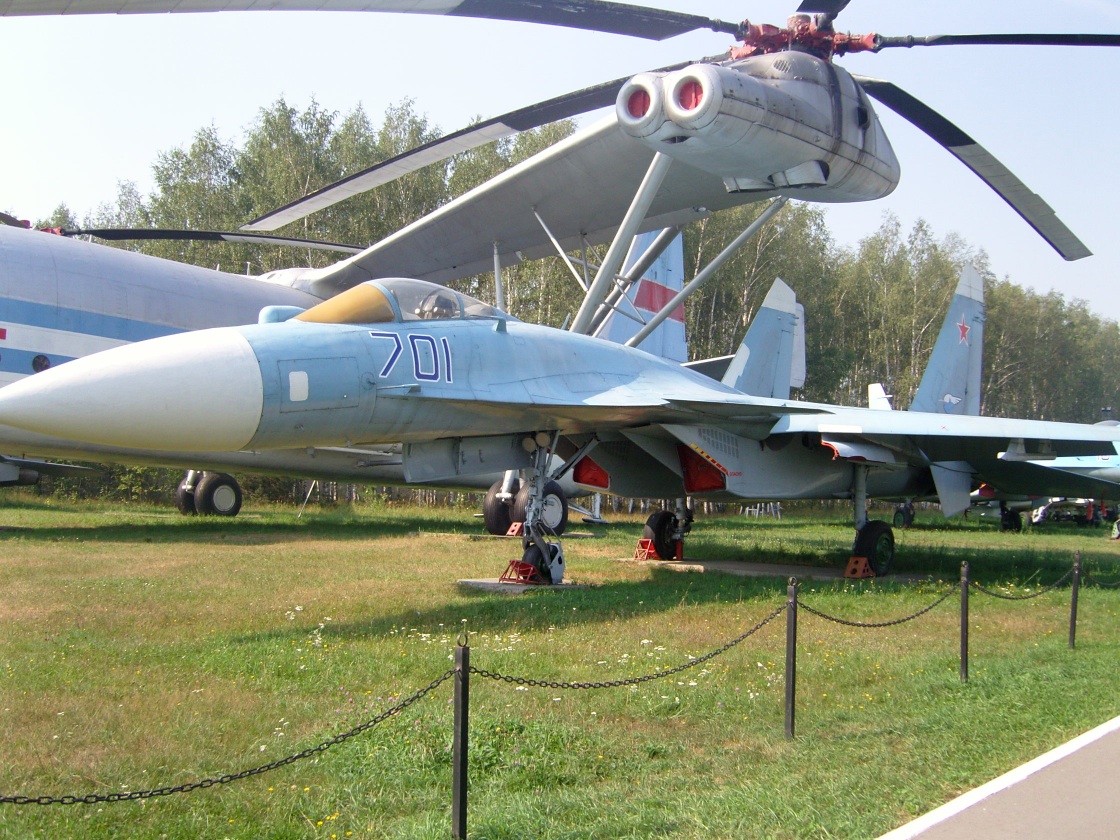
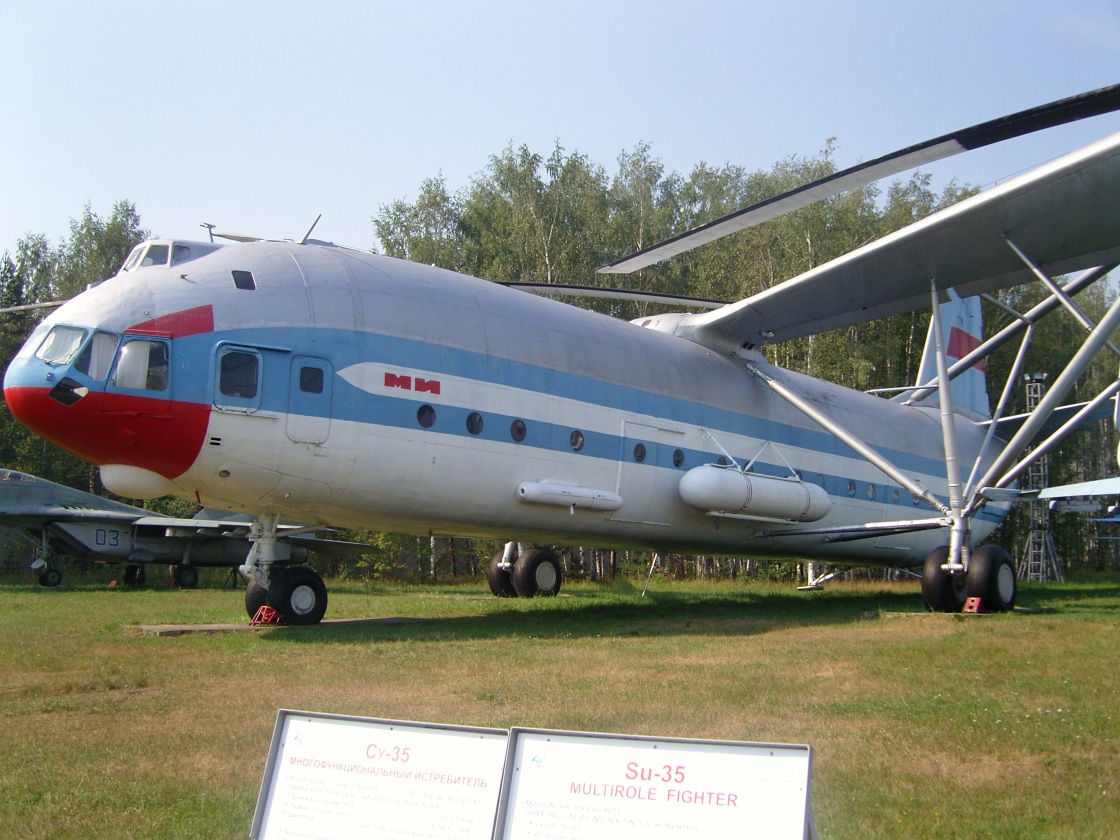
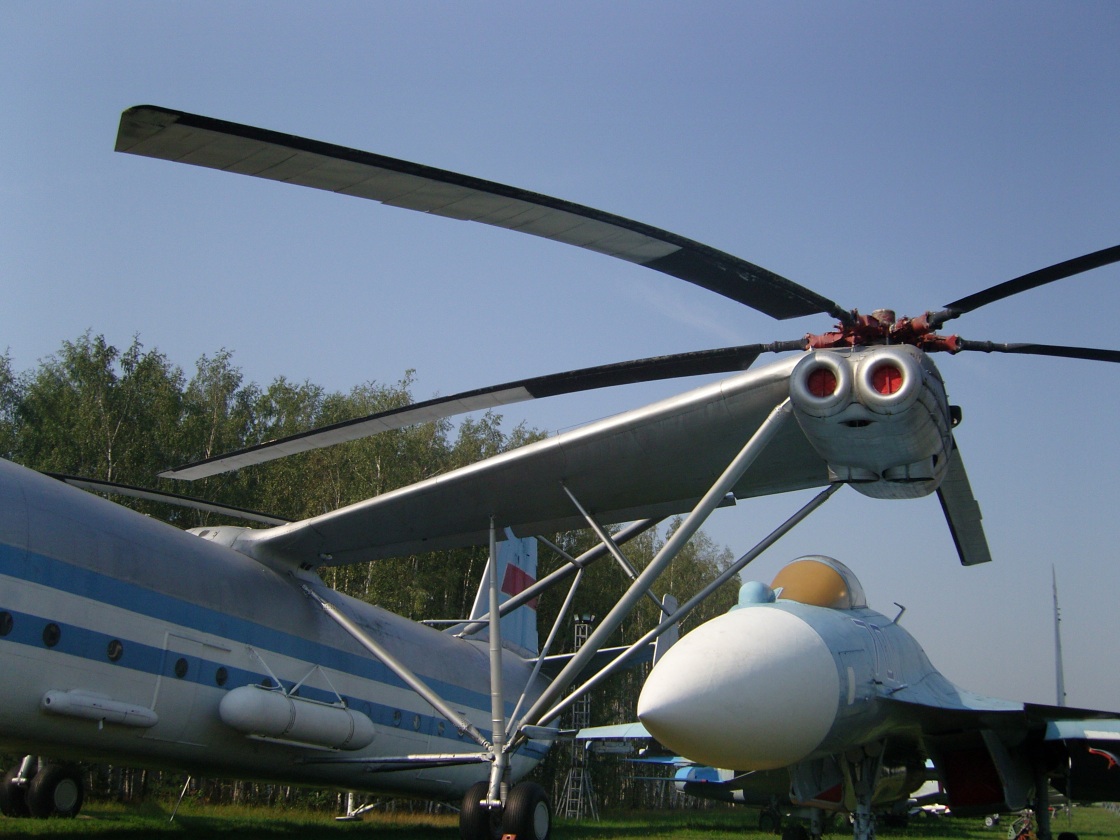
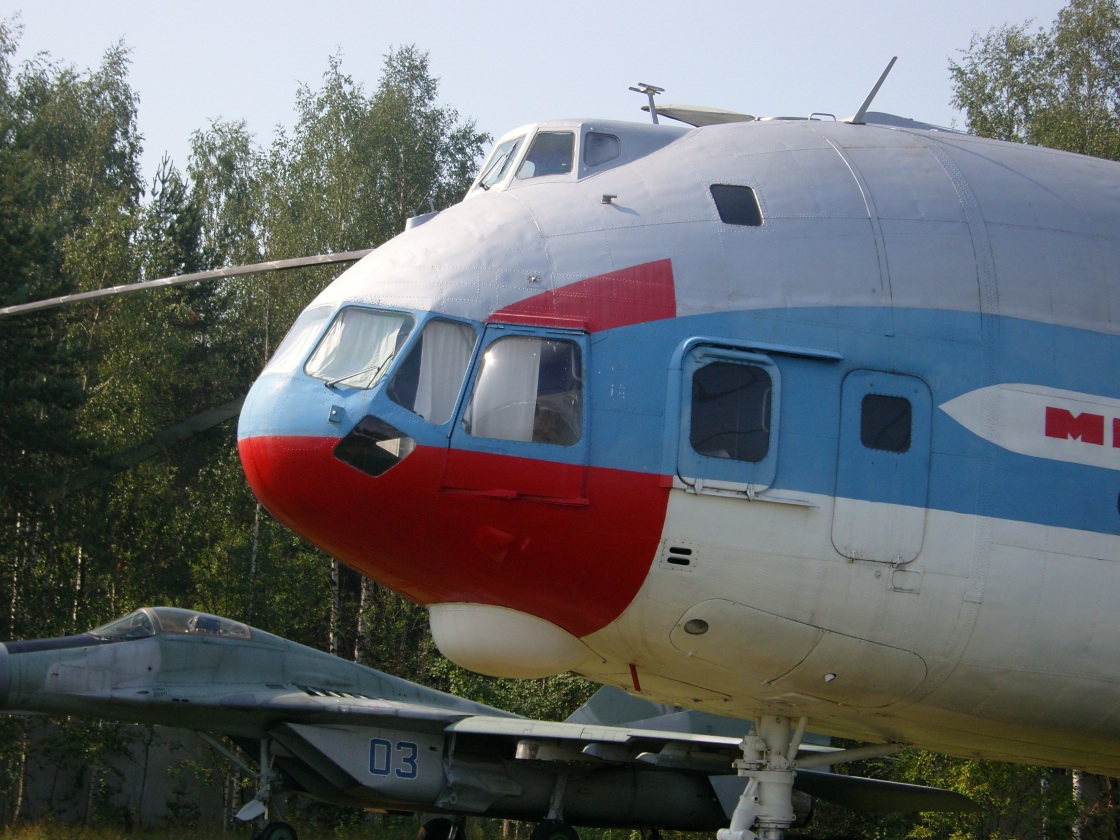
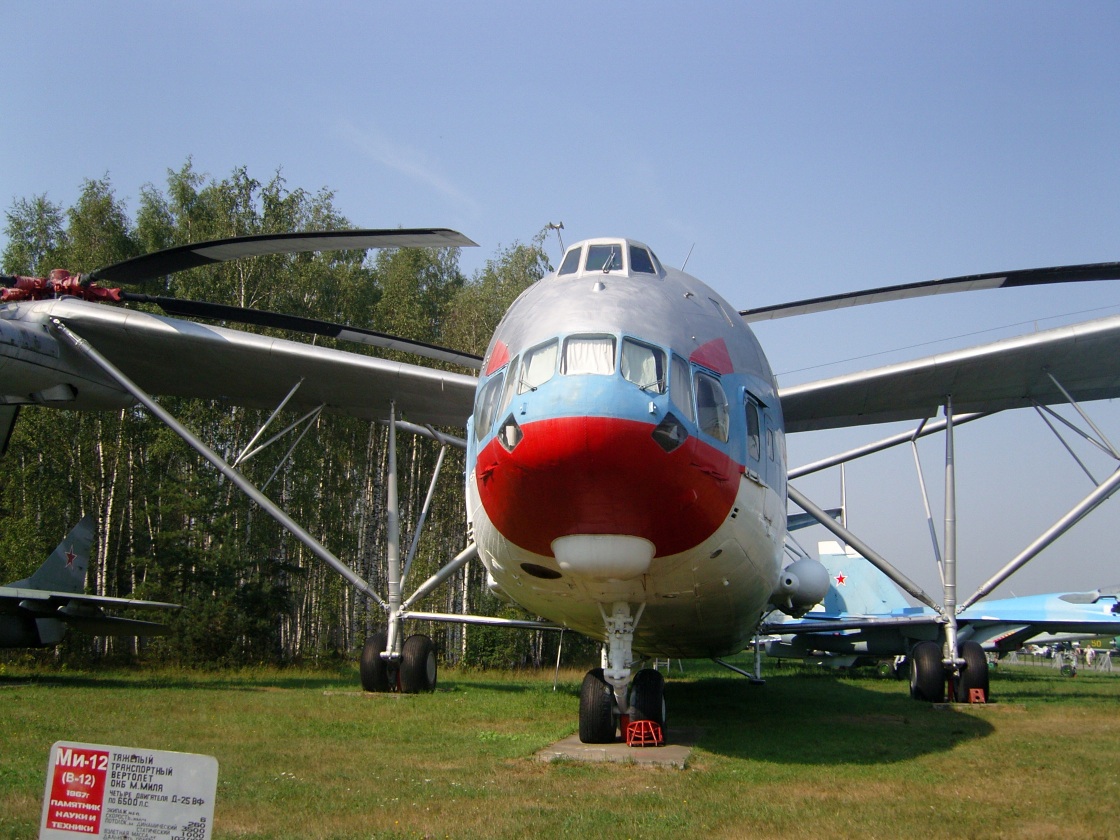
The Soviet made Mil Mi-12 (Also known as the V-12, NATO reporting name “Homer”) is the largest helicopter ever built.
The Mi-12 features the only two-rotor transverse scheme ever built by Mil eliminating the need for a tail rotor. The twin engines were taken together with the rotors from the Mil Mi-6 and duplicated on the Mi-12.
Development came about as a need for a heavy lift helicopter capable of carrying major missile components. Production began on the Mi-12 prototype in 1965 with the goal of lifting no less than 30,000 kg, and it flew first on July 10, 1968. In February 1969, the prototype lifted a 31,030 kg payload to 2,951m (9,682 feet). On August 6, 1969, the Mi-12 lifted 44,205 kg (88,636 lb) to a height of 2,255m (7,398 feet), a world record.It wasn’t mass produced because its aerodynamics capacities were not optimum, and it was vulnerable to attacks.
Comments
|
Comment from kamel benk
|
salut a tout le personnel de l’accademie youri gagarine,a tout mes amis que j’ai connu la bas lors de mon passage.merci pour tous.
|
Comment from Patchfree
|
Ce musée semble très précieux compte-tenu des exemplaires qu’il comporte. L’entretien doit poser des problème en particulier pour les aéronefs en extérieur. Le musée a-t-il des moyens pour cela?
|
Comment from Vassili Petrovitch
|
Le musée n’a vraisemblablement pas beaucoup de moyen pour rénover les appareils.
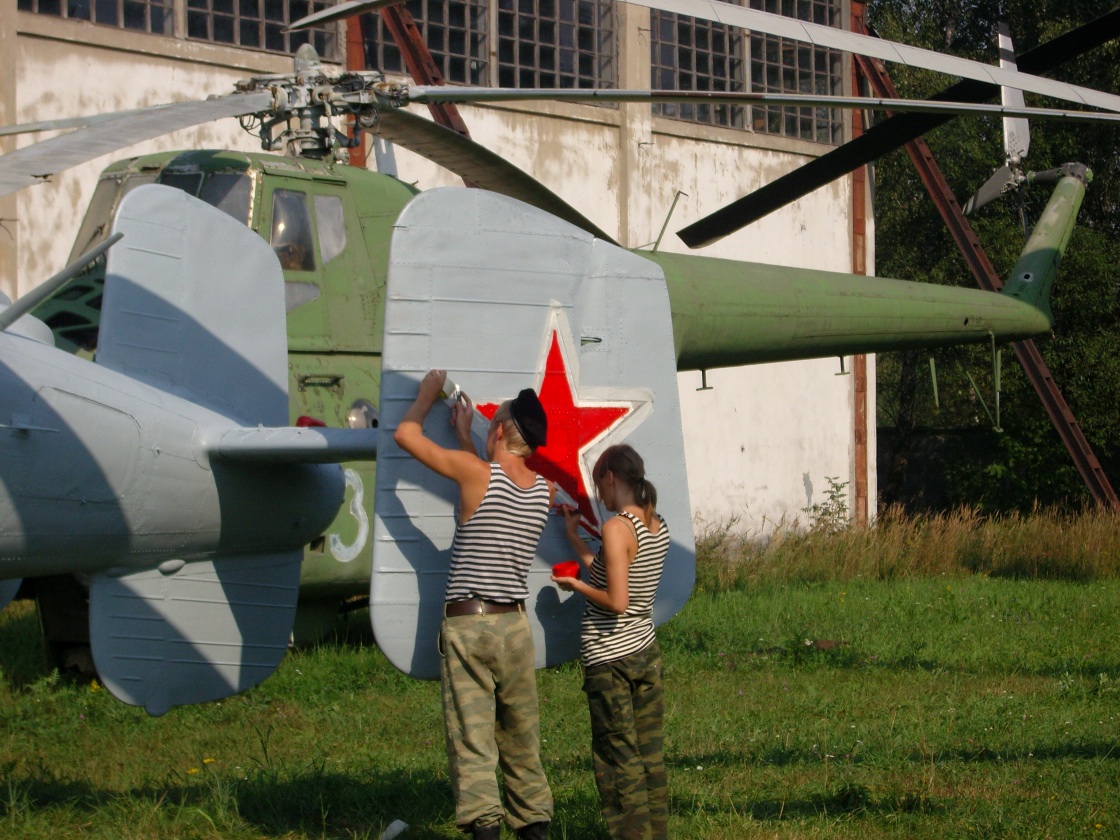
Le travail semble être fait pas des soldats en poste dans la base. Mais ils se contentent de repeindre les étoiles rouges sur les ailes ou les dérives.
Il est vrai que certains aéronefs n’ont pas fière allure dehors.
|
Comment from Jon Gustafson
|
Fantastic pictures and yes, I liked it and I am definately going to visit the Monino museum…I can recommend visiting the Airplane museum at Xian, China…I gigantic complex with marvelous planes such as the Tu-4 ( B-29 derivative ), Badger and a bunch of other planes. I could walk around, touch all the planes, due to renovation of the museum.
A hangar build into a mountain holds a large selection of rare planes – Go there, it´s definately a visit well worth!
|
Comment from Savador Serrano
|
Excelente museo con los mejores y algunos extraños aviones unicos en todo el mundo digno de visitar muy recomendable para los entusiastas de el mundo de la aviacion
|
Comment from Jacquemoud-Collet
|
J’ai visité le musée Monino ”en solo” en 2007. En 2009 je l’ai fait découvrir à 3 amis à l’occasion de MAKS 2009,(http://www.aviasalon.com/en). Je retourne à Moscou pour MAKS 2011 (International Aviation & Space Salon) et le ferai découvrir à mon fils Thibault de 16 ans. Cela fera la 3ème fois que visite Monino et ce sera avec toujours autant de plaisir. Ce musée est Exceptionnel. J’y retour cette fois avec mon matériel pro pour création d’une Visite Virtuelle 360°……. Félicitation pour votre site.
|
Pingback from Youri tupolev | Seelane
|
[…] Buran-Energia Monino airfieldThe Tupolev Tu-16 was a twin-engine jet bomber used by the Soviet Union. …. salut a tout le personnel de l’accademie youri gagarine,a tout mes amis que j’ai … […]
|
Comment from scottwilliamsblog
|
The Mil Mi-26 (NATO reporting name: Halo) is a Soviet/Russian heavy transport helicopter. In service with civilian and military operators, it is the largest and most powerful helicopter ever to have gone into production. Fantastic isn’t
“http://airsoc.com/articles/view/id/4f8d59c0c6f8fa8f7d000032/mil-mi-26tc-nato-reporting-name-halo-firefighting-in-greece?ev=10&evp=tl”
|
Comment from somchai s.chortchoung
|
I would like to thank you your staff during my visit to your Musee on Last 27/6/2016 which was your holiday. But to your kindness, you let me go in to the open air exhibition. I am very delighted and feel very appreciated to your kindnees to let me in. I will defenitely take chance to visit you again in the near future.
Your airplanes are so interesting.
Thanks again and wish you happy too. I will tell your musee among Thai People to visit your museum.
Thanks again for your kindness
somchai
|
Comment from Mohyuddin A Khan
|
An incredible collection. The most memorable part of my visit to russia.
Write a comment